




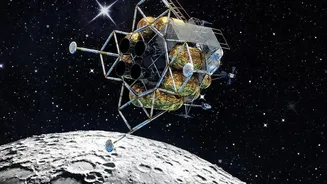
From Landing to Launching
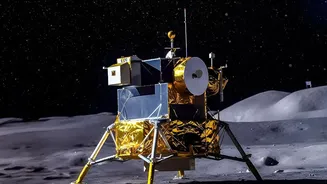
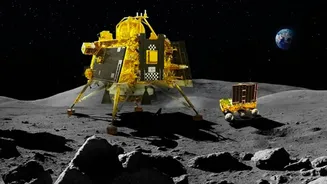
The triumph of Chandrayaan-3 was mastering the soft landing, a feat that placed India in an elite club of nations. Chandrayaan-4, however, aims to join an even more exclusive group. The mission's primary objective is to land, collect soil and rock samples,
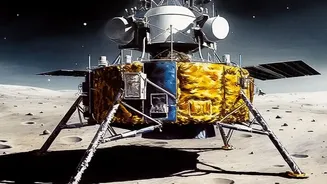
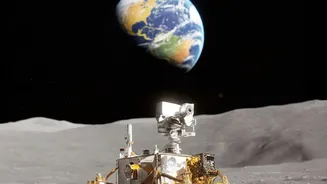
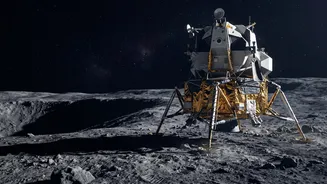
and then launch from the Moon's surface to return them to Earth. This 'sample-return' capability is exponentially more difficult than a one-way trip. It requires a spacecraft to not only survive the journey to the Moon but also to perform a launch from another celestial body, a maneuver ISRO has never attempted before. If successful, India will become only the fourth country, after the United States, the former Soviet Union, and China, to bring lunar material back for study.
A Five-Part Spacecraft Symphony
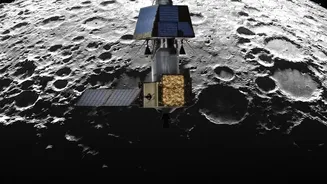
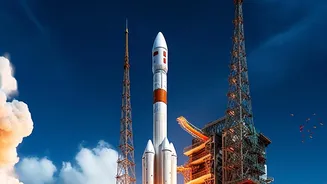
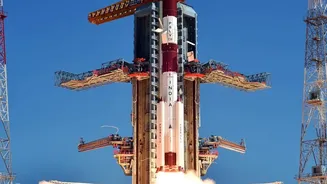
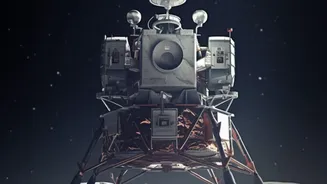
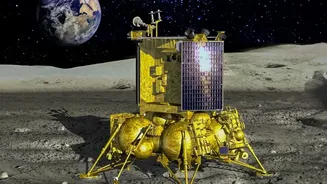
To achieve this monumental task, Chandrayaan-4 is engineered as a highly complex, five-module system. Unlike its predecessor, the mission is so massive that it will require two separate launches using India's powerful LVM3 rocket. The modules include a Descender for the landing, an Ascender to lift off from the Moon, a Transfer Module to journey back towards Earth, a Re-entry Module to protect the samples as they enter our atmosphere, and a Propulsion Module to guide the journey. These components will first be launched into Earth's orbit, where they will perform a delicate automated docking maneuver to assemble the final spacecraft before heading to the Moon—another first for ISRO.
The Scientific Prize: Pristine Lunar Soil
Why go through all this trouble for a few kilograms of lunar soil? The scientific rewards are immense. While orbiters can study the Moon remotely, and landers can perform experiments on-site, bringing samples back to Earth allows for analysis with state-of-the-art laboratory equipment that is too large and power-hungry to send to space. Scientists will be able to study the soil's composition, age, and mineralogy with unparalleled precision. Samples collected from the Moon's south polar region, a target for the mission, could provide the first direct evidence of water ice, unlocking secrets about the Moon's history and potential resources for future human habitats.
Building on a Legacy of Success
Chandrayaan-4 is the logical and ambitious next step in India's carefully planned lunar program. The learnings from Chandrayaan-2's orbiter and Chandrayaan-3's flawless landing and rover operations have provided the foundation for this mission. Key technologies, like the landing systems, have been proven. Now, ISRO is pushing into new territory with robotic arms for sample collection, automated drilling, and complex docking procedures in both Earth and lunar orbit. The mission has already received cabinet approval, greenlighting its development and cementing its place as a national priority. It’s a clear demonstration of ISRO's strategy: mastering one capability before moving confidently to the next, more challenging one.
A Stepping Stone to Manned Missions
Beyond its immediate scientific goals, Chandrayaan-4 is a critical testbed for technologies that will be essential for India's long-term space aspirations. The ability to launch from the Moon, perform automated docking, and safely return a capsule to Earth are all foundational capabilities required for sending Indian astronauts to the Moon, a goal envisioned for 2040. The mission also aligns with international collaborations, such as the LUPEX (Lunar Polar Exploration) mission with Japan, which aims to further explore the Moon's polar regions. Each step, from landing to sample return, paves the way for a sustained Indian presence in space and eventually, on the Moon itself.