





A New Point of View
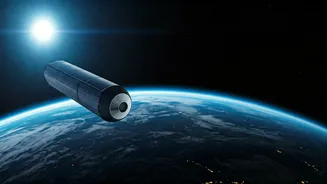
The connection begins with a shift in perspective. Astronauts from every nation have described a profound cognitive shift upon seeing Earth from space—a phenomenon known as the 'Overview Effect.' Viewing our planet as a fragile, blue marble suspended
in the vastness of space, with no visible borders, instils a powerful understanding of its interconnectedness and fragility. This emotional and intellectual awakening, shared by the pioneers of space travel, helped fuel the modern environmental movement. It was the first time humanity truly saw itself as a single ecosystem, and this perspective now underpins our global approach to sustainability.
The Ultimate Watchtowers
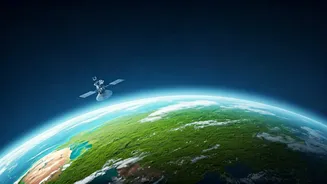
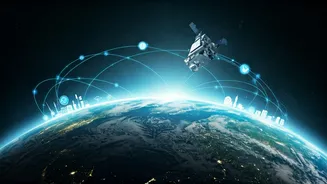
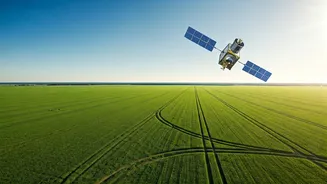
Beyond perspective, space provides our most vital tools for planetary management: satellites. From high above, these orbital sentinels are the unsung heroes of sustainability. Agencies like our own ISRO and NASA operate fleets of Earth-observation satellites that form the backbone of climate science. They measure ice melt at the poles, track rising sea levels with millimetre precision, and monitor greenhouse gas concentrations in the atmosphere. This data isn't just academic; it’s actionable. Governments use it to forecast weather disasters, companies use it to track supply chains, and conservationists use it to catch illegal deforestation and fishing operations in real-time. Without these eyes in the sky, our understanding of climate change would be decades behind.
Technology for a Closed System
Living in space is the ultimate exercise in resource management. On the International Space Station (ISS), every drop of water, every puff of air, and every gram of waste must be managed in a closed-loop system. The technologies developed to achieve this have profound implications for sustainability on Earth. For example, the advanced water purification systems on the ISS, which recycle about 98% of all water from sweat and urine, are being adapted for use in disaster zones and water-scarce regions. Similarly, research into efficient air filtration and waste-to-energy systems designed for astronauts is inspiring new solutions for creating circular economies in our cities.
Powering Journeys, and the Planet
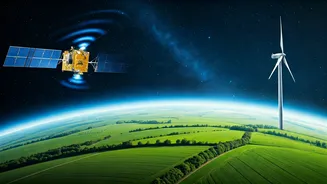
Every spacecraft, from the smallest satellite to the most ambitious Mars rover, has a critical power problem to solve. The answer, for decades, has been solar energy. The need to create lightweight, durable, and hyper-efficient solar panels for space missions has driven immense innovation in photovoltaic technology. The research and development funded by space agencies have directly contributed to the falling costs and rising efficiency of the solar panels we now see on rooftops and in solar farms across India and the world. The technology designed to power a probe in the darkness of space is now helping us transition to cleaner energy on Earth.
Farming for Mars, and Mumbai
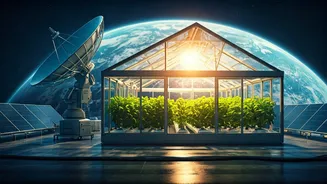
How would you grow food on a years-long mission to Mars? Scientists have been tackling this question for decades, leading to breakthroughs in controlled-environment agriculture. Techniques like hydroponics (growing plants in nutrient-rich water) and aeroponics (misting roots with water and nutrients) were perfected for potential space colonies. Today, these same methods are powering the vertical farming revolution in dense urban centres. These indoor farms can grow fresh produce year-round with up to 95% less water than traditional agriculture, no pesticides, and a fraction of the land. What started as a solution for feeding astronauts is now helping us build more resilient and sustainable food systems on Earth.