





The Science of Feeling Lighter
The secret to swimming's joint-friendly nature lies in a simple principle of physics: buoyancy. When you are in the water, it exerts an upward force that counteracts gravity. This support significantly reduces the amount of body weight your joints have
to bear. For example, when submerged in water up to your waist, your body is supported by about 50%. Go chest-deep, and that support increases to roughly 70-75%. Immerse yourself up to your neck, and the water supports as much as 90% of your body weight, meaning your joints are only dealing with a fraction of their usual load. This makes movements that might be painful on land, such as walking or bending, feel more comfortable and achievable in the pool.
A Haven for Aching Joints
This reduction in weight-bearing stress is particularly beneficial for individuals with joint pain, stiffness, or conditions like osteoarthritis. Osteoarthritis, the most common form, involves the wearing down of cartilage that cushions the bones in a joint. High-impact exercises can aggravate this condition, but swimming allows for an extensive range of motion without the painful jarring. The water's buoyancy reduces compression on the hips, knees, and spine. For those with rheumatoid arthritis, regular, gentle exercise like swimming can also help, while the warmth of many pools can soothe stiff joints and relax tense muscles, further easing movement. Research has shown that regular aquatic exercise can lead to reduced joint pain, decreased stiffness, and improved mobility for those with arthritis.
More Than Just Buoyancy
While buoyancy is the star player, water offers another key benefit: resistance. Moving your arms and legs through water is more challenging than moving them through air. This natural, consistent resistance helps build muscle strength across the entire body without the need for weights. Stronger muscles provide better support for your joints, which can improve stability and absorb more force, further protecting them from strain. Swimming is a true full-body workout, engaging the core, back, shoulders, arms, glutes, and legs. This comprehensive muscle engagement not only aids joint health but also provides a robust cardiovascular workout, improving heart health, circulation, and endurance.
Building Strength and Stability
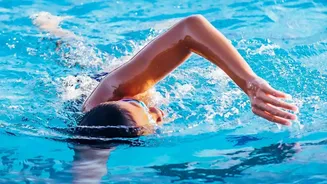
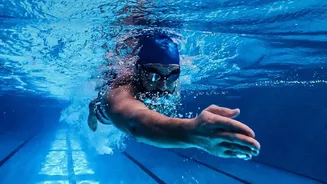
Different strokes target different muscle groups, allowing for a varied and balanced workout. Freestyle and backstroke are excellent for engaging the shoulders, lats, and core stabilisers. The breaststroke gives the chest and inner thigh muscles a good workout, while the demanding butterfly stroke builds powerful shoulders, core, and leg muscles. This strengthening is not just about building bigger muscles; it's about creating a more stable and resilient musculoskeletal system. Improved core strength, for instance, helps maintain a streamlined position in the water and supports the spine. Stronger leg muscles, from the glutes to the calves, help stabilise the hip and knee joints during daily activities on land.
Getting Started Safely
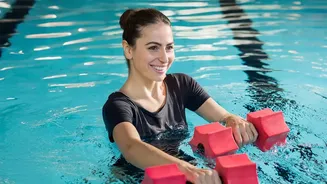
If you're new to swimming or returning after a long break, it's wise to start slowly. Begin with shorter sessions and gradually increase the duration as your endurance improves. If you're not a confident swimmer, you don't have to miss out; water walking or joining a water aerobics class can provide many of the same benefits. Using equipment like a kickboard can help you focus on your leg strength, while webbed gloves can add resistance for an upper-body workout. Proper form is key to preventing other types of strain, such as on the shoulder, so a few lessons with a coach can be a valuable investment. Most importantly, listen to your body and don't push through sharp pain.