




A New Space Race Fueled by Policy
India's space narrative is no longer solely authored by the Indian Space Research Organisation (ISRO). The Indian Space Policy of 2023, coupled with the establishment of the regulatory body IN-SPACe, has created fertile ground for a new generation of entrepreneurs.
This strategic shift encourages private firms to undertake end-to-end space activities, from building launch vehicles to operating satellite constellations. The goal is to allow ISRO to focus on advanced research and deep space exploration, while private players drive commercialisation and innovation, aiming to significantly expand India's share of the global space economy. This has unleashed a wave of investment and activity, with hundreds of startups now populating the sector.
Skyroot Aerospace: The Private Rocket Pioneers
Hyderabad-based Skyroot Aerospace has firmly established itself as a leader in India's private launch sector. The company made history with the successful orbital launch of its Vikram-1 rocket, making India only the third country with a privately developed orbital launch vehicle. This was a significant step up from their 2022 suborbital flight of the Vikram-S demonstrator. The Vikram-1 is designed to carry small satellites weighing up to 350 kg into low Earth orbit, offering a dedicated 'cab service' to space for customers who don't want to rideshare on larger rockets. With an all-carbon composite structure and 3D-printed components, Skyroot is focused on scaling up production with the ambitious goal of achieving monthly launches.
Agnikul Cosmos: 3D-Printing a Path to Orbit
Chennai's Agnikul Cosmos, an IIT Madras-incubated startup, is revolutionizing rocket manufacturing. The company has gained global attention for its Agnilet engine, the world's first single-piece 3D-printed rocket engine. This innovation drastically reduces manufacturing time and cost. Their customizable Agnibaan rocket is designed specifically for the small satellite market, capable of being launched on demand from India's first private launchpad. The successful test launch of their technology demonstrator, powered by a semi-cryogenic 3D-printed engine, was a major validation of their unique approach and a significant milestone for indigenous Indian space technology.
Pixxel: A Health Monitor for Planet Earth
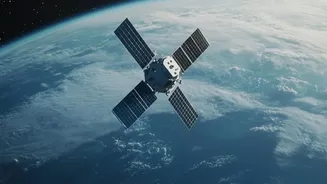
While some companies build the rides to space, Pixxel is focused on what we can learn by looking back at our planet. The Bengaluru and Los Angeles-based startup is deploying a constellation of the world's highest-resolution hyperspectral imaging satellites. Unlike standard cameras, hyperspectral imagers capture data across hundreds of light bands, revealing details invisible to the naked eye. This technology has powerful applications, from detecting crop diseases and water pollution to monitoring deforestation and mapping mineral resources. Having successfully launched its 'Firefly' constellation, Pixxel is now providing crucial data to clients in agriculture, mining, and environmental protection.
Dhruva Space: The Full-Stack Enabler
Dhruva Space operates as a crucial full-stack provider in the space ecosystem, offering the essential building blocks for space missions. Founded in 2012, the Hyderabad-based company specialises in small satellite platforms, solar arrays, and orbital deployers. Their DSOD series of deployers are designed to release CubeSats and small satellites precisely into orbit from launch vehicles. By providing these fundamental components and services, Dhruva Space enables a wide range of clients—from academic institutions to commercial companies—to execute their own space missions more efficiently and affordably.
Bellatrix Aerospace: The Power Behind the Satellites
A satellite's mission doesn't end at launch; it needs to maneuver in space. That's where Bellatrix Aerospace comes in. The Bengaluru-based company specialises in advanced in-space propulsion systems. Their portfolio includes high-efficiency Hall-effect thrusters, which use electric and magnetic fields to propel satellites, and eco-friendly 'green' propulsion systems designed to replace toxic hydrazine fuel. These thrusters are critical for adjusting orbits, avoiding collisions, and extending the operational life of satellites, making them a vital component for the long-term sustainability of space infrastructure.