





The Need for Speed (and Path)
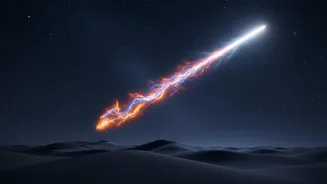
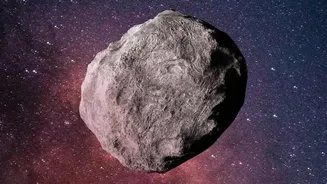
The single most telling difference between a meteor and re-entering space junk is speed. Meteors, which are fragments of asteroids or comets, slam into our atmosphere at breathtaking velocities, ranging from 11 to 72 kilometres per second. This immense
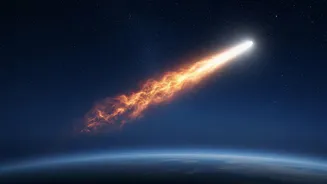
speed causes them to burn up quickly, often in a flash lasting just a few seconds. In contrast, man-made space debris is already in Earth's orbit. When it re-enters, it’s moving much slower, at around 8 kilometres per second. This results in a slower, more prolonged event that can last from 30 to 90 seconds or even longer as it travels across the sky. Furthermore, the angle of entry is a dead giveaway. Meteors can enter the atmosphere from any direction, often at steep angles. Space junk, however, typically de-orbits at a shallow angle, appearing to travel almost parallel to the ground.
Clues in the Debris Trail
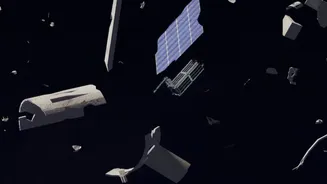
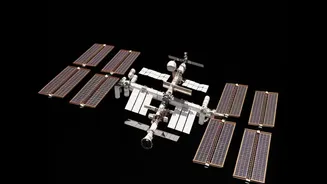
The way an object fragments and the trail it leaves behind offer more vital clues. Meteors, even large ones called fireballs, often appear as a single, intensely bright streak. If they do break apart, it's usually a swift, explosive event. Space junk re-entries often look more like a slow-motion cascade. As the object heats up, pieces like solar panels and antennas peel off, creating a cluster of multiple, smaller fireballs following the same path. This procession of bright points, all moving in the same direction and leaving glowing streaks, is a hallmark of a disintegrating artificial object. The duration of the visible event is key: if it's over in a flash, it's almost certainly a meteor; if it's a slow, drawn-out light show, you're likely watching space junk.
What's It Made Of?
When an object burns up in the atmosphere, its composition creates a unique light signature, which scientists can analyze using a technique called spectroscopy. Meteors are primarily made of rock and metals like iron and nickel. This produces specific colours as they vaporize. Man-made space junk, on the other hand, is built from manufactured materials like stainless steel, titanium, and aluminium alloys, along with polymers and paints. These elements burn with distinct colours and spectral signatures that are different from those of natural space rocks. While this analysis requires specialized equipment, it provides definitive proof of an object's origin. The METEOR project on the International Space Station, for instance, is dedicated to studying these chemical compositions from orbit to better understand the makeup of meteoroids.
Predictable vs. Random Events
Perhaps the most practical tool scientists have for identifying space junk is tracking. Global space surveillance networks maintain a vast catalogue of orbital objects, from active satellites to large pieces of debris. When a catalogued object's orbit begins to decay, its re-entry can often be predicted with reasonable accuracy, including the time and the general area over which it will burn up. Meteors, especially sporadic ones not associated with a known shower, are random and unpredictable. If a fiery re-entry is widely seen and matches a predicted pass of a defunct rocket body or satellite, its identity as space junk is confirmed. Natural meteor showers, like the Perseids or Geminids, are also predictable, but they appear to radiate from a single point in the sky and consist of many individual meteors over hours or days, a different phenomenon entirely.
Why Making the Distinction Matters
Distinguishing between these celestial events isn't just an academic exercise. With tens of thousands of tracked debris objects and millions of smaller, untracked pieces orbiting Earth, the risk of collision is significant. A piece of junk the size of a softball travelling at orbital speeds can destroy a multi-million-dollar satellite, disrupting everything from GPS navigation to financial transactions and weather forecasting. Accurately identifying re-entering debris helps refine models of the orbital environment, ensuring the safety of current and future space missions. It also helps differentiate between a harmless natural event and the potential, albeit low, risk of a piece of man-made hardware surviving re-entry and hitting the ground.