



It Starts with How We Look
The basic method for finding asteroids is surprisingly straightforward: take pictures of the same patch of sky minutes apart and look for anything that moves. Stars and galaxies stay put, but a nearby asteroid, comet, or other Near-Earth Object (NEO)
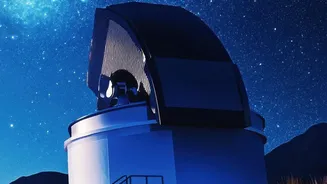
will appear as a moving dot against the fixed background. Automated software compares the images and flags these moving targets. Major survey programs, like the Catalina Sky Survey and Pan-STARRS, scan the sky every clear night, feeding data to a global network of astronomers who confirm the object and calculate its path. But this seemingly simple process is full of challenges.
Size and Speed Matter Most
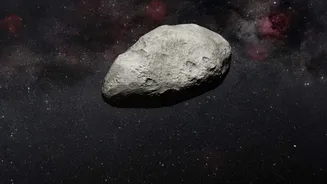
The most obvious factor is size. Larger asteroids reflect more sunlight, making them brighter and easier to spot from a greater distance. This gives scientists years, or even decades, to track their orbits with high precision. Smaller objects, however, are much fainter and can only be seen when they get very close to Earth. A recent example, asteroid 2026 RW1, was only about one metre across and was discovered just seven hours before it harmlessly burned up in the atmosphere over the Indian Ocean on September 6, 2026. An object's speed also plays a critical role. A fast-moving asteroid crosses our field of view quickly, giving observers a much smaller window to detect it and gather enough data to plot its course.
The Sun's Glare: A Cosmic Blind Spot
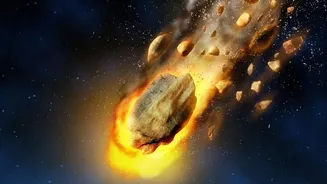
One of the biggest challenges for planetary defense is the Sun. Ground-based telescopes are effectively blinded by daylight, and they can't search for objects in the direction of our star. An asteroid approaching Earth from the daytime sky can remain completely hidden until it's practically on top of us, or has already passed by. This is a significant gap in our detection capabilities. The Chelyabinsk meteor, which exploded over Russia in 2013, came from the direction of the Sun and was therefore not detected by any Earth-based warning systems before it entered the atmosphere.
The Dark and the Bright
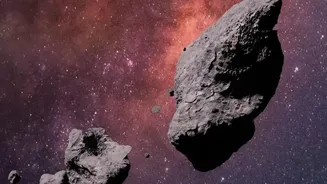
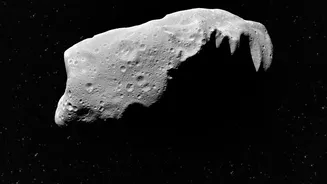
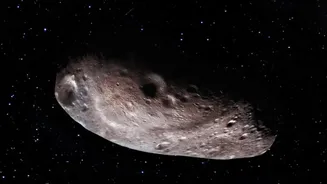
It’s not just size, but also composition, that affects an asteroid's visibility. Some asteroids have bright, reflective surfaces, while others are as dark as charcoal. These dark, low-albedo asteroids absorb most of the sunlight that hits them, reflecting very little back toward our telescopes. This makes them incredibly difficult to find, even if they are relatively large. They can lurk in the darkness of space, unseen until they get dangerously close. To overcome this, new technologies are being developed that look for the heat these objects radiate rather than the light they reflect.
Our Planetary Defense Toolkit
While ground-based telescopes like the ATLAS system provide a crucial line of defense, they are limited by weather, daylight, and atmospheric interference. To get a more complete picture, NASA is preparing to launch the NEO Surveyor space telescope, planned for no earlier than September 2027. Operating from a stable point in space, NEO Surveyor will use heat-sensing infrared detectors to find asteroids. This method allows it to spot both bright and dark asteroids, and crucially, it can look into regions of space that are difficult for ground telescopes to observe, such as the area toward the Sun. The mission aims to fulfill a mandate to find 90 percent of all NEOs larger than 140 meters—big enough to cause major regional damage.