





When flights get grounded, banking apps fail, and cloud services go dark all at once, it’s easy to assume the worst. A string of major tech outages across the US last week did just that, sparking fears of a coordinated and malicious cyberattack.
An Unsettling Coincidence
The week's
disruptions were widespread and alarming. It began with Microsoft's cloud services, including Outlook and Teams, going offline for users globally. Soon after, the US Federal Aviation Administration (FAA) ordered a nationwide ground stop for all departing flights, the longest such halt since the 9/11 attacks, due to a communications system failure. The chaos continued as customers at major banks like JPMorgan Chase experienced issues with online accounts and payment services. To top it off, Apple reported outages affecting iCloud and Apple Pay, and even the National Security Agency's (NSA) classified internal network went down. This rapid succession of failures hitting critical sectors—aviation, finance, tech, and intelligence—understandably put the public and experts on high alert.
Not an Attack, Officials Insist
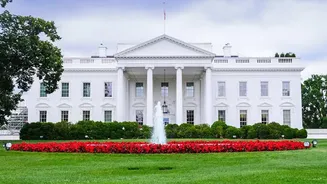
Despite the suspicious timing, top US officials have been clear and united in their message: this was not a cyberattack. The White House, the Director of National Intelligence, and the Department of Homeland Security have all stated there is no evidence to suggest the incidents were connected or the work of any malign actor. 'We have zero evidence or any reason to believe that any of these isolated or individual instances have anything to do with nefarious actors,' said National Security Adviser Marco Rubio. Instead, they attribute the turmoil to a series of unfortunate, unrelated internal failures. Homeland Security Secretary Markwayne Mullin told Congress he was '98% confident' the outages were not the result of foreign malicious activity, though he admitted he had never seen so many major failures in such a short period.
So, What Really Happened?
The real story is less cinematic but just as concerning. Each outage had its own distinct, mundane cause. The FAA ground stop was triggered when a contractor's router upgrade went wrong, overloading the network. The massive Microsoft outage was traced to a combination of a latent software bug and a surge in network traffic. JPMorgan Chase blamed its banking disruption on a 'software bug in on-premise hardware systems', explicitly stating it was not a cyber incident. Apple said an internal update was the culprit for its service failures, while the NSA reported its classified network went down during 'scheduled routine maintenance'. In essence, it was a cascade of coincidence, where different complex systems failed for different internal reasons at roughly the same time.
A Wake-Up Call for a Fragile World
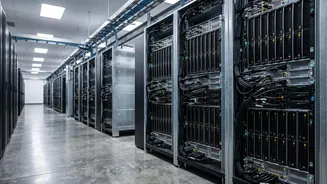
While the absence of a coordinated attack is a relief, the events highlight a deeper, more systemic vulnerability: the fragility of our digital infrastructure. Experts say that as systems become more interconnected, the risk of cascading failures increases, where one small glitch can have widespread consequences. Many of these critical systems are built on decades-old 'legacy' technology. Urgent efforts to patch and upgrade these aging systems, sometimes spurred by the discovery of new vulnerabilities, can themselves introduce instability and trigger outages if not tested perfectly. This incident demonstrates how tightly coupled our essential services are and how dependent society has become on a digital backbone that is complex, aging, and prone to unpredictable failure.