

Cosmic Dots, Big Mystery
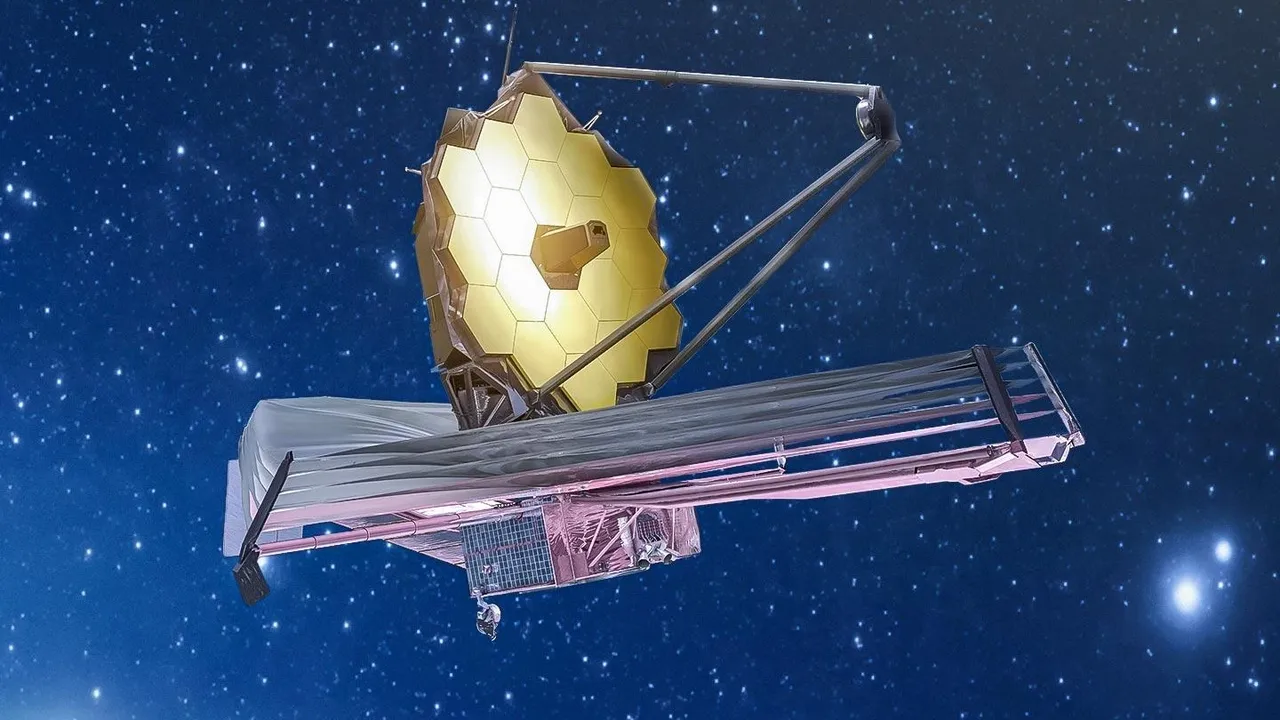
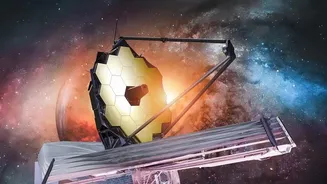
Since the James Webb Space Telescope (JWST) began its mission, it has been delivering images that challenge our understanding of the cosmos. Among its most perplexing discoveries are the 'little red dots' or LRDs. These are extremely distant, compact
objects that appear in abundance when the universe was very young, roughly 600 million years after the Big Bang, only to seemingly vanish as the cosmos matured. Their redness comes from a combination of factors: their immense distance means their light has been stretched to redder wavelengths by the expansion of the universe, and they are often shrouded in cosmic dust.
More Than Meets the Eye
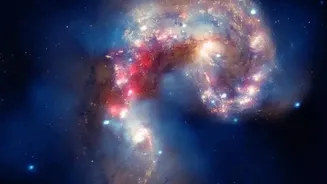
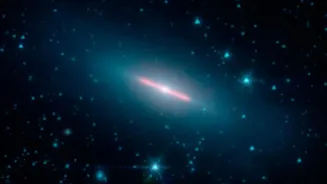
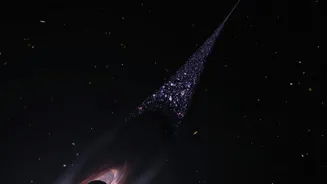
For a long time, the leading theory was that these dots were a new, unique type of object, perhaps an exotic 'black hole star'—a supermassive black hole gorging on so much gas that it was cocooned in a glowing shroud. While some LRDs may fit this description, a landmark study published in late July 2026 suggests a different, and in some ways more profound, answer. Researchers focused on a lower-redshift galaxy nicknamed 'Saguaro' which, despite being closer, has a bright, compact centre that behaves just like an LRD. The team then performed a thought experiment: they used computer models to see what Saguaro would look like if it were as far away as the early universe LRDs. The result was startling: the galaxy's sprawling spiral arms and outer structure completely disappeared, leaving behind only its bright, red core.
Finding the Hidden Galaxies
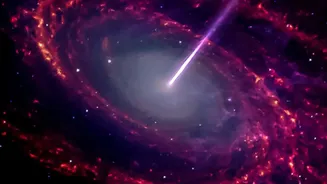
This discovery implies that many little red dots may not be strange, isolated objects at all. Instead, they could be the intensely bright and active hearts of enormous galaxies that are simply too far away for Webb to see in their entirety. The faint light from the outer, star-filled regions of these galaxies becomes too diffuse to detect over such vast cosmic distances, creating an observational illusion. All that remains visible is the blazing galactic nucleus, powered by a supermassive black hole actively consuming matter. This suggests that the early universe was populated with large, well-formed galaxies much earlier than many models predicted, but they have been hiding in plain sight, with only their cores visible to us as LRDs.
A Temporary Disguise
The Saguaro study also helps explain why LRDs seem to disappear as the universe ages. They don't actually vanish. The LRD phenomenon is likely a temporary, but common, phase in a galaxy's life. During a period of rapid growth, the central black hole outshines everything else, making the galaxy appear as an LRD. Later, as the black hole's activity calms down and the host galaxy continues to grow and form stars, its appearance changes into something more recognizable. This theory elegantly connects the puzzling dots seen in the infant universe to the diverse galaxies we see around us today. They weren't a separate class of object that went extinct; they were simply cosmic toddlers going through a very bright, very red phase.