







Feeling wobbly in Tree Pose, or Vrikshasana, is completely normal. This classic balancing posture challenges our stability and focus, but finding comfort is key. This guide will help you explore variations to build a strong and steady tree.
Understanding the Foundation of Tree Pose
Tree Pose,
or Vrikshasana in Sanskrit, is a foundational yoga posture that builds strength, improves posture, and calms the mind. The goal is to stand rooted through one leg, like a tree trunk, while the other leg is bent and the arms express the branches. Before exploring variations, it's essential to grasp the basics. Start in Mountain Pose (Tadasana), standing tall with your weight evenly distributed. Shift your weight onto one foot, engaging the muscles of that standing leg. Find a fixed point to gaze at (your drishti) to help maintain focus and balance. A key safety rule is to never place your foot directly on the side of your knee joint, as this can create unsafe pressure. Instead, the foot should always be placed above or below the knee.
Variation 1: The Supported Kickstand
If you're new to balancing or just feeling unsteady, this is the perfect place to start. From your standing position, shift your weight onto one leg. Bend the opposite knee and turn it out to the side, but keep the toes of that foot on the floor for support. Rest the heel of your lifted foot against the inside of your standing ankle. This 'kickstand' provides maximum stability, allowing you to focus on proper alignment without the fear of falling. Concentrate on keeping your hips level and facing forward, and press your hands together at your heart. This modification helps you build confidence and an awareness of how to engage your standing leg and core.
Variation 2: Foot on the Calf
Once you feel steady in the kickstand variation, you can increase the challenge slightly. From your standing position, lift your bent foot completely off the floor and place the sole against the inner calf of your standing leg. Continue to avoid the knee area entirely. Actively press your foot into your calf and your calf back into your foot. This creates an energetic connection that improves stability. You might notice you have to work a bit harder to keep your balance here. Keep your gaze steady and your breath even. If you still feel wobbly, remember you can always lightly touch a nearby wall or chair for support.
Variation 3: The Classic Tree Pose
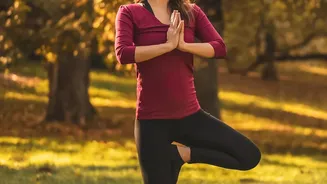
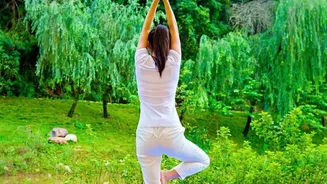
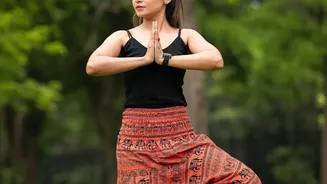
This is the full expression of the pose for many practitioners. From standing, use your hand to guide your foot to your inner thigh, as high up as is comfortable. The sole of your foot should press firmly against your thigh, above the knee. A common mistake is to let the hip of the bent leg hike up; focus on keeping both hips level. Engage your core by drawing your lower belly in, which will help stabilize your entire torso. Once you feel grounded, you can explore different arm positions. Bringing your hands to prayer at your heart is a great option, or you can 'grow your branches' by reaching your arms overhead.
Challenging Your Balance Further
When you are comfortable in the classic pose, there are several ways to deepen your practice. One option is to introduce movement. From a stable Tree Pose with arms overhead, you can create a 'windy tree' by gently swaying your arms and upper body from side to side. This challenges your core and stabilizing muscles in new ways. Another way to test your balance is to change your gaze. Try slowly looking up toward your hands, or for the ultimate challenge, try closing your eyes for a breath or two while standing near a wall for safety. These subtle changes force your body to rely on proprioception—your internal sense of position—rather than sight.