



The desire for clean, fresh air inside our homes has many of us wondering about the best solution. Is a lush urban jungle the answer, or should we invest in technology? Let's clear the air on this popular debate.
The Green Contender: Do Houseplants Really Purify Air?
The idea that houseplants can clean your
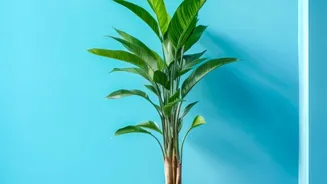
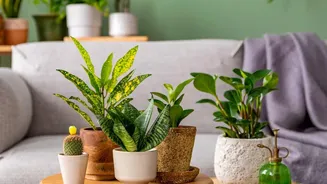
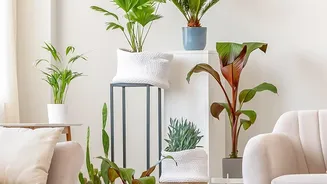
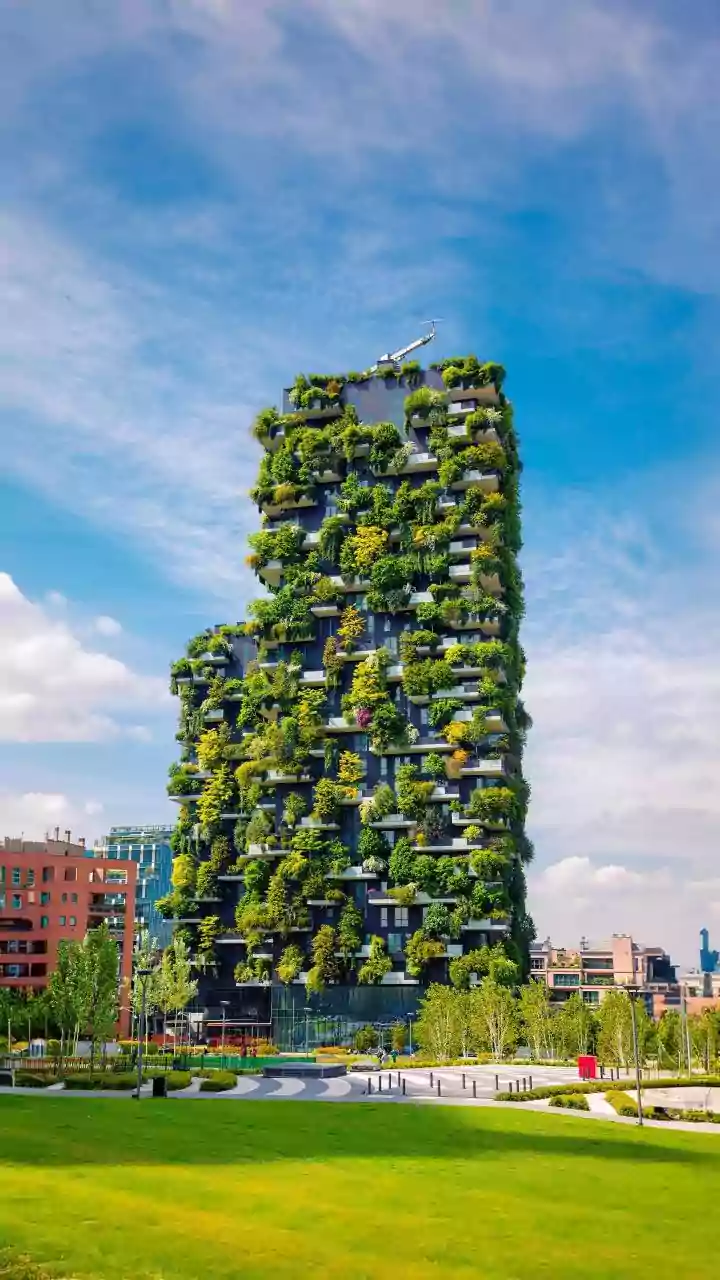
indoor air is incredibly popular, largely thanks to a 1989 NASA study. This research showed that in a sealed, controlled lab chamber, common houseplants could remove harmful chemicals called volatile organic compounds (VOCs) from the air. However, translating this to a real home environment is where the theory wilts. More recent scientific reviews have concluded that you would need an impractically large number of plants—somewhere between 10 and 1,000 per square metre—to match the air-cleaning effect of a building's standard ventilation, let alone an air purifier. While plants do absorb some pollutants, their impact in a typical, non-sealed room is minimal. Their real benefits are more about aesthetics and well-being; they can boost moods, lower stress, and add a touch of humidity to dry air. So, while they are a wonderful addition to a home, they are not a primary tool for air purification.
The Tech Solution: How Air Purifiers Work
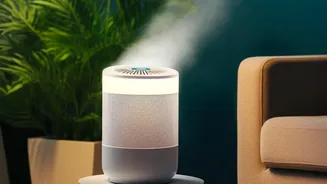
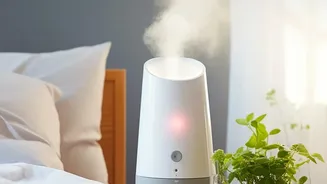
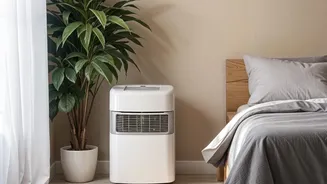
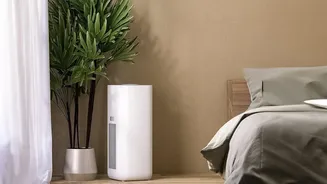
Unlike plants, which are passive, air purifiers are active, mechanical systems designed specifically to clean the air. Most effective models use a combination of filters. The star player is the HEPA (High-Efficiency Particulate Air) filter. This is a standard, not a brand, and a true HEPA filter is certified to trap 99.97% of airborne particles down to 0.3 microns in size. This includes common irritants like dust, pet dander, pollen, smoke particles, and some bacteria. Many purifiers also include an activated carbon filter, which is designed to adsorb gases, VOCs, and odours that a HEPA filter can't catch. The effectiveness of a purifier is measured by its Clean Air Delivery Rate (CADR), which tells you how quickly it can clean a room of a certain size. Compared to a plant's negligible CADR of less than 1, a typical air purifier has a CADR of 100 or more, making it thousands of times faster at cleaning the air.
The Clear Winner for Clean Air
When it comes to the raw performance of removing pollutants, there is no contest: air purifiers are significantly more effective than houseplants. Research has shown that a single air purifier can reduce airborne particles far more efficiently and quickly than a room full of plants. While a green wall might make a measurable difference, the number of plants required is impractical for most homes. For anyone with allergies, asthma, or sensitivity to pollution, an air purifier provides tangible relief by actively capturing the very particles that trigger symptoms. Plants simply cannot remove dust, dander, or smoke particles with any meaningful efficiency. Therefore, for the primary purpose of improving air quality, an air purifier is the clear and scientifically-backed choice.
Ventilation vs. Filtration: What’s the Difference?
This brings us to another key concept in air quality: the difference between ventilation and filtration. They are not the same thing, but they work together. Ventilation is the process of replacing stale, polluted indoor air with fresh outdoor air. This can be as simple as opening a window or as complex as a mechanical system that brings fresh air into the house. Ventilation is excellent for diluting pollutants that build up indoors, such as carbon dioxide from breathing, cooking odours, and moisture. Filtration, on the other hand, does not introduce new air. It cleans the air that is already inside a space. An air purifier is a filtration device. It pulls in the room's air, passes it through filters to trap pollutants, and then circulates the cleaned air back into the room. So, ventilation swaps out the air, while filtration cleans it.
The Best Strategy : A Breath of Fresh Air
The most effective strategy for clean indoor air is not an 'either/or' choice. It's a combined approach. The first and most important step is source control : remove or reduce the things causing pollution in the first place , like harsh chemical cleaners or indoor smoking . The second step is ventilation . Whenever possible , and when outdoor air quality is good , letting fresh air in is one of the best ways to reduce the concentration of indoor pollutants . Finally , filtration provides a powerful third layer of defence . An air purifier with a HEPA filter can continuously remove the fine particulate matter that ventilation might miss or that comes from outside . Think of it this way : ventilation flushes the room , and filtration scrubs the air that remains . And your houseplants ? They are the beautiful , mood - boosting companions that make your clean space feel like a home .