


The Lure of Eternal Shadows
The Moon’s South Pole is a landscape of stark contrasts, with towering crater rims bathed in near-perpetual sunlight and deep craters plunged into eternal darkness. These permanently shadowed regions (PSRs) are among the coldest places in our solar system.
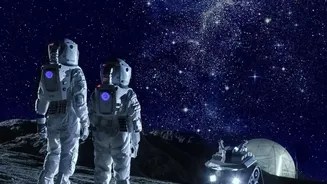
For decades, scientists hypothesised that these frigid traps could hold vast deposits of water ice, shielded from the sun's radiation. Data from missions like India's Chandrayaan-1 and NASA's Lunar Reconnaissance Orbiter confirmed the presence of hydrogen, a strong indicator of water. This discovery transformed the poles from a scientific curiosity into prime real estate for a future lunar settlement. The Artemis program plans to land astronauts in this region, not just for a fleeting visit, but to establish a long-term human presence.
Robotic Scouts Paving the Way
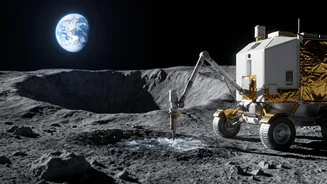
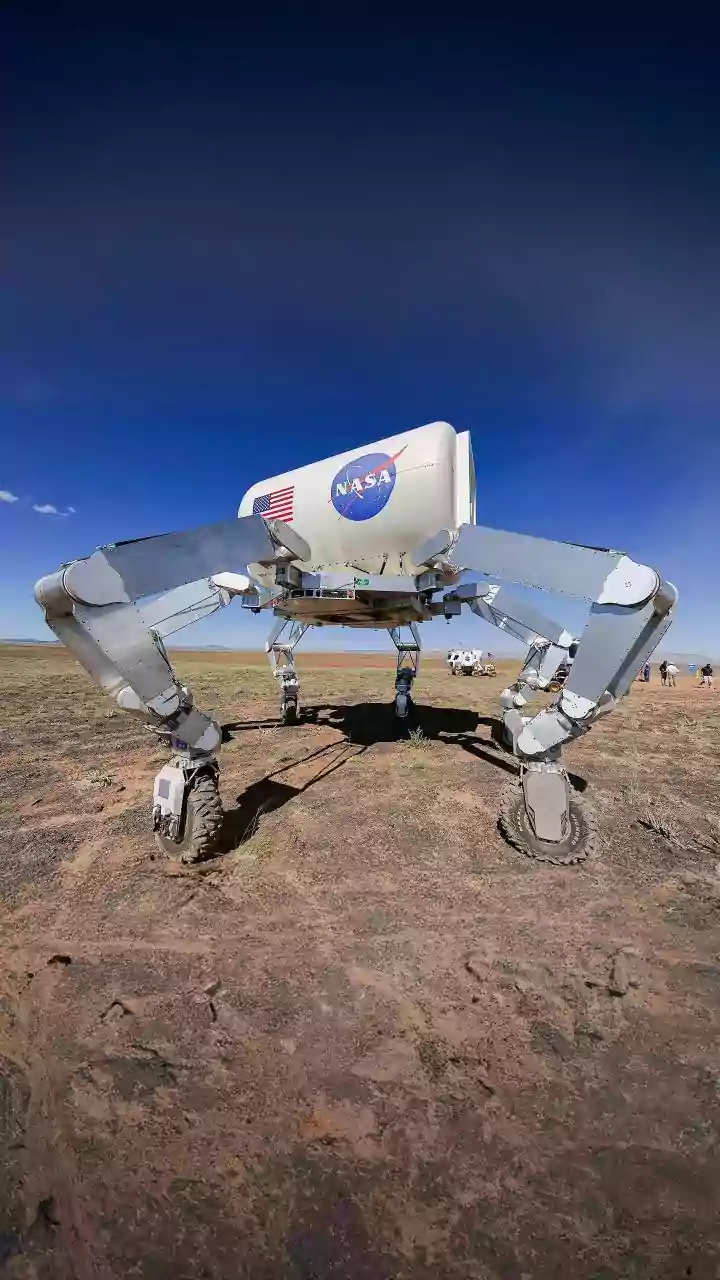
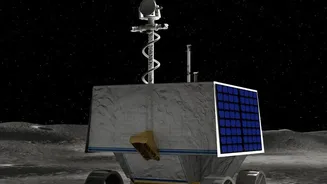
Before astronauts can set up camp, NASA is sending robotic scouts to map these precious resources. A key pathfinder mission is the Volatiles Investigating Polar Exploration Rover (VIPER). This golf-cart-sized robot is designed to drive into the treacherous, dark craters to get a direct look at the ice. Outfitted with a drill and specialized instruments, VIPER will analyse the composition and concentration of the ice, drilling up to a meter below the surface. The data it gathers will create the first-ever resource maps of a polar region on another celestial body, helping NASA pinpoint the most promising locations for future extraction and a permanent base. Experiments like the Polar Resources Ice Mining Experiment-1 (PRIME-1) are also testing the necessary drilling and analysis technologies.
More Than Just Drinking Water
The water ice locked away at the lunar South Pole is crucial for more than just astronaut survival. While it can certainly be melted and purified for drinking and growing plants, its most revolutionary application is in the production of rocket fuel. Through a process called electrolysis, water (H2O) can be split into its constituent elements: hydrogen and oxygen. Liquid oxygen and liquid hydrogen are the most powerful chemical rocket propellants known. Producing them on the Moon—a practice known as in-situ resource utilization (ISRU)—would be a game-changer. It would mean that spacecraft departing from the Moon for destinations like Mars wouldn't need to carry all their fuel from Earth, dramatically reducing launch costs and enabling more ambitious missions. The Moon could become a celestial refueling station.
The Engineering Challenge Ahead
Mining water on the Moon is an immense engineering challenge. The permanently shadowed craters are incredibly cold, and the lunar regolith, or soil, is abrasive and difficult to handle. NASA and its commercial partners are developing advanced technologies to overcome these hurdles. This includes robotic excavators, drills capable of penetrating icy regolith, and mobile processing plants that can heat the mined material to sublimate the ice into vapor, which is then captured and stored. Powering these operations will require robust energy solutions, such as solar arrays placed on crater rims that receive constant sunlight, potentially supplemented by nuclear power sources to endure the long lunar nights. Building this infrastructure, from landing pads and roads to pipelines for transporting resources, is a core part of the Artemis Base Camp concept.