






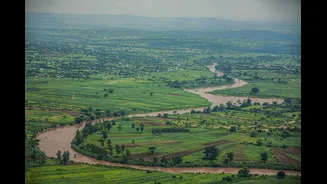
Imagine a forest that breathes with the ocean, a landscape where land and water trade places twice a day. This is the Sundarbans, the world's largest mangrove ecosystem, a realm of stunning biodiversity forged by the mighty rivers and relentless tides.
A Land Forged by Water
Stretching across India and Bangladesh, the Sundarbans is a massive delta formed by the confluence of three great rivers: the Ganges, Brahmaputra, and Meghna. As these rivers empty into the Bay of Bengal, they deposit immense quantities of silt, creating a complex network of tidal waterways, mudflats, and hundreds of islands. This makes the Sundarbans not a static landmass, but a constantly changing mosaic where the boundary between freshwater and saltwater, and land and sea, is always in flux. It is this dynamic interplay of water and sediment that has given rise to the largest contiguous mangrove forest on Earth, a UNESCO World Heritage Site renowned for its exceptional ecological processes.
The Rhythm of the Tides
The defining feature of the Sundarbans is its powerful tidal cycle. Twice daily, the sea surges inland, with water levels rising as much as 18 feet, flooding vast swathes of the forest. These tides don't just move water; they reshape the very land, eroding some banks while depositing silt to form new ones. This constant ebb and flow create a brackish environment where freshwater from the rivers mixes with saltwater from the bay. This saline, waterlogged condition dictates all life here. Only specially adapted vegetation can survive, and the entire ecosystem pulses to this twice-daily rhythm, with mudflats and mangrove roots appearing and disappearing with each tidal shift.
The Kingdom of Mangroves
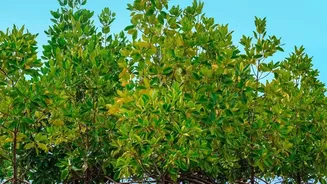
The forest itself is a marvel of adaptation. The name 'Sundarbans' is often linked to the 'Sundari' tree (Heritiera fomes), which once dominated the area. These and other mangrove species have evolved unique traits to thrive in the salty, oxygen-poor mud. Many have pneumatophores, or 'breathing roots', that jut vertically out of the mud to absorb oxygen from the air. This dense, tangled root system helps stabilise the land and acts as a vital natural barrier, absorbing the impact of cyclones and protecting coastal communities. Far from being just a forest, the Sundarbans is a critical nursery for countless aquatic species, supporting the livelihoods of millions.
Home of the Amphibious Tiger
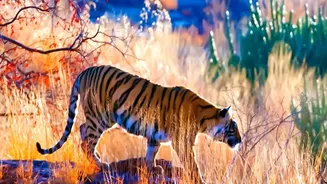
The Sundarbans is famous for its incredible biodiversity, but one resident stands out: the Royal Bengal Tiger. These tigers are unlike any others on Earth. They are powerful swimmers, regularly crossing wide rivers to move between islands in search of prey like spotted deer and wild boar. They have adapted to a life dictated by tides, hunting on muddy flats and developing a leaner build to navigate the dense mangrove thickets. Some researchers have even noted their ability to tolerate brackish water, a unique adaptation for a habitat where freshwater can be scarce. The forest is also a sanctuary for other threatened species, including the estuarine crocodile, Indian python, and various river dolphins.
Life on a Shifting Frontier
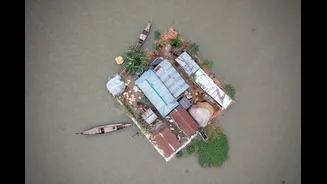
For the millions of people who call the Sundarbans home, life is inextricably linked to the forest and its tides. Fishing, crab collection, and honey gathering are primary livelihoods, but they are fraught with danger. Fishermen and 'mawalis' (honey collectors) must contend with unpredictable tides and the constant risk of encounters with tigers and crocodiles. Many communities practice a syncretic faith, praying to deities like Bonbibi, the guardian of the forest, for protection before entering. Life here is a delicate balance of dependence and danger, a testament to human resilience in one of the world's most challenging environments.
A Fragile and Uncertain Future
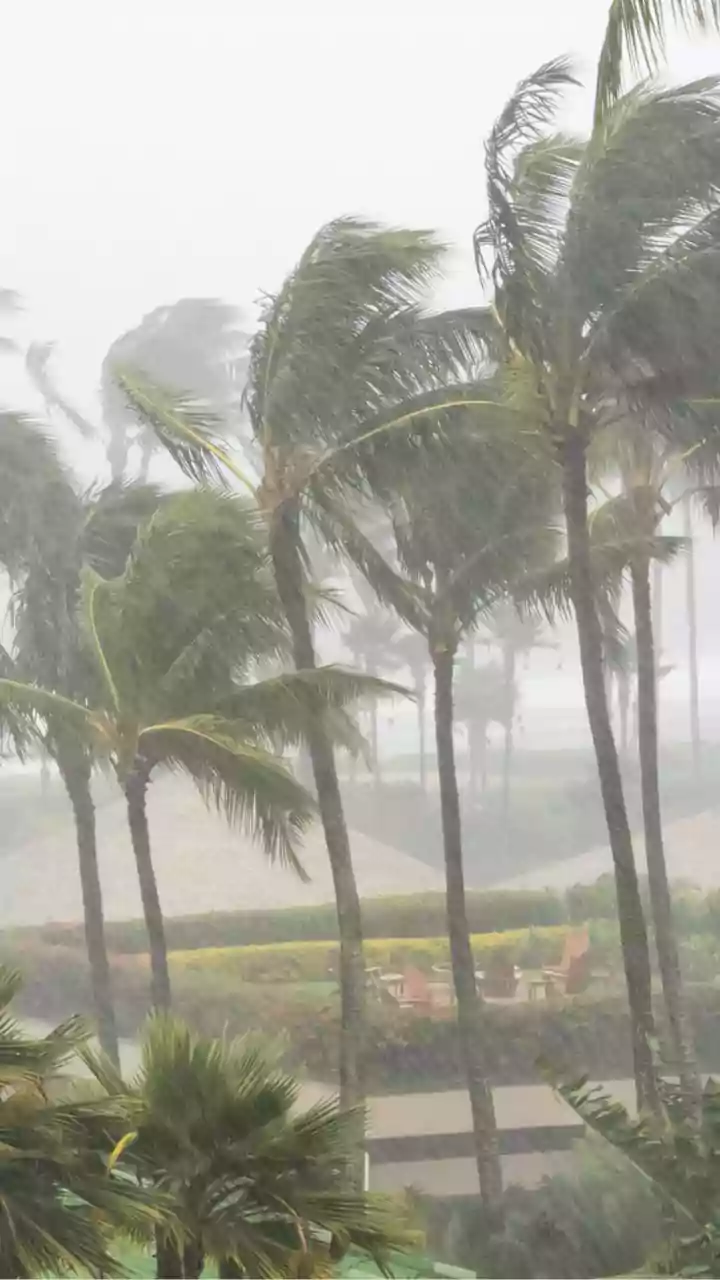
This unique ecosystem faces grave threats. The Sundarbans is on the frontline of climate change, with sea levels in the region rising at more than double the global average. This leads to increased soil and water salinity, threatening both the mangrove trees and the agricultural lands that communities depend on. Land is being lost to erosion, and the increasing frequency and intensity of cyclones pose a catastrophic risk to both wildlife and people. Human-wildlife conflict is intensifying as habitats shrink. The very forces of water that created the Sundarbans are now, accelerated by climate change, threatening its existence.