





Upgrade Shelter and Ventilation
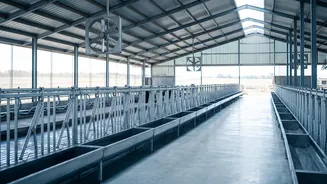
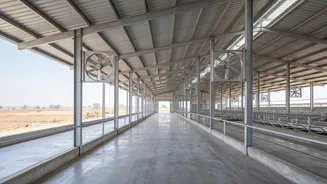
The first line of defence against heat stress is proper shelter. High-yielding crossbred cows are particularly vulnerable to heat. Barns should ideally have an east-west orientation to minimise direct sun exposure. Ensure roofs are high, ideally 14-16
feet, to allow heat to rise and escape. Simple shade structures using agro-nets or even thatched roofs can provide significant relief in loafing areas. Crucially, good ventilation is non-negotiable. Open sidewalls and ridge vents allow for natural airflow, preventing hot, stagnant air from building up inside the shed. For farms that can invest further, creating barriers against hot winds using thatched walls or wet jute bags can offer additional protection.
Implement Smart Cooling Systems
When shade and ventilation aren't enough, active cooling becomes essential. A combination of fans and sprinklers is one of the most effective methods. The strategy is to soak the cows for a short period (2-3 minutes) and then use fans to accelerate evaporative cooling. Running sprinklers continuously is counterproductive as it increases humidity and hinders evaporation. Misting systems can also lower the ambient temperature, but should be used cautiously in very humid regions. The goal is to cool the cow, not just the air. Focusing these systems in key areas like feeding bunks and holding pens before milking can provide the best return on investment.
Adjust Feeding and Nutrition
Heat stress directly impacts a cow's appetite. As animals eat less to reduce their metabolic heat production, their nutrient intake drops, causing milk production to fall. To counter this, farmers should shift feeding schedules to the cooler parts of the day, such as early morning and late evening. Offering feed more frequently in smaller quantities can also encourage consumption. The feed itself should be adjusted. Providing high-quality, easily digestible forages and energy-dense concentrates can help maintain nutrient levels. Supplementing the diet with electrolytes and minerals is also vital to replace what is lost through sweating and panting.
Ensure Unlimited Access to Water
This may seem obvious, but its importance cannot be overstated. A cow's water requirement can increase by 30 to 50 percent during hot weather. A high-yielding cow may need over 100 litres of water daily in peak summer. Ensure that multiple, large water troughs are always available and easily accessible. The water should be clean and, if possible, cool, as warm water can discourage drinking. Regularly cleaning the troughs is essential to prevent bacterial growth and ensure the water remains palatable for the animals.
Consider Heat-Tolerant Breeds
While management changes provide immediate relief, a long-term strategy involves genetics. India's indigenous cattle breeds like the Gir, Sahiwal, and Tharparkar are naturally more resilient to high temperatures and humidity compared to many exotic crossbreds. While their milk yield may traditionally be lower, they are better adapted to the local climate, require fewer interventions, and often have better resistance to local diseases. The Government of India, through initiatives like the Rashtriya Gokul Mission, is actively promoting the development and conservation of these indigenous breeds to build a more climate-resilient dairy sector.
Adopt Modern Milk Cooling
The battle against heat doesn't end once the milk leaves the cow. Milk is typically at 35-37°C when fresh, an ideal temperature for bacterial growth, which accelerates in high ambient temperatures. Delayed or inadequate cooling can lead to souring, reduced quality, and rejection at collection centres, causing direct financial loss. Investing in or gaining access to modern on-farm cooling systems that can quickly bring milk temperature down below 4-5°C is becoming crucial. This preserves the milk's quality, ensures a better price, and reduces waste, securing the farmer's hard-earned income.