

The Old 'Dry Moon' Belief
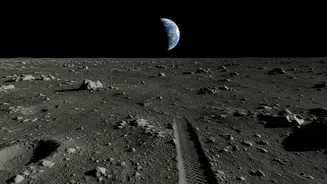
For much of modern history, scientists considered the Moon to be bone-dry. Samples returned by the Apollo missions seemed to confirm this, showing a world baked sterile by billions of years of solar radiation in a vacuum. The prevailing theory was that
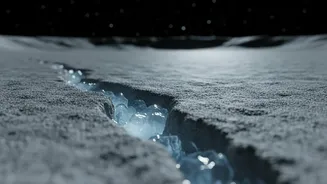
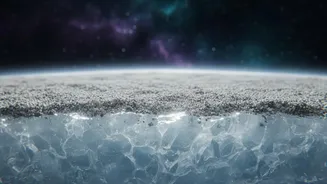
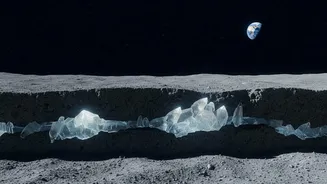
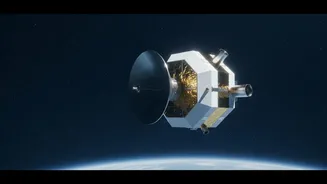
any water would be instantly vaporised and broken down by sunlight, its components lost to space. This view began to soften in recent decades, with orbital missions like India's Chandrayaan-1 and NASA's Lunar Reconnaissance Orbiter detecting hydrogen signatures, a proxy for water. These missions suggested water ice could be hiding in permanently shadowed regions (PSRs) at the poles — deep, frigid craters that never see sunlight. But this water was believed to be locked away in the most inaccessible places on the Moon, making it a tantalizing but difficult-to-reach resource.
A Game-Changer in the Soil
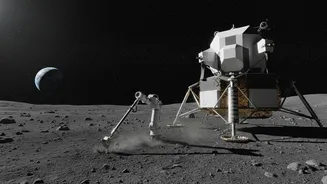
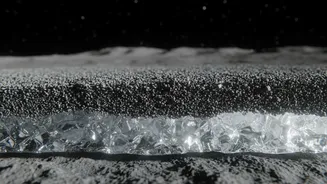
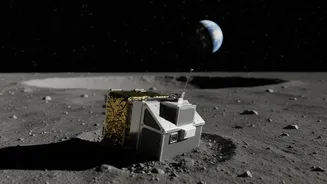
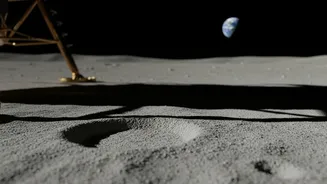
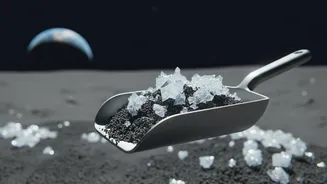
The latest shift in thinking comes not from orbit, but from the ground itself. Recent lander missions, such as China's Chang'e-5, have performed the first-ever on-the-spot analysis of lunar soil composition. Using onboard instruments to measure the spectral reflectance of the regolith (the loose layer of dust and rock), these landers have confirmed the presence of water molecules directly in the soil, even in sunlit areas. While the concentrations are not high — roughly 120 grams of water per tonne of soil in one measurement — the discovery is revolutionary. It proves that water isn't just confined to deep, dark craters. It is present, in small amounts, across more of the lunar surface than previously confirmed.
From Remote Guess to Ground Truth
The key difference is the move from remote sensing to 'in-situ' measurement. Orbital probes could only detect signs of hydrogen from high above, leaving ambiguity about whether it was water (H2O) or its chemical cousin hydroxyl (OH). Instruments like NASA's SOFIA observatory made great strides in confirming H2O from a distance, but a lander can directly analyse the soil it sits on. By drilling into the regolith and heating samples, these advanced probes can identify the specific chemical signatures of water molecules trapped within mineral grains or created by the interaction of the solar wind with the lunar surface. This provides what scientists call 'ground truth,' confirming theories and models with hard, physical evidence from the location itself, eliminating the guesswork.
A More Dynamic, Water-Rich Moon
These findings are changing the scientific model of the Moon from a static, dry body to a more dynamic system. The presence of water in sunlit areas suggests a lunar water cycle, however tenuous. Scientists now believe that water molecules, possibly delivered by micrometeorites or formed by solar wind interacting with lunar minerals, might migrate across the surface, getting trapped in the soil and potentially accumulating in the colder polar regions over billions of years. This implies that water is not just a relic of ancient comet impacts but is part of an ongoing process. The Moon is still incredibly dry compared to Earth — the Sahara has 100 times more water — but it's not the sterile desert we once thought. It's a world with a complex and active hydration system.
Unlocking the Future of Lunar Exploration
The implications for future space exploration are immense. The ability to access water is a critical enabler for long-term human presence on the Moon. Instead of a few isolated pockets of ice in dangerous polar craters, there may be a more widely distributed, accessible resource. This water could be extracted from the soil to provide drinking water and breathable oxygen for astronauts. Even more critically, it can be split into hydrogen and oxygen to create rocket propellant. This would turn the Moon into a refuelling station for deeper space missions, such as journeys to Mars. Knowing water is more widespread makes planning for future robotic and human landing sites much more flexible and could dramatically accelerate the timeline for establishing a sustainable human outpost beyond Earth.