





Understanding the Toll of Sitting
Spending eight hours in a chair does more than just make you tired; it actively changes your body. Prolonged sitting is linked to a host of health issues, including hypertension, musculoskeletal disorders, and even an increased risk of chronic diseases.
When you sit, your hip flexors shorten and tighten, your glute muscles can essentially 'switch off', and your spine compresses, leading to poor posture, lower back pain, and reduced mobility. This sedentary behaviour slows your metabolism and circulation, contributing to fatigue and decreased job satisfaction. Recognizing that our bodies are designed for movement is the first step toward reclaiming your physical health.
Micro-Moves to Make at Your Desk
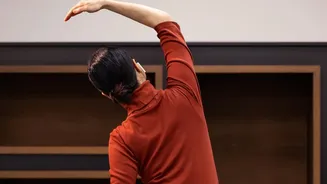
You don't need a gym to start restoring mobility; your office chair can be your starting point. Integrate small movements throughout your day to keep muscles active and prevent stiffness. Set a reminder to move every 30 to 60 minutes. Try simple neck rolls, slowly circling your head to release tension. Perform shoulder shrugs, lifting them to your ears and then rolling them back and down. A seated spinal twist can do wonders; gently rotate your torso to look over one shoulder, using the chair for a light stretch. Even extending your legs and flexing your ankles can improve blood flow. These 'deskercises' take only a few seconds but make a significant difference.
The Power of the Standing Break
One of the most effective strategies is to simply break the cycle of sitting. Aim to stand up and move around at least once every hour. If you have a standing desk, alternate between sitting and standing. If not, create reasons to get up. Walk over to a colleague's desk instead of sending an email, take the stairs instead of the lift, or use phone calls as an opportunity to pace around the office. During these breaks, perform a standing hip flexor stretch by placing one foot behind you and gently pressing your hips forward. Or try a chest opener by clasping your hands behind your back and squeezing your shoulder blades together to counteract a slumped posture.
Targeting Hips and Spine
The hips and thoracic (upper) spine are two of the biggest victims of a desk-bound life. They become tight and immobile, affecting everything from your posture to your ability to walk comfortably. To target this, try the cat-cow stretch, which can be done on your hands and knees at home, or even adapted to a seated position by arching and rounding your spine in your chair. Another powerful movement is the glute bridge. Lie on your back with your knees bent and lift your hips toward the ceiling, squeezing your glutes at the top. This reactivates the glute muscles and stretches the tight hip flexors.
An After-Work Reset Routine
Leaving work doesn't mean your recovery is over. Instead of moving from your office chair to the sofa, dedicate just 10-15 minutes to a post-work mobility routine. This helps to undo the stress of the day and reinforce better movement patterns. A simple routine could include leg swings to loosen the hips, V-sits to target hamstring flexibility, and thoracic rotations to improve spinal mobility. Incorporating a deep squat hold, where you lower yourself as far as you can while keeping your heels on the ground, can stretch the entire posterior chain. Consistency is more important than intensity; a short daily routine is far more effective than a long, infrequent one.