








A Constellation for Cooperation
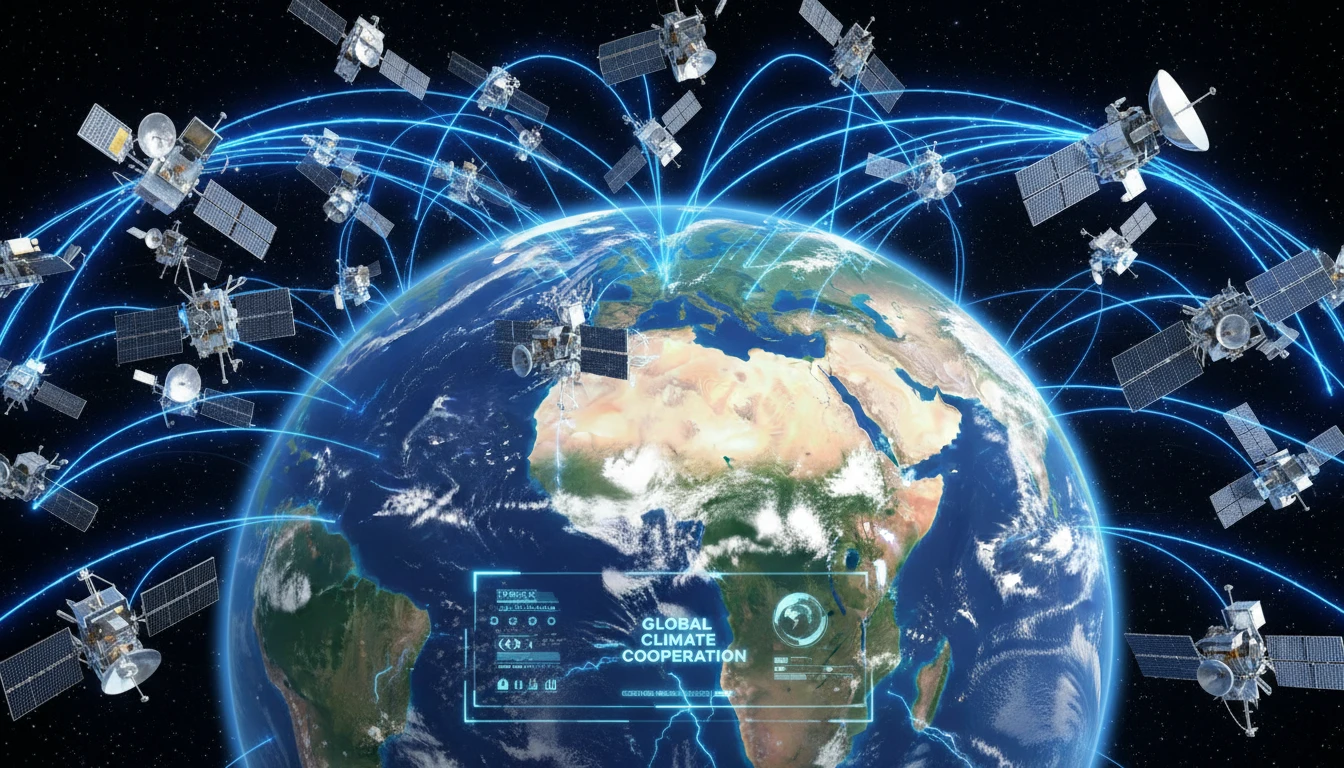
The BRICS nations—Brazil, Russia, India, China, and South Africa, along with newer members like the UAE, Iran and Egypt—have embarked on an ambitious journey into space cooperation. At the heart of this is the BRICS Remote Sensing Satellite Constellation
Agreement. This isn't about launching a single new satellite, but about creating a 'virtual constellation' by sharing data from existing national satellites. The agreement involves pooling information from at least six satellites, including India's Resourcesat-2 and 2A, to create a powerful data-sharing mechanism. This network of 'eyes in the sky' is designed to provide more comprehensive and timely data to all member countries, fostering a collective approach to global challenges.
Eyes on Earth's Biggest Problems
The primary goal of this satellite data-sharing mechanism is to tackle some of the most pressing issues of our time: climate change, disaster management, and environmental protection. By combining their remote sensing capabilities, BRICS nations can achieve more effective monitoring of everything from floods and droughts to deforestation and agricultural trends. For countries like India, which face recurring threats from cyclones, floods, and other natural calamities, access to a wider pool of satellite imagery can be transformative. It allows for better early warning systems, more accurate damage assessment, and more efficient deployment of relief efforts. The shared data will support public policies based on scientific evidence, helping governments take proactive measures.
India's Pivotal Role and Strategic Vision
India, through the Indian Space Research Organisation (ISRO), has been a key driver of this initiative. During its BRICS Chairship, India has actively pushed for deeper collaboration, proposing the concept of a “BRICS Space Economy” to foster joint innovation and inclusive growth. This vision extends beyond data sharing to include co-development of space technologies and building a shared ecosystem for startups and private industry. For India, the benefits are twofold. It strengthens the country's leadership role in the Global South while simultaneously enhancing its own domestic capabilities in disaster management, agriculture, and water resource monitoring by gaining access to data from partner satellites.
Sustainability in Space and on Earth
A crucial aspect of the recent BRICS space agency meetings is the emphasis on space sustainability. As more satellites are launched, the problems of orbital congestion and space debris become more acute. These discussions focus on developing debris-free missions and establishing responsible practices for space operations to ensure that outer space remains usable for future generations. This commitment to cleaning up their celestial neighbourhood is a vital step, reflecting a mature understanding that a sustainable space environment is necessary for providing the very Earth-observation data needed to promote sustainability on our planet.
Geopolitical Currents and Future Challenges
The BRICS space collaboration is not happening in a vacuum. It represents a significant step in South-South cooperation and provides a potential alternative to Western-dominated space infrastructure. By pooling their varied but complementary capabilities—from Russia's launch experience to India's cost-effective missions and China's advanced programs—the bloc aims for greater strategic autonomy. However, challenges remain. Geopolitical tensions between members, such as India and China, along with differing technical standards and regulations, could slow progress. Building trust and establishing clear protocols for data sharing and intellectual property will be critical for the long-term success of this ambitious venture. The potential establishment of a BRICS Space Council is seen as a way to create a more structured governance mechanism for these complex projects.