



The Problem With High-Heat Searing
Achieving a deep, flavourful crust on meat, paneer, or vegetables requires very high heat. The challenge lies in the cooking fat. Many common oils have a low smoke point, the temperature at which they begin to break down and burn. When an oil passes its
smoke point, it not only fills your kitchen with smoke but also undergoes chemical changes like oxidation and polymerization. These processes can create harmful compounds and, just as importantly for any food lover, introduce a bitter, rancid taste to your dish, ruining that perfect sear. Butter, while delicious, is a prime offender; its milk solids burn quickly at around 175°C, well below ideal searing temperatures.
Ghee's High-Heat Superiority
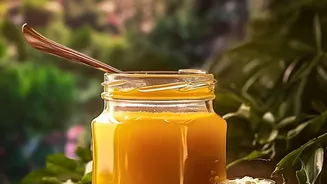
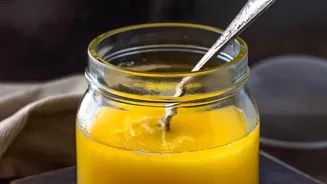
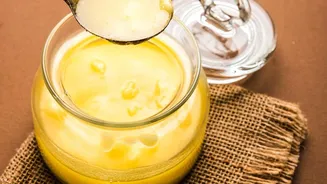
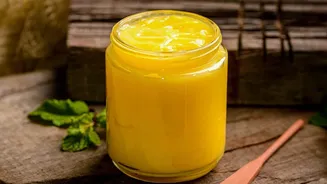
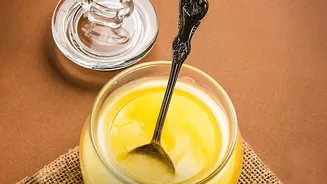
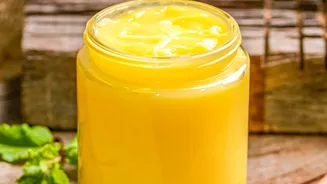
This is where ghee provides a clear advantage. Ghee is a form of clarified butter, where milk solids and water have been removed, leaving behind pure butterfat. This simple process dramatically increases its smoke point to around 250°C (482°F), significantly higher than butter and most common cooking oils. This means you can get your pan screaming hot for a perfect sear without the fat breaking down. Ghee is more chemically stable under heat, particularly compared to polyunsaturated vegetable oils, which can degrade and produce off-flavours even before they visibly smoke. The result is a cleaner, more stable cooking process and a better-tasting final product.
An Infusion of Flavour
While ghee’s high smoke point is the technical reason for its resurgence, the “infused” aspect is what truly excites the modern home cook. The process of gently heating ghee provides the perfect opportunity to steep it with aromatics. Herbs and spices not only impart their flavour to the fat but the ghee itself acts as a perfect carrier, delivering those notes deep into the food. Popular infusions include smashing whole garlic cloves and adding hardy herbs like rosemary and thyme, or creating a traditional Indian tadka with cumin seeds, mustard seeds, and turmeric. This two-in-one approach allows cooks to season their food from the very first step, building layers of complexity that a neutral oil simply cannot match.
How to Make Simple Infused Ghee
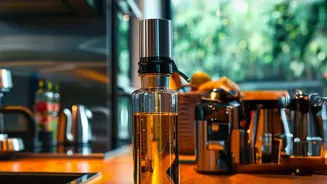
Making infused ghee at home is surprisingly straightforward. Start with a block of unsalted butter (or pre-made ghee if you're short on time). Place the butter in a heavy-bottomed saucepan over medium-low heat. Let it melt and come to a simmer; it will foam up as the water evaporates. After about 10-15 minutes, the milk solids will drop to the bottom and begin to brown, and the liquid will become a clear, golden colour. This is ghee. To infuse it, turn the heat to its lowest setting. Add your chosen aromatics—think smashed garlic cloves, sprigs of rosemary or thyme, or whole spices like cardamom pods and cinnamon sticks. Let them steep gently in the warm ghee for about 15-20 minutes, being careful not to let them fry or burn. The goal is a gentle infusion. Once fragrant, remove from the heat, let it cool slightly, and then strain the infused ghee through a fine-mesh sieve or cheesecloth into a clean glass jar. It will solidify at room temperature and can be stored in a cupboard for several weeks.
Putting It to Use
Using your infused ghee is simple: treat it like any other cooking oil. For searing, add a generous spoonful to a very hot pan. Wait for it to shimmer, then add your protein or vegetables. Its stability at high temperatures will help you achieve a beautiful, even crust without the risk of burning. The nutty flavour of the ghee itself, combined with your chosen infusion, creates a rich base that elevates everything from a simple steak to a block of paneer. Beyond searing, it’s a flavourful fat for roasting vegetables, frying eggs, or even just spreading on toast for an aromatic treat. It's a versatile, modern return to a traditional ingredient that brings both scientific advantages and culinary creativity to the urban kitchen.