







The Promise: Your 24/7 Travel Brainstormer
Let's start with the appeal. AI trip planners are like having a super-fast research assistant who works for free. Instead of drowning in dozens of browser tabs, you can ask a chatbot to draft a week-long itinerary for a backpacking trip, find budget-friendly
stays, or list hidden gems that tourists often miss. These tools are fantastic for the initial brainstorming phase. You can ask complex questions like, "Find me a five-day trip from Delhi under ₹20,000 that includes hiking and local food experiences." The AI can process vast amounts of data to generate a structured plan in seconds, saving you hours of manual work.
The Pitfalls: Hallucinations and Unreliable Details
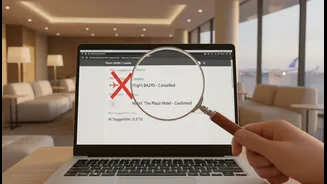
Here’s where things get risky. AI tools are notorious for what experts call "hallucinations"—inventing facts with confidence. An AI might recommend a fantastic restaurant that permanently closed two years ago, suggest a train route that doesn’t exist, or create an itinerary with impossibly tight transit times. One study found that a staggering 90% of AI-generated itineraries contained at least one error. These tools often lack real-time information on pricing, opening hours, or availability. They also can't grasp local context, like seasonal closures, cultural nuances, or safety concerns that a human would naturally consider. Relying on AI without verification can lead to disappointment or even put you in a bind.
The Budgeting Trap: AI's Optimistic Pricing
For students, budget is everything. While you can ask an AI to plan a trip around a specific budget, you should treat its estimates with caution. AI planners often underestimate the costs of major experiences and may not account for hidden fees or the most current pricing. What looks like a perfect, affordable trip on screen can quickly become more expensive in reality. For example, an AI might suggest an activity cost based on outdated information, leaving you short when you arrive. It's a useful starting point for a budget, but it is not a guaranteed final price.
The Smart Strategy: Use AI as a Co-Pilot, Not the Pilot
So, what's the verdict? Don't discard AI, but don't blindly trust it either. The smartest approach is a hybrid one. Use AI as your creative co-pilot to generate ideas, discover possibilities, and create a draft itinerary. But before you book anything, become the pilot. Your job is to verify every single detail. Double-check hotel addresses, confirm museum opening times on their official websites, and read recent human reviews for restaurants. Use the AI for discovery, but rely on trusted booking platforms and primary sources for confirmation. This method combines the efficiency of technology with the irreplaceable value of human judgment.