






From the Glaciers of Gangotri
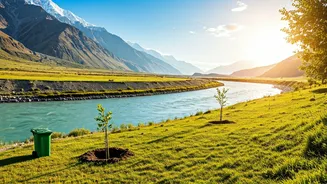
The journey begins at Gangotri, a high-altitude temple town nestled in the Garhwal Himalayas. Here, the river, known as Bhagirathi, is born from glacial melt. Its water is clear, cold, and revered for its purity. For centuries, this purity was a spiritual
concept. Now, it serves as a scientific benchmark and a poignant reminder of what has been lost downstream. The upper reaches of the Ganga, relatively untouched by industrialisation, represent a vision of the river in its ideal state. This pristine beginning inspires a deep sense of reverence, but also a responsibility. It sets the standard against which the rest of the river’s journey is measured, framing the conservation effort not just as a clean-up but as an attempt to restore the river’s inherent sanctity.
The Challenge of the Plains
As the Ganga descends into the plains, its character changes dramatically. Flowing through some of India’s most densely populated regions—cities like Kanpur, Prayagraj, and Varanasi—it absorbs the pressures of modern life. The challenges are immense. Untreated sewage from burgeoning cities, industrial effluents from tanneries and factories, and agricultural runoff laden with pesticides all find their way into the river. For decades, the narrative here was one of neglect and decay. The river that gives life to millions was itself dying. This stretch of the Ganga, from Uttarakhand through Uttar Pradesh, Bihar, and West Bengal, is where the battle for its future is being fought most intensely.
A New Current of Action
But the journey along the Ganga today is not just a tour of environmental problems; it is a showcase of emerging solutions. The flagship Namami Gange Programme, an integrated conservation mission, represents a systemic shift in approach. The focus has moved from piecemeal efforts to a holistic strategy encompassing wastewater management, riverfront development, and public awareness. Along the route, new sewage treatment plants (STPs) are becoming operational, preventing millions of litres of raw sewage from entering the river daily. Ghats are being cleaned and modernised, not just for pilgrims but for the entire community, transforming them into vibrant public spaces. This top-down effort provides the critical infrastructure needed for change.
The Guardians of the Ganga
Perhaps the most inspiring change is happening at the grassroots level. The concept of “environmental mindfulness” is most visible in the people who live along the river’s banks. The government has trained and deployed thousands of volunteers known as ‘Ganga Praharis’ (Guardians of the Ganga). These are local community members—fishermen, farmers, students—who act as the eyes and ears of the conservation effort. They monitor for pollution, lead clean-up drives, and educate their communities about sustainable practices. In Varanasi, boatmen have become advocates for a cleaner river, urging tourists not to dispose of plastics. In rural areas, farmers are being encouraged to adopt organic farming to reduce chemical runoff. This groundswell of public participation is turning conservation from a government project into a people’s movement.
The Final Stretch to Gangasagar
The river’s long journey ends at Gangasagar, where it flows into the Bay of Bengal. This confluence is a site of immense spiritual significance, but it also highlights final ecological challenges, including siltation and the impact of climate change on the delicate Sundarbans delta. Yet, arriving here after witnessing the efforts upstream fosters a sense of cautious optimism. The journey from Gangotri to Gangasagar is no longer just a map of pollution. It is a map of hope, dotted with STPs, committed volunteers, and a renewed cultural commitment to the river. The Ganga’s flow is now intertwined with a flow of consciousness—a collective realisation that the health of the river is inseparable from the health of the nation.