


Let an App Be Your Guide
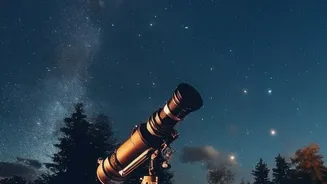
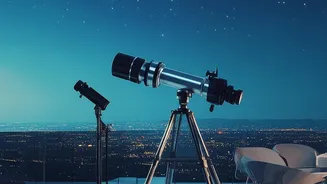
The single most powerful tool for any aspiring night photographer is a stargazing app on their smartphone. Modern apps use your phone's location and compass to show you a real-time map of the sky. Simply point your phone at the horizon, and the app will
identify stars, constellations, planets, and satellites. Popular and highly-rated options like SkyView, Star Walk 2, and Stellarium Mobile can tell you exactly when and where your target will rise and set. Many, like PhotoPills, are specifically designed for photographers, helping you plan shots with precision by calculating the position of the Moon or Milky Way for any future date and time. Getting familiar with one of these apps is the easiest first step to demystifying the night sky.
Learn the Celestial ‘Highway’
Planets don't just appear randomly; they follow a predictable path across the sky called the ecliptic. This is the same path the Sun and Moon travel along. During the day, take note of the Sun's arc from east to west. At night, the planets will be found somewhere along that same imaginary line. This is a crucial clue. If you see a very bright object far from this path, it's almost certainly a star. Knowing about the ecliptic helps you narrow your search area and focus your attention on the right part of the sky, saving you from scanning aimlessly for your planetary subject.
Distinguishing Planets from Stars
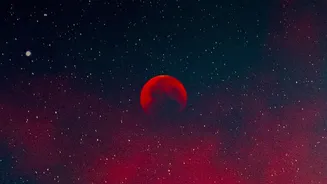
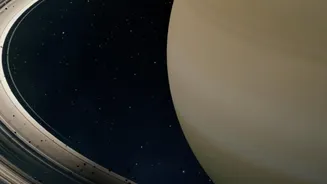
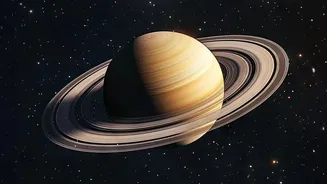
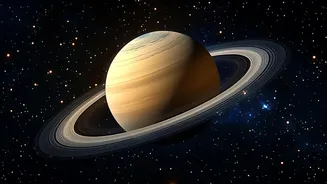
At a glance, bright planets can look like stars. The key difference is that stars twinkle, while planets shine with a steadier light. This twinkling effect, known as scintillation, is caused by Earth's atmosphere distorting the point-like light of distant stars. Because planets are much closer and appear as tiny discs rather than points, their light is less affected by atmospheric turbulence. Additionally, planets are often brighter than surrounding stars. Venus and Jupiter, in particular, can be incredibly luminous. Some planets also have a distinct color: Mars often has a reddish hue, while Saturn may appear pale gold.
Work With the Moon, Not Against It
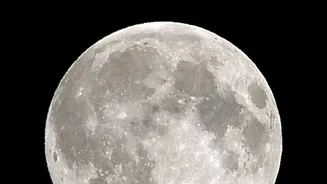
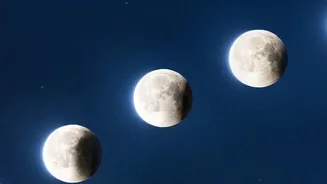
The Moon's phase is a critical factor in any night sky photoshoot. A full moon is so bright it can wash out the sky, making it difficult to photograph fainter stars or even planets. For capturing the Milky Way or faint objects, the days around a new moon (when the moon is not visible) provide the darkest skies. However, moonlight isn't always the enemy. A crescent or quarter moon can act as a giant, natural softbox, beautifully illuminating your landscape foreground without completely overpowering the stars. The most important details to check are the moonrise and moonset times. A bright moon that sets early in the evening can leave you with hours of dark sky to shoot in later.
Know Your Planetary Targets
Five planets are regularly visible to the naked eye: Mercury, Venus, Mars, Jupiter, and Saturn. Venus is often called the 'Morning Star' or 'Evening Star' because it's incredibly bright and appears close to sunrise or sunset. Jupiter is also exceptionally bright. Mars is recognizable by its distinct reddish color. Saturn is a bit fainter but still shines with a steady, often golden light. Mercury is the trickiest to spot, as it's always close to the Sun and only visible for a short time in the twilight. Use your sky app to confirm which of these 'wanderers' are currently visible in your night sky and what time they'll be at their highest point.