

The Sodium Advantage
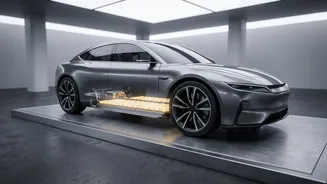
At the heart of an electric vehicle's high cost is its lithium-ion battery. The key materials—lithium, cobalt, and nickel—are not only expensive but also geographically concentrated, creating supply chain risks. India, for instance, imports the vast majority
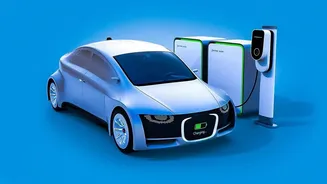
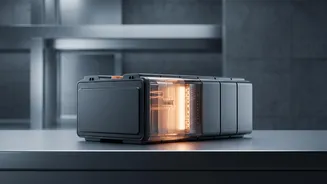
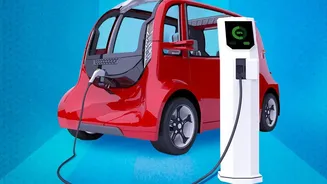
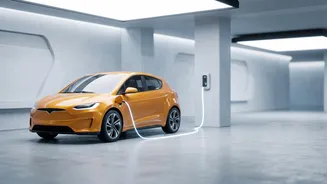
of its lithium. Sodium-ion batteries offer a powerful alternative. The core ingredient, sodium, is one of the most abundant elements on Earth and is widely available in India. This simple fact dramatically changes the economic equation. Projections suggest that sodium-ion batteries could be 25-40% cheaper to produce at scale compared to their lithium-ion counterparts. This cost reduction directly attacks the single most expensive component of an EV, potentially paving the way for more affordable models on Indian roads.
Breaking the Geopolitical Chain
India's heavy reliance on imported lithium and other battery materials creates significant economic and strategic vulnerabilities. Most of the world's lithium processing is controlled by a handful of countries, making the supply chain susceptible to price volatility and geopolitical tensions. By shifting focus to sodium-ion technology, India can leverage its domestic resources to build a self-reliant energy storage ecosystem. This aligns perfectly with the 'Aatmanirbhar Bharat' (Self-Reliant India) mission. Developing a local value chain, from raw material processing to cell manufacturing, would not only bolster energy security but also create a massive industrial opportunity. Remarkably, existing lithium-ion battery production lines can be adapted to manufacture sodium-ion cells with limited retrofitting, smoothing the transition for manufacturers.
India's Homegrown Push
The race to commercialise sodium-ion technology is well underway in India. Major corporations and nimble startups are making significant strides. Reliance Industries, through its acquisition of UK-based Faradion, is planning to establish a giga-scale manufacturing plant in India, with production potentially starting as early as 2026. Pune-based software major KPIT Technologies has also developed its own sodium-ion technology, which it has transferred to Trentar Energy Solutions for commercialisation. Meanwhile, startups like Indi Energy are innovating with unique approaches, such as creating hard carbon for the battery's anode from agricultural waste—a move that could help address the crop stubble burning issue in North India. Government bodies are also providing support, with recent advancements reaching a high Technology Readiness Level (TRL), indicating that commercial production could be just two to three years away.
Performance, Safety, and the Road Ahead
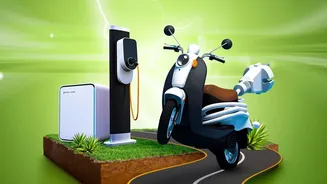
While the cost and supply chain benefits are clear, sodium-ion batteries do have trade-offs. Their primary challenge has been lower energy density compared to lithium-ion cells, meaning they store less energy for the same weight. This could translate to a shorter range for EVs. However, this technology is rapidly evolving. Recent breakthroughs by Indian scientists have demonstrated ultra-fast charging capabilities—charging to 80% in just six minutes—and impressive lifespans of over 3,000 charge cycles. Furthermore, sodium-ion batteries are inherently safer, with a lower risk of thermal runaway and fire. They also perform better in a wider range of temperatures, a crucial advantage for the diverse Indian climate. For many use cases, especially in two-wheelers, three-wheelers, and city-centric compact cars, the current energy density is already becoming viable.