


What Does 'Root-Bound' Mean?
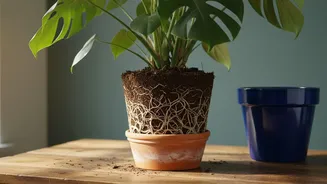
A plant becomes root-bound, or pot-bound, when its root system has expanded to fill the entire container. With nowhere left to go, the roots start growing in tight circles, pressing against the pot's inner walls. It’s a natural result of a healthy, growing plant eventually
outgrowing its space. While it sounds alarming, think of it as a sign of success. Your plant has been thriving, and now it’s simply ready for a bigger home. However, if left unchecked, this dense mass of roots can eventually restrict the plant's ability to absorb water and nutrients, leading to stress and stalled growth.
The Thirsty Paradox Explained
It’s logical to think that a pot full of roots would hold onto water, but the opposite is true. As roots multiply and circle, they displace the soil. Potting mix is what actually holds moisture for the plant to drink over time. With less soil, the pot's water-holding capacity is significantly reduced. Furthermore, the compacted root mass can become so dense that water runs straight through the pot and out the drainage holes without ever soaking into the core of the root ball. This leaves the center dry and the plant thirsty, even if you just watered it. The symptoms often mimic those of an under-watered plant, causing confusion for many plant parents.
Key Signs Your Plant Needs Repotting
Your plant will give you several clues when its roots are getting cramped. One of the most obvious signs is seeing roots physically escaping the pot, either poking through the drainage holes at the bottom or circling on the soil's surface. You might also notice that the plant's growth has slowed down or stopped entirely, with new leaves appearing smaller than previous ones. Other symptoms include leaves turning yellow or brown, wilting quickly between waterings, and the plant itself looking generally unhappy despite regular care. In severe cases, the pressure from the dense root ball can even cause plastic pots to bulge or crack.
How to Confirm and Fix the Problem
To know for sure if your plant is root-bound, you need to see the roots. Gently tip the plant on its side and try to slide it out of its pot. If it’s stuck, you can squeeze the sides of a flexible pot or run a knife around the edge of a rigid one to loosen it. If you see a dense mat of roots with very little soil, your suspicion is confirmed. The solution is to repot it into a container that is about one to two inches larger in diameter. Before placing it in the new pot with fresh potting mix, gently loosen the tangled root ball with your fingers. If the roots are extremely compacted, you can make a few shallow vertical cuts on the sides of the root mass with a clean knife to encourage new outward growth.
Choosing Your New Pot and Soil
When repotting, select a new container that is only slightly larger than the old one. Moving a plant into a pot that is too large can lead to problems with overwatering, as the excess soil stays wet for too long and can cause root rot. Ensure the new pot has adequate drainage holes. It’s also the perfect time to give your plant a fresh start with new potting medium. Use a high-quality soilless potting mix designed for indoor plants, which typically contains ingredients like peat moss, perlite, and vermiculite to ensure good drainage and aeration. Avoid using garden soil, which is too dense for containers and can introduce pests.