
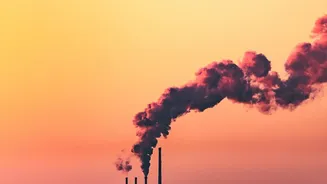
As smog blankets many Indian cities, parents face a tough daily choice: send children out with masks or keep them inside. Understanding the real risks and benefits of each option is key to making the best decision for your child's health.
Why Children Are More Vulnerable
When air quality
plummets, children are uniquely at risk. Their lungs are still developing, and they breathe more air relative to their body weight than adults. This means they take in a higher concentration of pollutants like PM2.5 — fine particulate matter small enough to penetrate deep into the respiratory system and even enter the bloodstream. This exposure can lead to reduced lung growth, an increased risk of asthma and other respiratory infections, and long-term health consequences. Because of this heightened vulnerability, the decision to play outside on a polluted day carries more weight for children.
The Case for Masks: A First Line of Defence
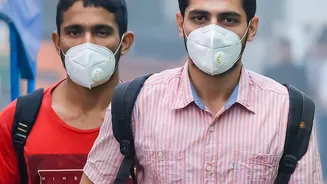
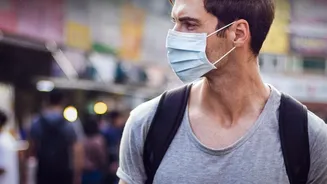
A good quality, well-fitting mask can be an effective tool. Doctors recommend using certified N95, KN95, or FFP2 respirators, as these are designed to filter at least 95% of harmful PM2.5 particles. Cloth and standard surgical masks are largely ineffective against these tiny pollutants because they don't provide an adequate seal around the face. For a mask to work, fit is just as crucial as filtration. Parents should look for child-sized versions that create a secure seal over the nose and mouth without gaps. However, masks are not a complete solution. They do not filter out harmful gases and should be seen as a supplementary measure, not a free pass for prolonged outdoor exposure on severely polluted days.
When to Choose Masks: A Practical Guide
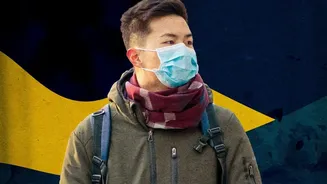
Masks are most useful when outdoor exposure is unavoidable, such as during the commute to school or for short-duration activities. However, their use requires careful consideration, especially for younger children. Experts advise that children under the age of two should never wear masks due to the risk of suffocation. For children aged two to five, masks should only be used for short periods under close adult supervision. If a child has a pre-existing condition like asthma, it's best to consult a doctor, as some children may find a tight-fitting mask makes breathing more difficult. It is also critical that a child can comfortably tolerate the mask; if they show signs of distress or breathing difficulty, the mask should be removed immediately.
The Hidden Cost of Staying Indoors
While keeping children inside offers the most certain protection from outdoor pollutants, it comes with its own set of significant drawbacks. Outdoor play is not just a luxury; it is essential for healthy development. It is crucial for physical health, building strong muscles and bones, and helps prevent obesity. Exposure to sunlight provides necessary Vitamin D. Furthermore, unstructured outdoor play stimulates creativity, problem-solving skills, and social-emotional growth by teaching children to negotiate, collaborate, and build resilience. Consistently limiting outdoor time can negatively impact a child's mental well being, attention span, and overall development.
A Balanced Strategy: An AQI Based Approach
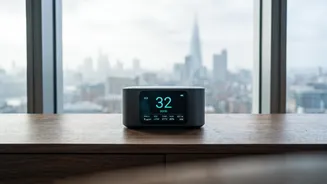
The best approach isn't a rigid 'either or' rule but a flexible strategy based on the daily Air Quality Index (AQI). Checking your local AQI should become a daily habit. Here is a general framework many health experts advise:
- AQI 0 - 100 (Good to Moderate): Outdoor play is generally safe for most children.
- AQI 101 - 150 (Unhealthy for Sensitive Groups): Children with asthma or other sensitivities should limit strenuous outdoor exertion. For others, shorter outdoor periods with a well fitting mask are a reasonable compromise.
- AQI 151 - 200 (Unhealthy): It's best to move all play indoors. If a child must be outside, it should be for a very short duration, and a certified mask is essential.
- AQI 201+ (Very Unhealthy to Hazardous): All children should remain indoors. At these levels, even masks cannot make the air safe for their developing lungs.