




The Rise of the Robotic Scientist
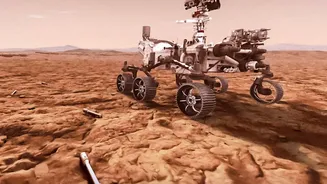
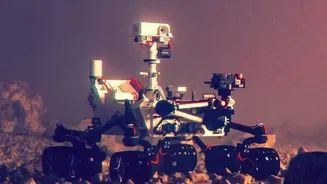
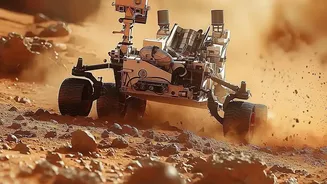
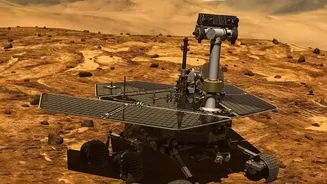
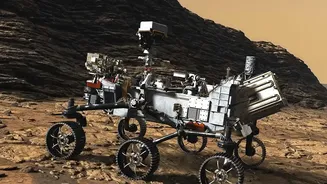
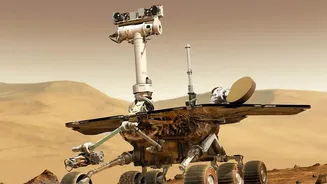
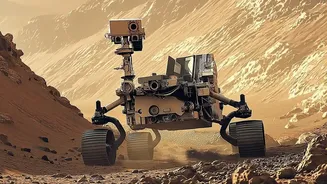
For decades, robots have been our proxies on the Red Planet, from the first wheeled Sojourner to the sophisticated science labs of Curiosity and Perseverance. These rovers are no longer just remote-controlled vehicles; they are becoming true autonomous
scientists. Armed with artificial intelligence, systems like AEGIS and PIXL can identify scientifically interesting rock targets, zap them with lasers for chemical analysis, and decide what data is most valuable to send back to Earth, all without direct commands. This level of autonomy is crucial, not just for overcoming the communication delays between Earth and Mars, but for increasing the sheer volume and efficiency of scientific discovery. Rovers like Perseverance have used AI-driven navigation to cover more ground and manage their own schedules, significantly reducing idle time and maximising energy for science. This growing intelligence makes robots a powerful and cost-effective tool for planetary exploration.
The Irreplaceable Human Element
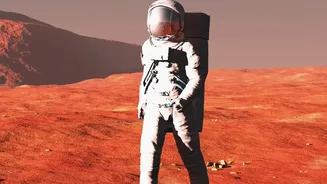
Despite the impressive capabilities of their robotic counterparts, proponents of human missions argue that nothing can replace an astronaut's intuition and adaptability. A human geologist can survey a landscape, integrate countless data points intuitively, and make on-the-spot decisions that are still beyond the reach of AI. Experts argue a human explorer could accomplish in a week what a rover might take a year to do. Humans can fix complex problems, navigate treacherous terrain impassable to a wheeled rover, and possess a creativity in investigation that machines currently lack. The primary scientific goal for a human mission, as outlined by a recent National Academies report, is the search for life. Finding and interpreting potential fossilised microbes may require a person on the ground, capable of breaking open countless rocks and understanding the nuanced geological context in a way no robot can.
Cost, Risk, and Return
The single greatest barrier to sending humans to Mars is the staggering cost and risk. Estimates for a crewed mission range from tens of billions to potentially half a trillion dollars, dwarfing the budgets for even the most complex robotic missions. The challenges are immense: developing precision landing systems for heavy payloads, protecting astronauts from years of cosmic radiation, mitigating the physiological effects of microgravity like bone and muscle loss, and ensuring life support systems work flawlessly for a mission with no quick abort option. Robotic missions, while not cheap, are orders of magnitude less expensive and carry no risk to human life. They can be sent on one-way trips to a wider range of hazardous locations, pushing the boundaries of where we can explore without endangering astronauts.
A Future of Collaboration
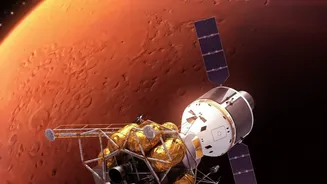
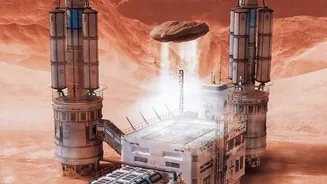
The debate is increasingly shifting from 'versus' to 'and'. The future of Mars exploration is unlikely to be an either/or choice but rather a sophisticated partnership between humans and robots. Autonomous systems will act as vanguards, scouting dangerous locations, constructing habitats, and performing routine maintenance before humans even arrive. A recent German space agency project, VaMEx, is exploring how a 'swarm' of different robots could work together to map and explore complex terrain, preparing the way for human scientists. Astronauts in orbit around Mars could control rovers on the surface in real-time, eliminating the long communication delays with Earth and combining human intuition with robotic resilience. This collaborative model leverages the strengths of both approaches, making exploration safer, more efficient, and more ambitious.