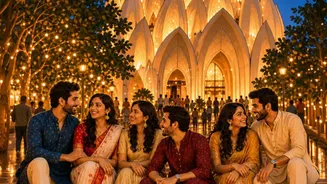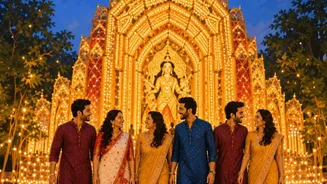





The festive season in India arrives with a familiar soundtrack: shimmering lights, joyous music, and the inevitable, 'So, when are you getting married?'. But for many singles, the response to that question is quietly, yet firmly, changing.
The Weight of Festive Expectations
For decades,
festivals like Diwali, Durga Puja, and the year-end wedding season have amplified the social expectation to be coupled. Being single during these family-centric occasions can often feel like a deviation from the norm. Well-meaning relatives and the curated perfection of couple-centric posts on social media can create a potent mix of loneliness and self-consciousness. A recent survey highlighted that for many divorced or widowed individuals, the festive season makes their single status feel more pronounced than ever, triggering a sense of comparison and the feeling that their life has stalled while others move ahead. This pressure isn't just external; it can lead to internal doubt, with many singles questioning if they genuinely desire a partner or are just reacting to a fear of missing out.
A Deliberate Shift in Priorities
Despite the pressure, a significant shift is underway. Many Indian singles are now consciously choosing to slow down and approach relationships with more intention, especially during the festive rush. A key driver of this change is the re-evaluation of life priorities. Increasing financial independence, particularly among women, along with a greater focus on career growth and personal well-being, means marriage is no longer seen as a compulsory milestone of adulthood. It is becoming one of several life choices, entered into with more maturity and deliberation. This generation is placing a higher value on genuine compatibility, emotional stability, and consent over the spectacle and social prestige of a wedding.
From FOMO to JOMO
The Fear of Missing Out (FOMO) that spikes during festivals is being consciously replaced by the Joy of Missing Out (JOMO). Singles are becoming more adept at recognizing temporary, festival-induced loneliness and are refusing to let it dictate their dating choices. Recent survey data shows that a significant portion of young daters would rather remain single than settle for a partner who doesn't meet their standards, even if it means navigating the 'October loneliness' alone. Rather than rushing into a connection to have a 'plus-one' for a party, many are intentionally delaying commitments, protecting potential relationships from the overwhelming pressure of a festive-season public debut. This cautious approach stems from a desire to build something meaningful, not just fill a temporary void.
Redefining Celebration on Their Own Terms
This newfound confidence is leading singles to rewrite the rules of celebration. Instead of enduring traditional events alone, many are creating new, personally meaningful rituals. This can look like hosting a 'Friendsgiving' or a game night, turning the holiday into a celebration of chosen family. Some are even cheekily bringing a friend as a festive plus-one to avoid the endless questions about their relationship status. The focus is shifting from what's missing to what's present: strong friendships, personal growth, and the peace that comes from living authentically. They are moving away from a one-size-fits-all model of festivity, creating experiences that are cozy, chaotic, or even completely solitary—and finding immense power in that choice.
The Thoughtful Approach to Connection
This trend isn't about rejecting relationships, but about redefining the path to them. For many, festivals are now seen as a crucial compatibility test. An indifference to shared traditions or values can be a dealbreaker for young daters, who see these moments as a way to gauge emotional connection beyond surface-level attraction. Even how a potential partner behaves at a marathon of family gatherings has become a modern stress test. Ultimately, the shift reflects a broader societal change where individual choice is gaining ground over collective expectation. The modern Indian single is not anti-relationship; they are pro-compatibility, prioritising a partnership between equals that is sustained by dignity and mutual trust over one born of festive pressure.