




A Style Rich in History
Before you start twisting, it is worth knowing the heritage behind this look. Bantu knots, sometimes called Zulu knots, are not a new trend but a traditional African hairstyle with deep cultural roots. The name originates from the Bantu peoples, a term
describing hundreds of ethnic groups across southern and central Africa. For centuries, these knots have been worn as a protective style to keep hair healthy and as a symbol of identity. Today, they remain a proud expression of cultural heritage and a brilliant, practical way to style hair. The technique serves two purposes: you can wear the knots as a chic, sculptural style, or you can take them down to reveal a cascade of curls, known as a 'Bantu knot-out'.
The Benefits of Going Heat-Free
The main appeal of a Bantu knot-out is achieving voluminous curls without touching a curling iron. This makes it a fantastic protective style, as it shields the ends of your hair from potential breakage and environmental damage. By avoiding heat, you help maintain your hair's natural moisture and strength. The style is also wonderfully low-maintenance; once the knots are in, they can last for several days with minimal upkeep, making them perfect for busy schedules. It is a versatile technique that works on various hair types and lengths, from short to long, and from naturally straight to coily. Plus, it is a two-in-one style, giving you a striking look with the knots and a completely different vibe with the resulting curls.
Your Step-by-Step Guide
Ready to try it? The process is straightforward. Start with clean, detangled, and moisturised hair. Some prefer to work with completely dry, stretched hair, while others find slightly damp hair easier to manage. Section your hair using a comb for clean parts; the size of your sections determines the final curl. Smaller sections (around one inch) will give you tighter, more defined curls, while larger sections create looser, softer waves. Working one section at a time, apply a light styling cream or pomade for hold. Twist the entire section of hair tightly from the root to the end, like turning a doorknob, until it forms a rope. Then, wrap this twisted rope around its own base, creating a small, tight bun or 'knot' against your scalp. Tuck the end of the hair underneath the knot to secure it. A bobby pin or a small elastic band can be used for extra hold if needed.
The Grand Finale: The Knot-Out
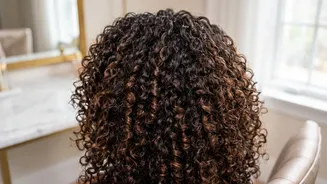
Patience is crucial for a successful knot-out. You must allow your hair to dry and set completely. Most people leave the knots in overnight, wrapped in a silk or satin scarf to protect them and minimise frizz. When you are certain your hair is 100% dry, it is time for the reveal. To prevent frizz, lightly coat your fingertips with a hair oil or serum before you begin. Carefully and gently unwind each knot in the opposite direction you twisted it. Do not pull or rush the process. Once all the knots are undone, you will be left with coiled sections of hair. Use your fingers to gently separate these coils to build volume and create a fuller look. Avoid using a comb or brush, as that can break up the curl pattern and cause frizz. Fluff at the roots with your fingers, and you will have a head full of beautiful, bouncy, voluminous curls.
Tips for Perfect, Long-Lasting Volume
To make your voluminous new look last, a few extra steps can help. When creating the knots, ensure the tension is firm but not painfully tight, as this can strain your scalp. If you have straight or fine hair that struggles to hold a curl, using a mousse or a light-hold gel during the twisting phase can provide extra support. To preserve your curls overnight, you can 'pineapple' your hair by gathering it into a very loose, high ponytail on top of your head and protecting it with a satin bonnet or scarf. In the morning, simply take your hair down and gently fluff it with your fingers to revive the volume.