







The Challenge with Traditional Forecasting
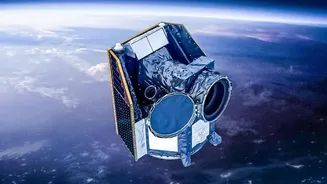
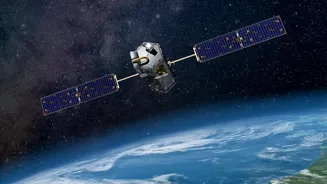
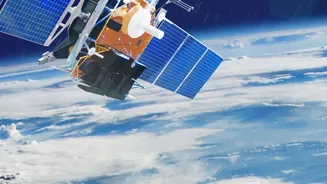
For decades, weather and climate prediction has relied on complex numerical models based on the laws of physics. These models process data from satellites, ground stations, and ocean buoys to project future conditions. However, the sheer volume of data and the chaotic
nature of the atmosphere create significant hurdles. Traditional models can be computationally expensive and slow, sometimes taking weeks to run a long-term simulation on a supercomputer. This limits the number of scenarios scientists can test, creating a gap between what models expect and what the atmosphere actually does. This uncertainty has major consequences, affecting everything from a farmer's decision on when to plant crops to a city's plan for evacuating residents before a hurricane.
How AI Changes the Game
Artificial intelligence, particularly machine learning, offers a fundamentally different approach. Instead of being programmed with physics equations, AI models are trained on decades of historical weather data. They learn to recognise subtle patterns, hidden connections, and precursor signals that might elude conventional methods. By processing massive datasets in parallel, AI can identify the complex signatures of developing extreme weather much earlier and with greater specificity. This allows some AI models to run forecasts significantly faster—in some cases, projecting 100 years of climate patterns in 25 hours on a standard GPU cluster, a task that would take weeks for traditional models on a supercomputer. This speed and efficiency are transforming what's possible in climate science.
From Heatwaves to Monsoons
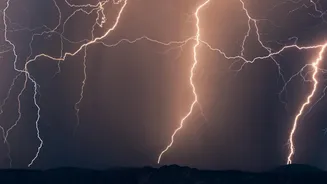
The practical applications of this technology are already emerging. AI is enhancing predictions for a wide range of events, including hurricanes, floods, droughts, and wildfires. For example, deep learning can analyse satellite imagery to spot rapidly developing storm clouds or shifts in atmospheric moisture that signal danger. In South Asia, where a delayed monsoon can impact the livelihoods of millions, AI-powered models offer the potential for more accurate and localised rainfall predictions, helping farmers make critical decisions about planting and irrigation. Similarly, for both India and the US, AI can improve early warning systems for major storms like hurricanes and cyclones by delivering high-resolution predictions that help optimise evacuation plans and protect infrastructure.
Building Trust and Real-World Impact
A major focus for researchers is ensuring that these AI models are not just accurate, but trustworthy. An emerging field called explainable AI (XAI) aims to open the "black box" to understand how these systems arrive at their conclusions. This is crucial for high-stakes situations, ensuring the model has learned meaningful science rather than a statistical shortcut that could fail with an unprecedented weather event. Beyond forecasting, AI is also being deployed to take direct climate action. A United Nations programme now uses AI to analyse satellite data to detect major methane leaks from the oil and gas sector, notifying governments and companies so they can take action. This system has already helped cut emissions equivalent to taking millions of cars off the road.
The Road Ahead
Despite the promise, challenges remain. The effectiveness of AI is dependent on the quality and availability of vast datasets. Furthermore, experts caution that bigger AI models are not always better, and that combining AI with proven physical laws is often the most effective approach. Human expertise remains critical. Meteorologists are needed to interpret the data, provide context, and make the final call, especially when lives are at stake. AI is not a replacement for human forecasters but a powerful tool to augment their abilities. The collaboration between AI experts, climate scientists, and policymakers will be essential to translate these technological advancements into effective mitigation and adaptation strategies that protect vulnerable communities worldwide.