




Chasing Away Sickness with Sticks
The name 'Behdienkhlam' literally translates from the Pnar language to 'driving away plague with sticks'. At its core, the festival is a powerful invocation for health and a plea to ward off diseases and evil spirits before the peak of the monsoon. Celebrated
annually in July after the sowing season, it is the most significant cultural event for the Pnar people, who follow the indigenous Niamtre faith. The festival serves as both a cleansing ritual for the community and a prayer for a bountiful harvest, reflecting a deep connection between faith, nature, and agrarian life. While its origins are ancient, rooted in a prophecy about a devastating plague, its purpose remains deeply relevant today.
A Symphony of Ritual and Colour
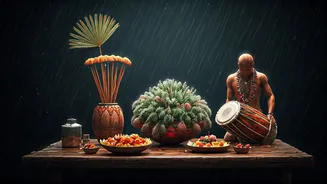
The festival spans three to four days, packed with a series of vivid rituals. It begins with the Daloi, or chief priest, performing religious rites. A key custom involves young men beating the roofs of every house with bamboo poles, a symbolic act to drive away any lurking misfortune. The visual centrepiece of the festival is the 'rot', which are towering, intricately decorated bamboo structures, similar to chariots. These are paraded through the town before being ceremoniously immersed in a sacred pool called Aitnar. This final act is a moment of communal catharsis, where men dance with joyous abandon in the muddy waters to the sound of pipes and drums. While men lead the public rituals, women play a crucial role by preparing sacrificial food for the ancestors.
More Than Just a Festival
Behdienkhlam is the cultural and spiritual heartbeat of the Jaintia people. It’s a time of homecoming, when members of the community who have moved away return to their ancestral land to participate. This reinforces social bonds and preserves the unique identity of the Pnar tribe. The festival is a living narrative, a covenant between the people and their creator. In recent years, the 'rots' have also become a form of social commentary, with decorations often depicting current events or themes like corruption, blending ancient tradition with modern consciousness. This adaptability has helped the festival remain a powerful expression of the Jaintia soul, drawing cultural enthusiasts and tourists to witness its raw energy.
The Grand Finale: Datlawakor
The festival culminates in a unique and highly anticipated event: a game called 'Datlawakor'. Similar in spirit to football, it is played with a small wooden ball between two teams representing the northern and southern regions of Jowai. The teams battle fiercely in a muddy field to push the ball to the opposing side's territory. The game is more than just a sport; its outcome is considered a divine prophecy. The side that wins is believed to be blessed with a more abundant harvest in the coming year, making every moment of the contest a prayer in motion. It’s a fittingly earthy and energetic conclusion to a festival dedicated to the prosperity of the land and its people.