



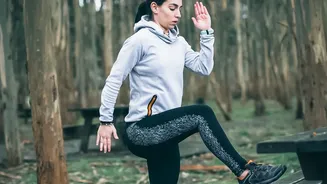
Looking for a free, effective way to build powerful legs and glutes? Your local park holds the key. The humble playground bench is all you need to unlock the step-up, a fundamental exercise for lower body strength, balance, and coordination.
Why Bother With Step-Ups?
The step-up
is a powerhouse of a functional exercise. It mimics everyday movements like climbing stairs or stepping onto a bus, making it incredibly practical. It's a unilateral movement, meaning it works one leg at a time. This is fantastic for identifying and correcting strength imbalances between your left and right sides, which can reduce injury risk. The primary muscles worked are the quadriceps (front of the thighs) and the glutes (your buttocks), but your hamstrings, calves, and core also get involved to provide stability. By performing step-ups, you build strength, improve balance, and enhance coordination—all with a single, scalable exercise.
Finding Your Perfect Platform
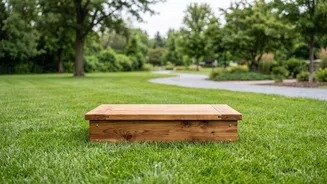
Before you begin, scout your playground for a suitable platform. This could be a sturdy bench, a low wall, or a platform on a play structure. The ideal height depends on your fitness level. A good starting point is a height where your knee is bent at roughly a 90-degree angle when you place your foot on top. If you're a beginner or have knee concerns, start lower—even ankle height is effective. Choosing a step that is too high can compromise your form and shift the work away from your legs. Always inspect the surface to ensure it's stable, dry, and not broken. Safety first: make sure the area around you is clear and be mindful of any children playing nearby.
Mastering the Basic Step-Up
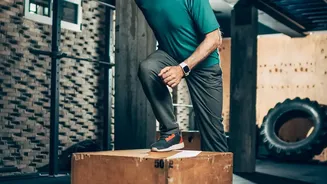
Proper form is crucial to get the benefits and avoid injury. Stand facing your chosen platform. Place your entire right foot firmly on the surface—don't let your heel hang off the edge. Keeping your back straight and core engaged, drive through your right heel to lift your body up until you are standing on the platform. The key is to use the strength of your front leg, not to push off with your back leg. To ensure this, you can even try lifting the toes of your back foot before you step up. Bring your left foot to meet your right on the platform. Then, control the movement as you step back down with the left foot first, followed by the right. Complete all repetitions on one side before switching to the other.
Common Mistakes to Avoid
The most common error is pushing off forcefully with the back leg. This takes the load off the working leg, defeating the purpose of the exercise. Another mistake is choosing a step that's too high, which forces you to lean forward excessively and use momentum. Also, watch your knee alignment; don't let your knee cave inward as you step up. It should track in line with your middle toe. Finally, don't just drop back down. Control the eccentric (lowering) phase of the movement. This builds additional strength and stability.
Variation 1: The Lateral Step-Up
To shift the focus to your inner and outer thighs (adductors and abductors), try the lateral step-up. Stand sideways next to your bench. Place the foot closest to the bench—say, your right foot—onto the surface. Drive through your right heel to lift yourself up, bringing your left foot to meet the right. This sideways movement challenges your stability and works your muscles in a different plane of motion, which is great for overall hip strength and athletic movement. Lower yourself back down with control and complete your reps before switching sides.
Variation 2: Step-Up with High Knee
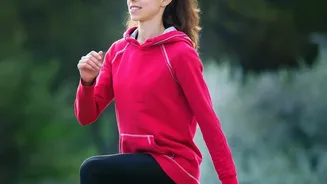
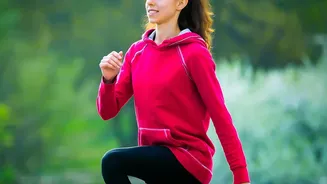
For an added challenge to your core and balance, incorporate a high knee. Perform a standard step-up, but as you reach the top of the movement, don't just place your non-working foot on the bench. Instead, drive that knee up toward your chest, aiming for hip height. Hold the position for a moment, focusing on staying stable, before lowering the leg and stepping back down. This variation increases the intensity, improves coordination, and further engages your core muscles.
Variation 3: The Weighted Step-Up
Once you've mastered the bodyweight versions, you can add resistance to continue building strength. You don't need gym equipment for this. Simply wear a backpack filled with a few heavy books or water bottles. Hold the backpack in front of your chest or wear it as you normally would. This added load will make the exercise more challenging, helping you progress. Start with a light weight and focus on maintaining perfect form before adding more.