


The Core Question: Stability vs. Rotation
Both sports are celebrated for delivering a killer core workout, but they do it in different ways. Stand-up paddleboarding is arguably the king of core stability. Simply standing on the board requires constant engagement from your entire midsection—abdominals,
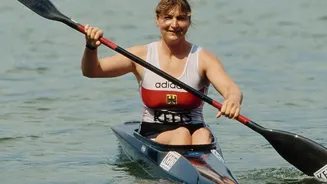
obliques, and lower back—to maintain balance. This creates a deep, continuous, and stabilizing workout for your core muscles. Kayaking, on the other hand, builds core strength through rotation. A proper kayaking stroke isn't pulled with the arms; it's driven by twisting the torso. This powerful rotational movement specifically targets the obliques and lats, building dynamic strength and power through the midsection. So, if your goal is a rock-solid, stable core, SUP has the edge. If you're looking for rotational power, kayaking is your answer.
Upper Body Focus: Pulling vs. Full Body Integration
When it comes to the upper body, kayaking offers a more concentrated workout. The repetitive motion of pulling a double-bladed paddle through the water heavily engages the back (lats, rhomboids), shoulders (deltoids), and arms (biceps and triceps). It's an excellent way to build significant upper body and back strength and endurance. While many beginners make the mistake of paddling only with their arms, proper technique leverages the larger, more powerful muscles of the back. Paddleboarding provides a more integrated, full-body workout where the upper body is just one part of the kinetic chain. The single-bladed paddle stroke engages the lats, shoulders, and arms, but the power is generated from the core and transferred through the body. It's less about isolating the upper body and more about using it in coordination with your core and legs.
Lower Body Involvement: Active Balancing vs. Bracing
This is where the two sports diverge most significantly. Paddleboarding is a true full-body workout where the lower body is constantly active. To stay balanced, your feet, ankles, calves, quads, and glutes are continuously making small adjustments. This sustained, low-level engagement builds endurance and stability in the entire lower half of your body. In kayaking, the lower body's role is primarily for stability and bracing. Your legs and glutes are engaged to connect your body to the boat, helping you maintain posture and transfer power from your core rotation into your paddle stroke. However, you are seated, so the lower body is not actively supporting your full body weight or engaging in the same way it does on a paddleboard. For those seeking a comprehensive leg and glute workout, paddleboarding is the clear winner.
The Balance and Proprioception Factor
If improving your balance is a primary goal, stand-up paddleboarding is unparalleled. The inherent instability of the board forces your body to constantly adjust, which dramatically improves proprioception—your sense of where your body is in space. This not only strengthens large muscle groups but also the small stabilizing muscles around your joints, particularly in your feet and ankles. Kayaking, being a seated activity with a low center of gravity, is far more stable and requires significantly less balance. While balance is still a factor, especially in choppy water, it's not the core challenge of the sport. The stability of a kayak makes it more accessible for beginners or those who may struggle with balance.
Which Is Right for Your Strength Goals?
Ultimately, the best choice depends on what you want to achieve. Choose Stand-Up Paddleboarding if your goal is a total-body workout. It excels at building deep core stability, improving overall balance, and engaging your legs and glutes far more than kayaking does. It’s the better option for functional, full-body conditioning. Choose Kayaking if your goal is to build a powerful upper body and back. It provides a more targeted strength workout for your lats, shoulders, and arms, and is fantastic for developing rotational core power. It’s also a more accessible option if balance is a concern or if you want to cover longer distances with greater speed and efficiency.