



Beyond the Postcard View
For many, travel has become a race to capture the same photo from the same angle as everyone else. We visit places but don’t always experience them. Culture-first travel offers a powerful alternative. It’s a philosophy that prioritizes understanding the life
within a foreign culture over simply observing it from the outside. It means choosing destinations not just for their beauty, but for their soul. This approach seeks genuine connection—engaging with local traditions, respecting the rhythm of daily life, and leaving a place better than you found it. It’s about being a participant, not just a spectator. While destinations like Shillong and Cherrapunji are the well-known faces of Meghalaya tourism, the town of Jowai in the West Jaintia Hills presents a quieter, more profound opportunity for this kind of immersive journey.
Welcome to Jowai, the Pnar Heartland
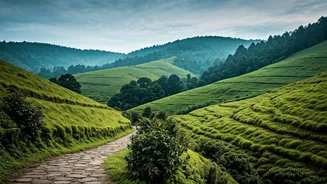
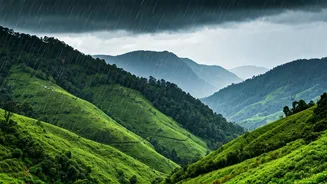
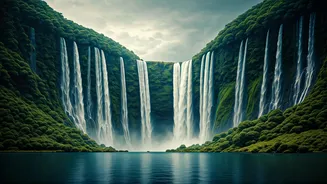
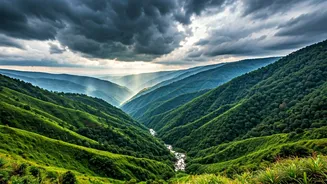
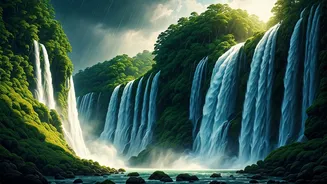
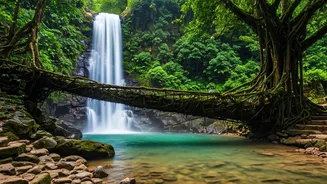
Jowai is the headquarters of the West Jaintia Hills district and the cultural epicentre for the Pnar people, a subgroup of the Khasi. Located on a scenic plateau about 66 kilometres from Shillong, the town is enveloped on three sides by the winding Myntdu River. Unlike the more commercialized tourist circuits, Jowai offers a glimpse into a community where traditions are not just preserved but lived. This is the land of the Niamtre religion, a matrilineal society, and a calendar punctuated by vibrant, ancient festivals. The town itself is a hub of local life, but its true magic lies in the surrounding landscape of rolling hills, sacred groves, and cascading waterfalls like Tyrshi and Krang Suri, which serve as the backdrop for a deeply rooted culture.
Life Measured in Festivals and Dances
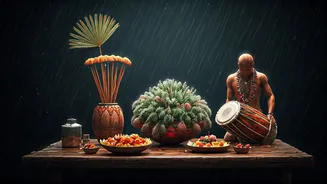
To understand Jowai is to understand its festivals. The most significant is Behdeiñkhlam, celebrated annually in July after the sowing season. The name literally means "to drive away plague with sticks," a powerful ritual to cleanse the community and pray for a bountiful harvest. For four days, the town comes alive with processions, drum beats, and sacred rites performed by the Daloi, or chief. A key ritual involves young men beating the roofs of every house with bamboo poles to symbolically chase away evil spirits. The festival culminates in a spectacular event at a muddy pool called Aitnar, where towering decorative structures called 'rots' are immersed and a game similar to football, 'Dad-lawakor,' is played with a wooden ball. Alongside this is the Laho dance, a more informal and joyous expression of community spirit where men and women dance together, linking arms in a celebration of unity and social harmony.
An Invitation to Participate
What makes Jowai a blueprint for culture-first travel is that its traditions are accessible yet deeply authentic. They are not performed for tourists; they are the lifeblood of the Pnar people. Organizations like the Seiñraij Jowai are dedicated to preserving this cultural heritage, ensuring it remains a living, breathing entity. For a traveller, this means the opportunity for genuine engagement is high. A visit to a local market offers more than just souvenirs; it’s an insight into the local economy and cuisine. Engaging with community-led tourism initiatives, which are growing in Meghalaya, allows visitors to learn directly from the people whose ancestors shaped the land. This model of tourism ensures that visitor spending directly supports the community and incentivizes the preservation of the very culture that makes the region unique.
Why Jowai's Chapter Matters
Jowai represents a sustainable path forward for tourism in ecologically and culturally sensitive regions. By focusing on the depth of its Pnar heritage rather than just its scenic spots, it avoids the pitfalls of over-tourism that can dilute local identity. A journey here isn’t about the glamour of a five-star resort but the richness of staying in a local homestay, learning about the matrilineal traditions that empower women, or understanding the spiritual significance of the Nartiang monoliths nearby. It teaches a slower, more deliberate way of travel, where the goal is to build understanding. In a world rushing towards homogeneity, Jowai reminds us that the most valuable travel experiences are those that celebrate and sustain cultural distinctiveness.