






Why The Ratio Is So Important
Brewing coffee is essentially a process of extraction, where water dissolves flavours, oils, and acids from the ground beans. Your coffee-to-water ratio is the primary factor that controls the strength and balance of this extraction. Get it wrong, and you'll
notice it immediately. Too much water for the amount of coffee results in a thin, watery, and under-extracted cup that can taste sour. Too little water leads to a brew that is overly concentrated, heavy, and often unpleasantly bitter or harsh, a sign of over-extraction. The goal is to find the 'sweet spot' where the extraction is balanced, creating a cup that is flavourful, aromatic, and complex without being dominated by bitterness or sourness.
The 'Golden Ratio' Starting Point
For those new to measuring their coffee, there is a widely accepted starting point known as the 'golden ratio'. The Specialty Coffee Association (SCA), a leading authority in the industry, recommends a range between 1:15 and 1:18. This means for every one gram of coffee, you should use between 15 and 18 grams of water. Many baristas and home brewers find that 1:16 is an ideal and forgiving place to start for most filter coffee methods. This ratio typically produces a cup that is strong enough to be flavourful but balanced enough to avoid bitterness. For a standard 350ml mug, this works out to about 22 grams of coffee.
Why You Should Use a Scale
While using tablespoons or scoops is common, it's not the most accurate way to achieve consistency. The weight of ground coffee can vary significantly depending on the roast level and grind size; a scoop of a light roast can weigh more than a scoop of a darker, oilier roast. A simple digital kitchen scale removes this guesswork. By weighing both your coffee grounds and your water in grams, you can replicate your perfect brew day after day. Since one millilitre of water conveniently weighs one gram, you can place your mug and brewer on the scale, tare it to zero, and pour until you hit your target water weight.
Adjusting for Different Brew Methods
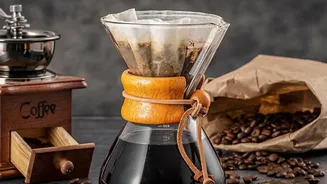
While 1:16 is a great all-purpose ratio, different brewing methods have their own sweet spots. Full immersion methods, where the coffee and water steep together for several minutes, often benefit from a slightly stronger ratio to create a richer body. For a French press, a ratio of 1:15 is a common starting point. Pour-over methods like a V60 or Chemex work well in the 1:15 to 1:17 range, allowing for a clean and bright cup. Automatic drip machines also fall comfortably within this 1:15 to 1:17 range. Cold brew and espresso are outliers; cold brew concentrate often uses a very strong 1:4 to 1:8 ratio, while espresso uses a tight 1:2 ratio.
Fine-Tuning to Find Your Perfect Cup
The perfect ratio is ultimately a matter of personal preference. Think of the golden ratio as your starting point for experimentation. After brewing a cup at 1:16, taste it and decide how you'd like to adjust it. If your coffee tastes weak or watery, make it stronger by moving to a 1:15 ratio (using less water for the same amount of coffee). If it tastes too intense or heavy, make it lighter by moving toward a 1:17 or 1:18 ratio (using more water). The key is to only change one variable at a time. By keeping your grind size and brew time consistent, you can isolate the effect of the ratio and deliberately dial in the exact flavour profile you enjoy most.