







The Left-Hander Problem
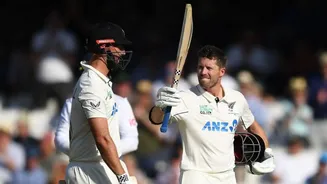
The primary reason for Sundar's inclusion was a classic cricketing tactic: the match-up. The New Zealand top order is stacked with left-handed batsmen, including key players like Tom Latham, Devon Conway, Henry Nicholls, and Rachin Ravindra. Washington
Sundar, as a right-arm off-spinner, spins the ball away from left-handers, a traditionally more challenging delivery to face. Ravindra Jadeja's left-arm orthodox spin, conversely, turns into the left-handed batsman, which can often be easier to negotiate. Indian assistant coach Sitanshu Kotak confirmed this was a deliberate ploy, stating the selection was made because of the four left-handers in the opposition's XI.
A Question of Team Balance
Beyond the specific match-ups, Sundar's selection offers a different kind of balance to the team. With a green-tinged pitch at the Basin Reserve favouring pacemen, India opted for a four-pronged pace attack. In such a combination, the role of the lone spinner changes. The team needed a spinner who could offer control and contribute significantly with the bat. Sundar is widely considered a batting all-rounder, with a solid, technically sound approach that has seen him score crucial runs down the order, and even a maiden Test century. While Jadeja is a proven and explosive batter, Sundar's style is often seen as that of a top-order batsman playing lower down, providing a different kind of stability.
Workload Management and Future-Proofing
One cannot ignore the relentless schedule of modern cricket. Ravindra Jadeja is a vital, three-format player for India. Managing his workload, especially ahead of a long season with numerous Test matches, is crucial to prevent injury and maintain his peak performance. Resting him for a match, especially when a sound tactical alternative is available, is a prudent long-term strategy. Furthermore, the Indian team management is always looking to build depth and groom the next generation of players. Sundar has been in and out of the national side due to injuries, and giving him a consistent run in a high-stakes Test series is essential for his development and for future-proofing India's all-rounder slot.
A Different Kind of All-Rounder
Jadeja and Sundar, while both categorized as all-rounders, perform different roles. Jadeja is an attacking spinner and a dynamic lower-order finisher, famed for his '3D' skills encompassing batting, bowling, and elite fielding. Sundar, on the other hand, is often used as a defensive bowler who can contain batsmen, especially in the Powerplay in white-ball cricket, and is viewed as a more classical batsman. His height gives him natural bounce, and his accuracy allows him to bottle up one end, creating pressure that the pace bowlers can exploit from the other. The choice, therefore, was not about who is the 'better' player overall, but which set of skills was better suited for the specific conditions and opposition India faced in this Test.