




How the Digital Mirror Works
At its core, a virtual try-on (VTO) tool uses a combination of artificial intelligence (AI) and augmented reality (AR). When you open the tool on a brand's website or app, it accesses your phone's camera. The AI scans your face to create a detailed map
of your features, identifying your eyes, lips, and the overall canvas of your skin. It then uses AR to overlay digital swatches of products like lipstick or foundation onto your real-time image. This allows you to see how a shade might look on you without ever opening a bottle. The technology has become a cornerstone of the rapidly growing AI beauty market, which is projected to be worth billions. These tools are designed to boost purchasing confidence and create a more engaging shopping experience for consumers at home.
The Promise: A Perfect Match From Your Couch
The appeal of VTO is obvious. It offers unparalleled convenience, letting you test dozens of shades in minutes from anywhere. This is a huge advantage over traditional in-store testing, which can be time-consuming and often involves unhygienic shared samples. For brands, it’s a powerful way to engage customers and reduce returns. The goal is to move beyond simple filters and provide a realistic simulation that helps you make an informed decision. Some advanced platforms even offer personalized recommendations based on an analysis of your selfie. By analyzing data from countless users, the AI aims to learn what shades work best for different skin tones, becoming a virtual beauty assistant that can guide you to your ideal product.
The Reality: When the AI Gets It Wrong
Despite the sophisticated technology, anyone who has used these tools knows the results can be mixed. The single biggest challenge is lighting. Your screen can look dramatically different in the warm light of your living room compared to the cool, natural light by a window. An AI algorithm can easily misinterpret your skin's color if the lighting is poor, recommending a shade that is too dark, too light, or has the wrong undertone. Camera quality is another major factor. The front-facing camera on an older smartphone simply won’t capture the same level of detail and color accuracy as a newer model, leading to a less reliable recommendation. This gap between the virtual shade and the real-life product is where consumer trust often falters.
The Undertone Undertaking
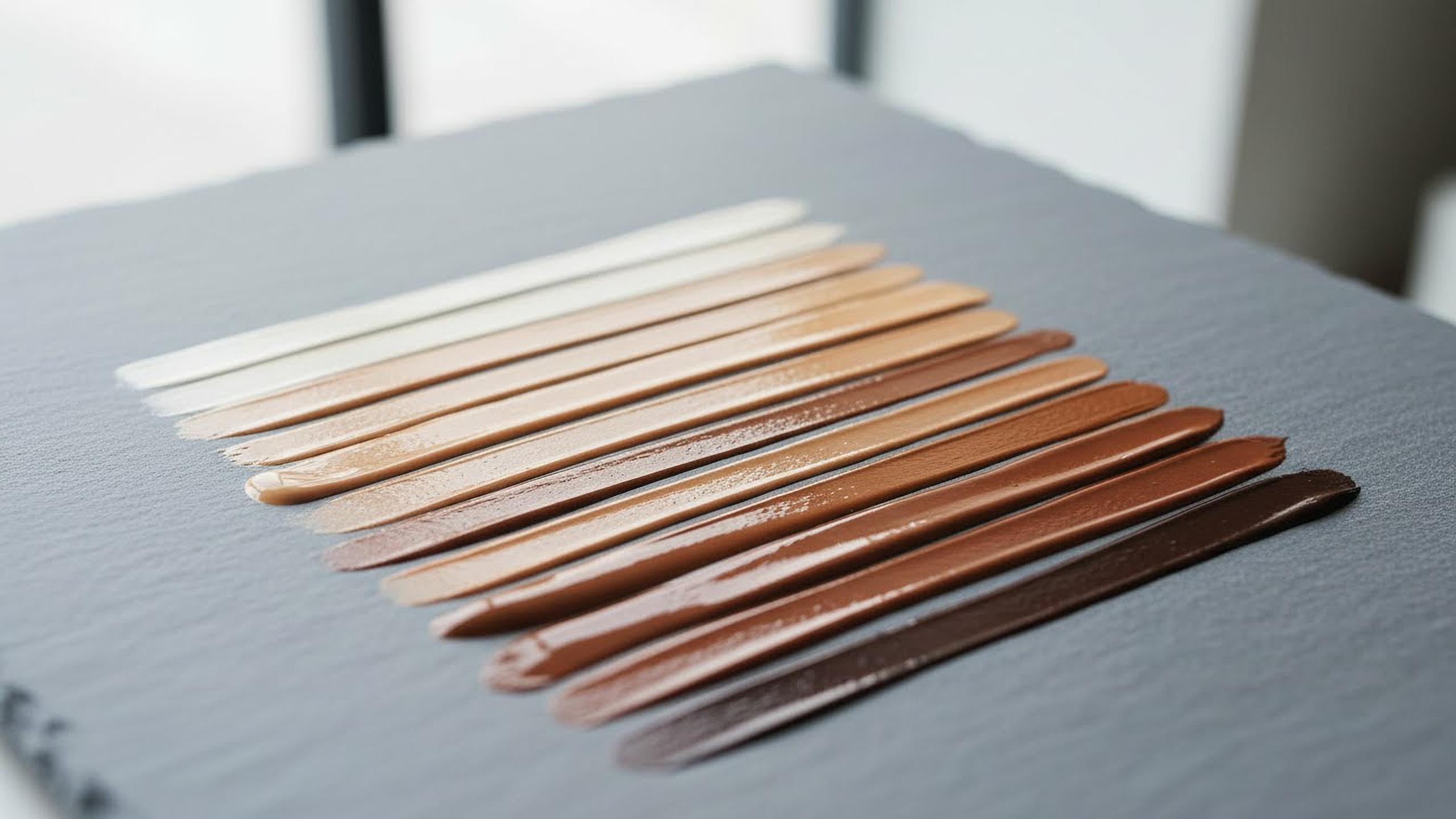
Perhaps the most complex task for any shade-matching technology—human or AI—is correctly identifying skin undertones. Your skin's surface tone might change with a tan, but your undertone (cool, warm, or neutral) remains constant. It’s what makes a foundation look like a seamless part of your skin rather than a mask. AI struggles to accurately detect these subtle nuances through a camera lens alone. It can get confused by surface redness or shadows, leading it to recommend a warm-toned foundation for someone with cool undertones, or vice versa. This is why a shade might look plausible in the virtual try-on but appear obviously wrong when you see the actual product in person.
Tips for a Better Virtual Match
While not foolproof, you can take steps to make the AI work better for you. First, always use the best lighting possible. Sit facing a window with indirect, natural daylight. Avoid overhead lights, which cast shadows, or yellow-toned lamps. Make sure your face is clean and free of existing makeup to give the AI a clear canvas. Use the highest-quality camera you have available, and hold it steady at eye level. Most importantly, use the tool as a guide, not a final verdict. If the AI suggests three shades, don’t just add one to your cart. Use those recommendations as a starting point to research swatches on real people or to request samples if possible.
The Future is Blended and Smarter
The technology is constantly improving. The future of beauty is expected to blend scientific innovation with intelligent personalization to build greater consumer trust. We are moving toward an era of predictive personalization, where AI doesn’t just see your face but understands your skin's needs on a deeper level. Future tools might integrate data from questionnaires about your skin type, concerns, and preferences to refine recommendations. Some experts predict a hybrid model will become the norm: you use AI at home to narrow your options down to two or three top contenders, then visit a store or order a sample to make the final, confident choice. This combines the convenience of digital with the reliability of physical testing.