







Finding the right exercise can feel complicated, especially when you're short on space. Yet, two of the simplest, most effective workouts need very little room: walking and skipping. But which one is the right choice for your fitness goals and home setup?
The Calorie Burn Question
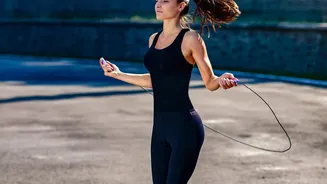
When it comes to burning calories efficiently, skipping, or jumping rope, has a clear edge. As a high-intensity activity, it engages your entire body, from your legs and core to your shoulders and arms. A person can burn 200 to 300 calories in just 15 minutes of skipping, making it a powerhouse for those with limited time. Walking is a lower-intensity exercise, but its effectiveness should not be underestimated. A brisk walk can burn a significant number of calories, especially when sustained over a longer period of 30 to 60 minutes. While it may take longer to match the burn from skipping, walking is often easier to maintain consistently day after day, which is a crucial factor for long-term weight management and overall health.
Space and Convenience
Here, the comparison gets interesting. Skipping requires a relatively small, fixed spot. You need enough room to swing the rope without hitting furniture and sufficient ceiling height. A small patch in your living room, garage, or a balcony can be your dedicated skipping station. However, walking offers a different kind of freedom. While you can walk in place or pace in a small room, its real advantage is its versatility. You can walk outdoors, exploring your neighbourhood and getting fresh air. If you are truly confined, pacing back and forth in a hallway or even around a large room is a viable option. Walking requires absolutely no dedicated 'spot', just a clear path, making it arguably more adaptable to very cramped or unusually shaped living spaces.
Impact on Your Joints
The primary difference from a health perspective is the level of impact. Walking is a low-impact exercise, meaning at least one foot is on the ground at all times. This makes it an excellent and safe choice for beginners, older adults, people recovering from injuries, or anyone with joint issues, particularly in the knees and hips. Skipping, on the other hand, is a high-impact activity. The repetitive jumping motion puts stress on your ankles, knees, and hips. While this impact helps improve bone density, it can be risky for those with pre-existing joint problems or those who are significantly overweight. Proper technique, a good quality jump rope, and a forgiving surface like a mat can help mitigate some of this stress, but the high-impact nature remains.
Equipment and Cost
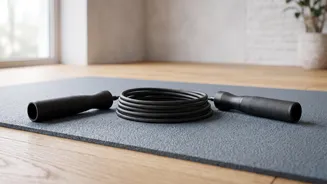
Both exercises are famously affordable, but there are slight differences. To start walking, all you truly need is a comfortable pair of shoes. There are no other mandatory costs, making it one of the most accessible forms of exercise available. For skipping, your primary investment is a jump rope. Basic speed ropes are incredibly inexpensive, though you can opt for more advanced, weighted, or 'smart' ropes that track your rotations. While still a very low-cost entry, it does require purchasing a piece of equipment. In both cases, proper footwear is recommended to provide support and prevent injury, but walking requires nothing beyond that initial investment.
Skill and Coordination
Walking is a natural movement that requires no learning curve. You can do it immediately, and the only skill to develop is managing your pace and duration. Skipping requires a period of adaptation. For beginners, it can be a frustrating mix of tangled ropes and tripping over your own feet. It demands timing, rhythm, and coordination between your hands and feet. While most people can pick up the basic movement with a bit of practice, mastering it and moving on to more complex techniques like crossovers or double-unders takes dedication. This initial barrier to entry can be discouraging for some, whereas the simplicity of walking allows you to focus purely on the effort and not the execution.
So, Which Is Right for You?
The best choice depends entirely on your personal circumstances. Choose skipping if you are short on time, want a high-intensity workout to maximise calorie burn, have no joint issues, and want to improve your coordination and bone density. You just need a small, clear spot with enough vertical space. Choose walking if you prefer a low-impact activity, are a beginner to exercise, have joint sensitivities, or value the mental health benefits of getting outdoors. It's easier to sustain for long periods and requires no special skills or equipment beyond a good pair of shoes.