




The Great Starch-to-Sugar Shift
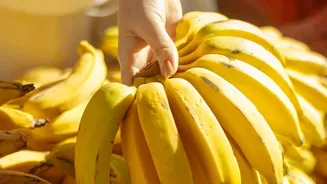
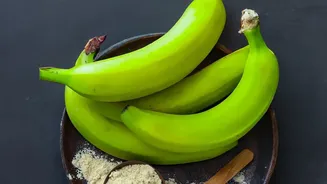
The fundamental difference between a green (raw) banana and a yellow (ripe) one lies in its carbohydrate composition. As a banana ripens, enzymes work to convert its complex starches into simple sugars like sucrose, glucose, and fructose. This is why
a firm, starchy green banana tastes mild, while a soft, yellow one is distinctly sweet. A green banana's carbs are 70-80% resistant starch, a figure that drops to under 1% once it's fully ripe. This transformation is key to understanding how each type affects your body.
Green for Gut Health and Glycemic Control
That resistant starch in green bananas is a powerhouse. Because it 'resists' digestion in the small intestine, it functions more like dietary fibre. It travels to the large intestine, where it becomes food for your beneficial gut bacteria, acting as a prebiotic. This process can support digestive health and may promote a feeling of fullness. Furthermore, green bananas have a low glycemic index (GI), around 30 to 42, meaning they release sugar into the bloodstream slowly. This helps in maintaining more stable blood sugar levels after a meal.
Ripe for Quick Energy and Antioxidants
As the starch converts to sugar, a ripe banana becomes a source of quick, easily digestible energy. This makes them an excellent pre-workout snack or a handy pick-me-up. The GI of a ripe banana is higher, typically between 51 and 62, reflecting its higher sugar content. But that's not all. As bananas ripen and develop brown spots, their antioxidant levels actually increase. These beneficial compounds, including phenolics, may help the body combat oxidative stress. While they lose some resistant starch, ripe bananas still offer essential micronutrients like potassium, vitamin B6, and vitamin C.
Don’t Waste It, Taste It: Snack Ideas
While banana bread is the classic way to use up overripe bananas, Indian kitchens offer a world of quicker, simpler possibilities. Those soft, intensely sweet bananas are not a problem to be solved but an ingredient packed with potential. Their mushy texture and concentrated flavour make them perfect for binding, sweetening, and enriching a variety of everyday snacks, moving far beyond the occasional cake.
Sweet Banana Appam or Paniyaram
A beloved South Indian snack, sweet appam is a perfect use for mushy bananas. Mash one or two very ripe bananas and mix with rice flour or wheat flour, a bit of jaggery for extra sweetness, a pinch of cardamom powder, and some grated coconut. Add water to form a thick batter, similar to what you’d use for idli. Pour spoonfuls into a greased paniyaram pan and cook until golden brown on both sides. The result is a batch of soft, fluffy, and sweet bites that are perfect with evening tea.
Instant Banana Dosa or Pancake
For a quick breakfast or tiffin treat, mash a ripe banana into your regular dosa batter or create a simple pancake. For a 'godi' (wheat) version, mix whole wheat flour, mashed banana, grated coconut, and a little jaggery. Thin it out with water or milk to a pancake-like consistency. Pour onto a hot tawa, drizzle with a little ghee or oil, and cook on both sides until golden. It’s a healthy, filling, and naturally sweet meal that comes together in minutes.
No-Fuss Kolar Bora or Gulgule
These sweet fried dumplings are popular across India, known as Gulgule in the North and Kolar Bora in Bengal. Simply mix mashed ripe banana with whole wheat flour (atta), a bit of fennel (saunf), a pinch of salt, and a little sugar or jaggery. The moisture from the banana should be enough to form a thick, dropable batter. Deep fry small spoonfuls in medium hot oil until they are puffed up and deep golden brown. They are crispy on the outside and wonderfully soft and cake like on the inside.