





A Strategic Change at the Top
Meta has announced a significant transition in its infrastructure leadership. Santosh Janardhan, the long-serving head of infrastructure and co-head of engineering who has been with the company since 2009, will step down in early 2027. Taking his place
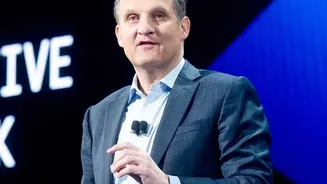
is David Brown, a former senior vice president from Amazon Web Services (AWS) who joined Meta in July 2026. This move is far from a routine reshuffle. It signals a deliberate strategic choice to bring in an executive with deep experience in building and operating the kind of hyperscale cloud infrastructure that powers Amazon's global empire. Brown is not only taking over infrastructure but will also serve as the Chief Technology Officer of Meta Compute, a critical initiative managing the company's enormous AI build-out. Janardhan will remain through the first quarter of 2027 to ensure a smooth transition.
An Unprecedented Infrastructure Investment
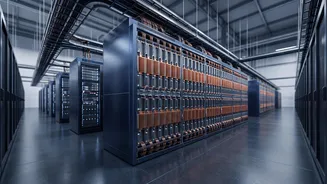
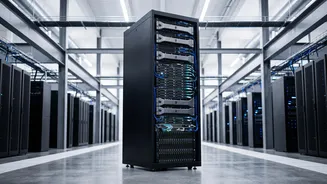
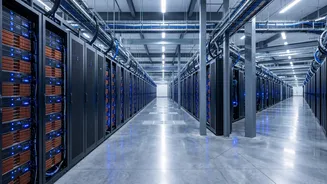
To understand why this leadership change is so significant, one must look at the sheer scale of Meta's financial commitment to AI. The company has forecasted capital expenditures for 2026 to be between $135 billion and $145 billion, with the overwhelming majority directed at AI infrastructure. This level of spending is staggering, even by Big Tech standards, and has raised questions from investors about its impact on cash flow. The investment is aimed at a massive expansion of data centers specifically designed for the intense demands of artificial intelligence. For example, Meta is expanding its Hyperion data center project in Louisiana to a 5-gigawatt capacity, with an estimated cost of $50 billion. To put that in perspective, until recently, even the world's largest data centers were measured in hundreds of megawatts, not thousands.
The Insatiable Hunger for Compute Power
At the heart of these new data centers is a voracious appetite for 'compute'—the raw processing power needed to train and run advanced AI models. This power comes primarily from specialized chips known as GPUs. Meta is not just building its own facilities but is also securing capacity from partners. The company has a multi-year, $35.2 billion agreement with specialized cloud provider CoreWeave to secure a vast amount of AI computing capacity through 2032. This strategy allows Meta to bypass some of the power grid and construction bottlenecks that can slow down its own data center projects. This immense compute capacity is essential for developing next-generation AI like the models in its Llama and Muse series and for powering AI features across its entire suite of apps, including Facebook, Instagram, WhatsApp, and Messenger.
Connecting Leadership to Strategy
Hiring an executive like David Brown, with his background at AWS, is a direct response to this massive hardware and infrastructure build-out. While Santosh Janardhan was instrumental in scaling the infrastructure for Meta's social media era, the new challenge is different. It involves managing a supply chain of unprecedented scale, overseeing the construction of gigawatt-level data center campuses, and potentially building a new business by renting out excess compute power to other AI companies. Reports suggest Meta is already in talks to lease capacity to companies like Anthropic. Brown's experience at AWS, which runs the world's largest cloud computing rental business, makes him uniquely suited for this next phase. His role is to ensure that the hundreds of billions being invested translate into functional, efficient, and ultimately profitable AI capacity.
The High-Stakes AI Race
This leadership change and infrastructure overhaul is not happening in a vacuum. It is a critical move in the high-stakes global race for AI dominance against rivals like Google, Microsoft, and Amazon. Physical capacity has become a strategic competitive advantage. The ability to deploy massive computing power quickly can determine how fast a company can innovate and release new AI products, from internal models to consumer-facing AI assistants. With this pivot, Meta is transforming from a social media company into a core AI infrastructure player that could power not only its own services but also a new generation of AI applications from other businesses. The success or failure of this strategy, helmed by new leadership, will define Meta's relevance and profitability for the next decade.