








The UPI Revolution Goes Global
India's Unified Payments Interface (UPI) has fundamentally changed how money moves within the country, processing billions of transactions monthly. Now, this homegrown financial technology is expanding its footprint across the world. Spearheaded by NPCI
International Payments Limited (NIPL), the international arm of the National Payments Corporation of India, UPI is being integrated with payment systems in several countries. This initiative allows Indian travellers to pay for goods and services abroad by simply scanning a QR code with their existing UPI apps, just like they do at home. The goal is to create a seamless, cost-effective, and secure payment experience, reducing the reliance on traditional methods like cash or cards. This expansion is not just about convenience; it represents a major step in the internationalisation of India's digital payment infrastructure.
How Does It Actually Work?
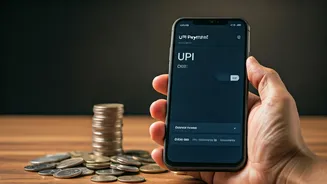
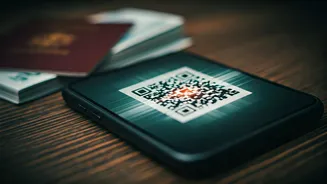
Using UPI abroad is designed to be incredibly simple. First, travellers need to activate the 'international payments' feature on their UPI app, such as PhonePe, Google Pay, or BHIM. This is a one-time setup that links your Indian bank account for foreign transactions. Once activated, the process at a supported international merchant is straightforward: scan the merchant's QR code, enter the amount in the local currency (like euros or dirhams), and your app will display the equivalent amount in Indian Rupees in real-time. After you confirm the amount and enter your UPI PIN, the payment is processed instantly. The funds are debited from your Indian bank account in rupees, while the merchant receives the payment in their local currency. This is made possible through partnerships between NIPL and local payment networks in each country.
Where Can You Use UPI Today?
As of mid-2026, UPI is accepted for Indian travellers in a growing list of countries. The network includes popular tourist and business destinations. Key countries where UPI is live for merchant payments include France, the United Arab Emirates (UAE), Singapore, Nepal, Bhutan, Mauritius, Sri Lanka, Qatar, and Cambodia. Recently, Greece also joined the list, becoming the second European country after France to adopt the system. In France, you can famously use UPI at the Eiffel Tower. In the UAE, it's available at numerous retail outlets, while the linkage with Singapore's PayNow allows for widespread use. Cambodia became the ninth country to join, enabling payments at over 4.5 million merchant locations via its national KHQR system. NPCI is actively pursuing further expansion, with plans to cover 20 countries in the coming years.
UPI vs. Credit Cards: The Real Cost
One of the biggest advantages of using UPI abroad is the potential for lower costs. While UPI apps themselves don't typically charge a fee for international transactions, your bank will apply charges for the currency conversion. This includes a foreign exchange markup on the exchange rate. However, this is often more transparent and potentially cheaper than using most credit or debit cards. Credit cards often come with a foreign transaction fee, typically around 2% to 4%, in addition to the currency conversion markup. Recent partnerships with banks like HSBC and J.P. Morgan are aimed at providing real-time FX rates for UPI transactions, which means you see the exact rupee amount before you pay, increasing transparency. While premium travel credit cards with zero foreign transaction fees can be competitive, for many travellers, UPI presents a more straightforward and economical option.
What to Keep in Mind
While UPI's global expansion is exciting, travellers should be aware of a few practical points. Firstly, availability is not yet universal; it's limited to merchants who are part of the partner networks in each country. So, it's wise to carry a backup payment method. Secondly, you'll need an active internet or data connection on your phone to make a transaction. Thirdly, transaction limits for international UPI payments are generally in line with domestic limits, typically around ₹1 lakh per transaction, although higher limits may apply for specific categories. Finally, remember to activate international payments on your UPI app before you travel to ensure it works smoothly when you arrive at your destination.