



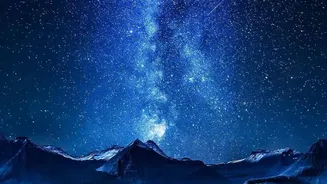

Celestial Fireworks Explained
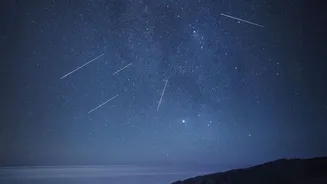
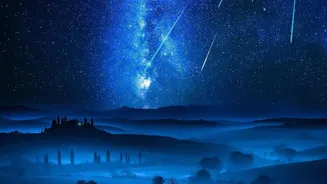
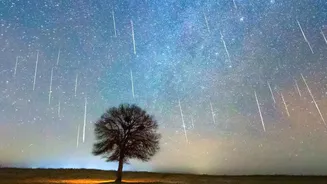
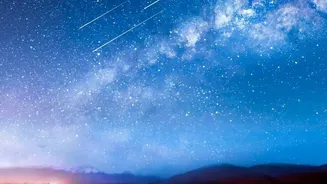
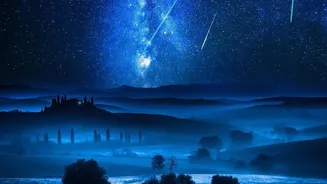
Meteor showers are not falling stars, but tiny fragments of cosmic dust burning up as they enter Earth’s atmosphere. These particles are debris left behind by comets on their journey around the sun. When our planet passes through these dusty trails each
year, we are treated to a spectacular light show. The Perseids and Orionids are two of the most reliable and impressive showers visible from India, known for producing bright, fast-moving meteors that can light up the night.
The Perseids: A Mid-August Spectacle
The Perseid meteor shower, produced by debris from Comet Swift-Tuttle, is one of the most popular showers of the year. In 2026, it is set to peak on the night of August 12-13. This year's event is particularly special because the peak coincides with a new moon, meaning the sky will be perfectly dark, offering ideal viewing conditions. For observers in India, the best time to watch will be from midnight until dawn, when the shower's radiant point in the constellation Perseus is high in the sky. Under clear, dark skies, you could see between 50 and 100 meteors per hour. While August is technically late monsoon for much of India, the trans-Himalayan regions like Ladakh and Spiti Valley offer clear, cloud-free skies.
The Orionids: An Autumn Gift from Halley's Comet
As autumn sets in, the Orionid meteor shower provides another opportunity for stargazing. Caused by dust from the famous Halley's Comet, this shower peaks on the night of October 21-22, 2026. The Orionids are known for their speed and brightness, often leaving persistent trails that linger for a few seconds. In 2026, viewing will be affected by a bright waxing gibbous moon during the early part of the night. However, there is a window of opportunity for dedicated observers. The moon sets a few hours before dawn, leaving the sky dark for prime viewing in the pre-dawn hours. From a dark location, you can expect to see about 15 to 20 meteors per hour during this moonless window.
Why Non-Metro Locations Are Essential
The single biggest obstacle to enjoying a meteor shower is light pollution. The bright glow from cities and towns washes out the night sky, making all but the brightest meteors invisible. To truly experience these celestial events, you must venture out into the countryside, away from artificial lights. India is home to several regions with pristine dark skies, rated on a scale called the Bortle scale, where Class 1 is the darkest. Places like Hanle in Ladakh, India's first official Dark Sky Reserve, Spiti Valley, and the Rann of Kutch offer some of the best stargazing in the country. Even a short drive 30 to 40 kilometres outside a major city can dramatically improve your view.
How to Find Your Stargazing Spot
You don't need to travel to a designated reserve to enjoy the show. Look for remote areas with a wide, unobstructed view of the sky. Hill stations, national parks (check for night access), deserts, or even the outskirts of a small village can be excellent choices. Consider locations like the Western Ghats in Coorg and the Nilgiris, or desert camps around Jaisalmer in Rajasthan. Before you go, use online light pollution maps to find dark spots near you. The key is to find a safe location away from streetlights and traffic, where you can settle in for a few hours.
Your Night Sky Viewing Kit
You don't need a telescope or binoculars to watch a meteor shower; your eyes are the best tool for the job. However, a few items can make the experience much more comfortable. Bring a blanket or a reclining chair to lie back on. Nights can get chilly, even in warmer months, so pack warm layers of clothing. Give your eyes at least 20-30 minutes to fully adapt to the darkness—and avoid looking at your bright phone screen, which will ruin your night vision. If you need light, use a torch covered with red cellophane. Finally, pack some snacks, water, and a good dose of patience. The universe will do the rest.