


Why Choose Low-Impact Cardio?
Low-impact exercise is any form of cardio where at least one foot stays on the ground at all times. This simple difference means significantly less stress on your ankles, knees, hips, and spine compared to high-impact activities like running or jumping.
But don't mistake 'low-impact' for 'low-intensity' or 'low-benefit'. These workouts are fantastic for improving heart health, building endurance, managing weight, and enhancing flexibility and mobility. They are beginner-friendly, reduce the risk of injury, and are easier to stick with consistently, making them a sustainable choice for any fitness level.
The 5-Minute Essential Warm-Up
Never skip your warm-up. A proper warm-up gradually increases your heart rate and circulates blood to your muscles, preparing them for exercise and preventing injury. Spend about five minutes on dynamic, flowing movements. Try 60 seconds of marching in place, followed by 30 seconds each of arm circles in both directions, hip circles, side-to-side leg swings, and forward leg swings for each leg. This sequence activates your entire body and gets your joints ready to move.
Exercise 1: Marching With High Knees
This is a foundational low-impact move that elevates your heart rate effectively. Stand tall with your feet hip-width apart and your core engaged. Begin marching in place, but focus on driving your knees up toward your chest, one at a time. Pump your arms in opposition to your legs, as if you were power-walking. The higher you lift your knees and the faster you move your arms, the more intense the exercise becomes. It's a simple yet powerful way to get your blood pumping without any jarring impact.
Exercise 2: Controlled Butt Kicks
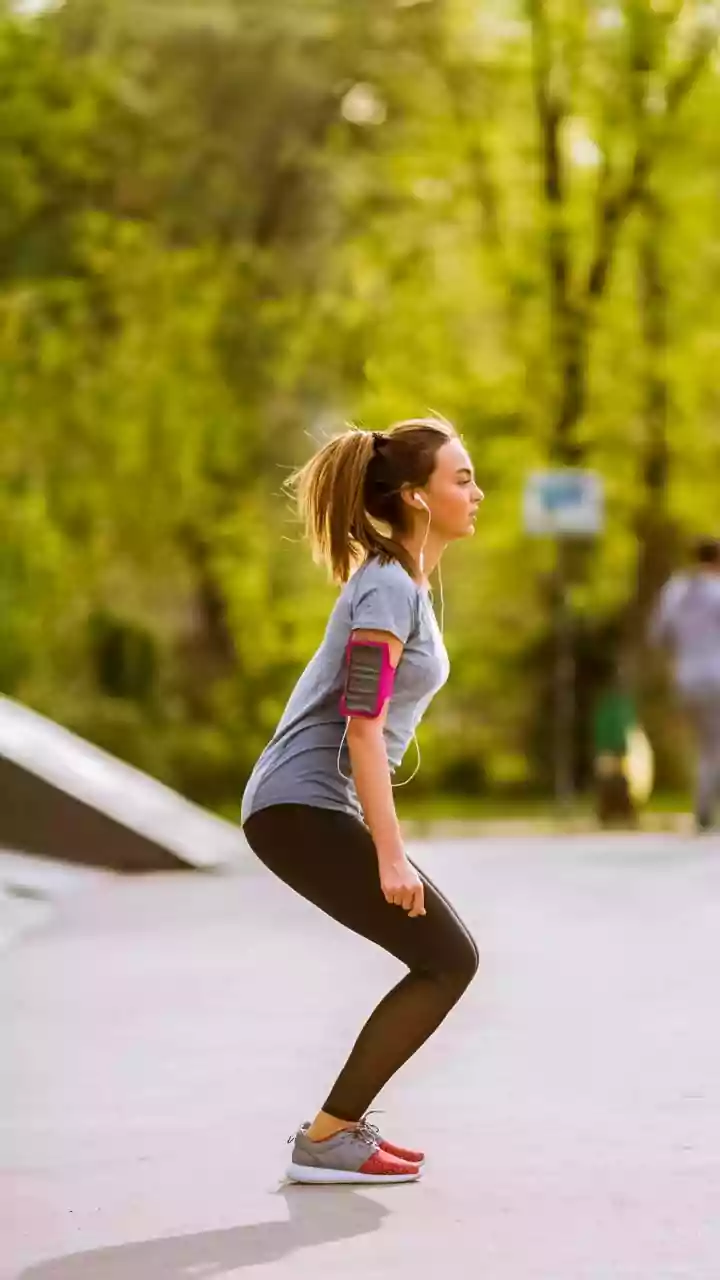
This exercise targets your hamstrings and glutes while keeping your heart rate up. Stand with your feet about hip-width apart. Begin to march or shuffle in place. As you do, bring your right heel back toward your right glute in a controlled motion, then your left heel to your left glute. Unlike the high-impact running version, you are not jumping. Keep one foot on the ground at all times. You can increase the intensity by picking up the pace, moving from a march to a quicker shuffle as you alternate legs.
Exercise 3: Step-Ups
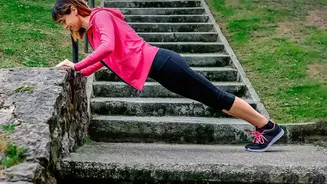
Step-ups are a fantastic way to build leg strength and cardiovascular endurance. All you need is the bottom step of a staircase or a sturdy, low stool. Stand facing the step. Place your entire right foot onto the step and press through your heel to lift your body up, bringing your left foot to meet your right. Step back down with your left foot, then your right. Continue, alternating the leading leg each time to ensure you work both sides evenly. This controlled movement minimizes joint stress while challenging your muscles.
Exercise 4: Standing Bicycle Crunches
Engage your core and elevate your heart rate simultaneously with this standing abdominal exercise. Stand with your feet shoulder-width apart and place your hands lightly behind your head, elbows wide. Lift your right knee toward your chest while rotating your torso to bring your left elbow toward your right knee. Return to the start and repeat on the other side, bringing your left knee toward your right elbow. Move in a smooth, continuous motion, focusing on the twist in your torso.
Putting It All Together: Your Workout
A great way to structure your workout is by using timed intervals. Try performing each of the exercises above for 45 seconds, followed by 15 seconds of rest before moving to the next one. Once you've completed all four exercises, that's one circuit. Rest for 60-90 seconds, and then repeat the entire circuit 3 to 4 more times for a complete workout of about 20-25 minutes. Aim to do this routine 3 to 5 days a week, listening to your body and resting when needed. The key is consistency.
The Crucial Cool-Down
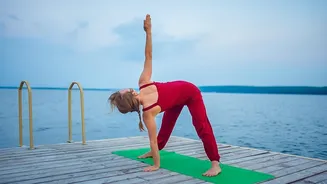
After your last circuit, don't just stop. A cool-down allows your heart rate to return to normal gradually and helps improve flexibility. Spend 5 to 10 minutes performing gentle, static stretches. Hold each stretch for 20-30 seconds without bouncing. Focus on your major muscle groups: quadriceps, hamstrings, glutes, calves, chest, and back. This helps reduce muscle soreness and promotes recovery.