






A Delayed But Vigorous Arrival
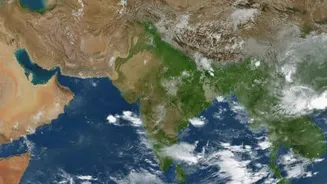
The India Meteorological Department (IMD) confirmed on June 24 that the monsoon has advanced into parts of both states. [8, 12, 23] In Madhya Pradesh, its entry was about nine days later than the usual date, arriving in 15 southeastern districts including
Indore, Dhar, Khandwa, and Balaghat. [9] For Gujarat, the monsoon's arrival through Surat ends a period of significant rainfall deficit, which stood at a worrying 84% as of June 22. [14, 23] While the arrival was delayed, it has been marked by intensity, with the IMD issuing alerts for heavy rainfall, thunderstorms, and gusty winds reaching up to 70 kmph in parts of Madhya Pradesh. [8]
A Boon for Farmers, A Boost for Reservoirs
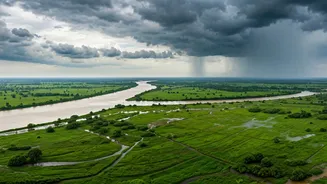
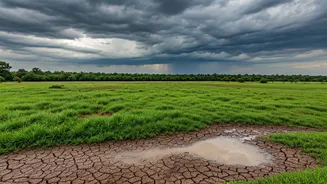
The monsoon's arrival is a lifeline for Central India's agricultural heartland. Farmers who have been anxiously waiting can now begin sowing key Kharif crops like soybean, cotton, and pulses. [8] The rains are crucial for the country's rain-fed agriculture, which depends heavily on the June to September season for nearly 75% of its annual rainfall. [14] The downpours will also begin the critical process of replenishing depleted reservoirs and groundwater tables, securing drinking water supplies for the months ahead. The delayed onset had hampered sowing activities, with agricultural experts noting that at least four inches of rain are needed for ideal conditions, a target only Bhopal had met prior to the monsoon's full arrival. [7]
Urban Centers Brace for Disruption
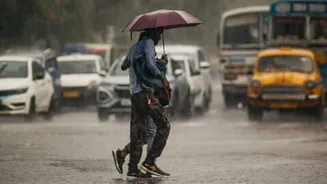
While celebrated in rural landscapes, the monsoon's initial onslaught has exposed vulnerabilities in urban infrastructure. The first spells of heavy rain in Bhopal led to severe waterlogging and traffic chaos in key areas like MP Nagar, Karond, and Shahpura. [19] The situation was worsened by ongoing metro construction and unfinished drainage work under the AMRUT 2.0 project, which left open trenches and hazardous, muddy roads. [19, 22] Commuters were stranded for hours as the combination of reduced road width and heavy downpours created massive bottlenecks. [19] Similarly, pre-monsoon showers in Ahmedabad had already highlighted civic challenges, with brief, intense rain causing waterlogging and uprooting trees, raising concerns about the city's readiness for sustained downpours. [20]
IMD Alerts and the Forecast Ahead
The IMD has placed several districts in both states on alert. For Madhya Pradesh, a rain and thunderstorm alert has been issued for 46 districts, including Bhopal and Indore. [9] In Gujarat, heavy rain is forecast for isolated places in the south, even as northern parts of the state continue to experience high temperatures. [23] The IMD has advised residents to stay indoors during thunderstorms and away from trees or open fields. [8] Conditions are favourable for the monsoon to advance further into more parts of Gujarat and Madhya Pradesh, as well as neighbouring states like Uttar Pradesh and Bihar, over the next two to four days. [8, 9, 15] However, the overall seasonal forecast for Madhya Pradesh suggests below-normal rainfall for 47 districts, a potential concern for the later stages of the season. [9]