







The End of an Era for the ISS
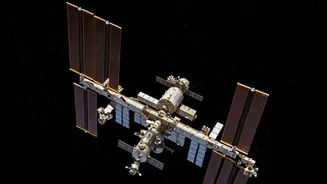
The International Space Station stands as one of humanity's greatest engineering achievements, a football-field-sized laboratory that has been continuously inhabited since November 2000. However, after three decades of service, the aging outpost is facing
structural fatigue and rising maintenance costs. NASA and its international partners have scheduled its decommissioning for around 2030–2031. The plan involves a carefully controlled deorbit, guiding the 450,000 kg station to a fiery re-entry over a remote stretch of the South Pacific Ocean, often called the “spacecraft cemetery.” This transition marks the end of a government-led monopoly on human presence in low-Earth orbit (LEO) and the beginning of a major strategic pivot.
A New Business Model in Orbit
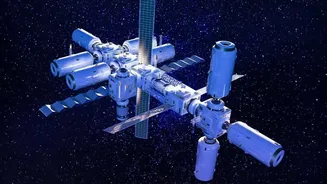
Rather than building a direct government-owned successor to the ISS, NASA is turning to the private sector. Through its Commercial Low-Earth Orbit Destinations (CLD) program, the space agency is acting as an investor and anchor customer, funding multiple companies to develop their own orbital stations. The goal is to create a robust LEO economy where NASA is just one of many customers—including other nations, private companies, and research institutions—purchasing services like lab space, crew accommodation, and manufacturing capabilities. This shift is expected to lower costs for taxpayers while fostering innovation and opening up space for new commercial ventures, from in-space manufacturing of pharmaceuticals and fibre optics to private astronaut missions and even tourism.
The Leading Commercial Contenders
Several companies are now in a race to become the first commercial landlords in orbit. Axiom Space, a Houston-based company, has a unique strategy. It is already flying private missions to the ISS and plans to attach its first module to the station around 2027. Over the next few years, it will add more modules before detaching to become a free-flying independent station prior to the ISS's retirement. Another major player is the Starlab project, a transatlantic joint venture between US-based Voyager Space and European aerospace giant Airbus. They plan to launch a large, single-module station on a single flight in 2029, with a focus on science and research. Not far behind is Blue Origin, which partnered with Sierra Space on Orbital Reef, envisioned as a “mixed-use business park” in space with capacity for up to ten people. While its timeline seems less firm, the concept highlights the ambition to create versatile orbital platforms.
Laboratories Among the Stars
These next-generation stations are being designed from the ground up to be state-of-the-art research facilities. They will offer advanced laboratories for experiments in the microgravity environment, which is impossible to replicate on Earth for extended periods. Scientists will be able to conduct research in areas like materials science, drug development, human physiology, and plant growth. Axiom Station's modules, for instance, are being built to include modern crew quarters and dedicated research and manufacturing facilities. Starlab is also being designed as a continuously crewed platform dedicated to critical research and industrial activity. The core offering of all these outposts is access to a unique environment that can unlock scientific discoveries and new technologies, continuing the legacy of the ISS but in a more commercially diverse ecosystem.
A New Chapter for Global Space Programs
The move to commercial stations will dramatically change how national space agencies operate. Instead of investing billions in building and maintaining their own hardware, countries will be able to purchase services and flight opportunities for their astronauts and scientists. This model could lower the barrier to entry for nations looking to expand their human spaceflight programs. For example, Axiom Space has already flown astronauts from several different countries on its private missions to the ISS. There has even been discussion of potential collaboration between Blue Origin and ISRO for providing crew transport to the Orbital Reef station, showcasing the potential for new international partnerships in this commercial era. This new marketplace of orbital destinations ensures that the vital research conducted in space can continue and expand, with more players and more platforms than ever before.