



Why Good Drainage is Crucial
Before we dive into the 'how,' let's understand the 'why.' When water sits at the bottom of a pot, it fills all the air pockets in the soil. Plant roots need oxygen to survive, and without it, they essentially suffocate. This condition, known as root rot,
is one of the most common reasons container plants fail. The roots turn mushy and can no longer absorb water or nutrients, leading to a plant that looks wilted and sick, even in wet soil. Good drainage ensures that excess water flows away freely, allowing roots to breathe and thrive.
Start with the Right Container
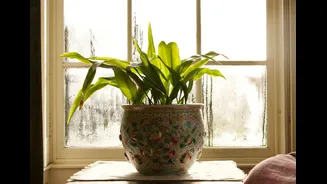
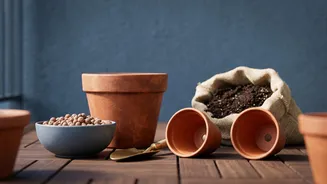
Your first line of defence against waterlogging is the pot itself. The most critical feature is a drainage hole. If you fall in love with a decorative pot that doesn't have one, you must drill a few yourself. Without an escape route, excess water has nowhere to go. The material of the pot also matters. Terracotta pots are porous and allow soil to dry out faster, which is excellent for plants that dislike 'wet feet'. Glazed ceramic or plastic pots retain more moisture, which can be useful but requires more careful watering. Whatever you choose, make sure it has at least one, if not several, holes at the bottom.
The Myth of Adding Gravel
For generations, gardeners have been told to add a layer of rocks, gravel, or broken pot shards to the bottom of containers to improve drainage. This is a persistent myth that actually makes things worse. Instead of helping water escape, this coarse layer creates something called a 'perched water table'. Water does not move easily from the fine-textured soil to the coarse-textured gravel layer below. Instead, it pools in the soil just above the gravel, raising the saturated zone and pushing it closer to your plant's delicate roots. The best practice is to fill the entire pot with a high-quality potting mix and skip the gravel layer altogether.
Create the Perfect Potting Mix
Never use soil directly from a garden bed in your containers. It's too dense and compacts easily, leading to poor drainage and aeration. Instead, use a quality potting mix designed for containers. For an even better result, create your own well-draining mix. A simple and effective recipe for Indian conditions is to combine equal parts of regular garden soil, cocopeat (or compost), and an aerating agent. Good aerating agents include perlite, coarse sand (like construction sand), or pumice. This mixture provides a balance of moisture retention from the cocopeat and excellent drainage and airflow from the perlite or sand, creating the perfect environment for healthy roots.
Elevate Your Efforts
Even with the best pot and soil, drainage can be hindered if the pot sits flat on the balcony floor, blocking the exit holes. A simple but highly effective trick is to elevate your pots slightly. You can use 'pot feet', which are small terracotta or plastic risers, or simply place a few bricks or bottle caps under the container. This small gap allows air to circulate underneath and ensures that water can drain away freely, preventing the pot from sitting in a puddle after a heavy watering or a downpour. It is a small step that makes a significant difference.
Choose Plants for the Season
With your drainage system perfected, you are ready to plant. October is a fantastic season for flowering plants on Indian balconies. Consider hardy and colourful options that will appreciate your well-draining setup. Marigolds (Genda), Zinnias, and dwarf varieties of Hibiscus are excellent choices that bloom profusely during this period. Vinca (Sadabahar) and Portulaca are also incredibly resilient and thrive in containers. By choosing seasonal plants, you are working with nature, giving your garden the best possible chance of success.