


The Sun’s Unseen Temper
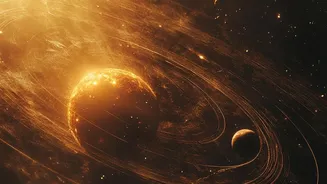
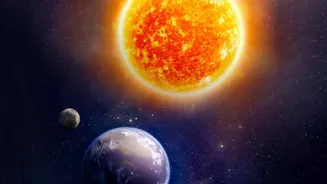
The sun, our life-giving star, has a volatile side. It periodically unleashes massive bursts of energy and matter, known as solar flares and coronal mass ejections (CMEs). A solar flare is an intense blast of radiation, while a CME is a giant cloud of solar plasma
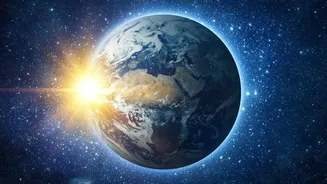
and magnetic fields hurled into space. When Earth is in the path of these events, it triggers what we call space weather. While our planet's magnetic field and atmosphere shield us from the worst effects, our technology in orbit and on the ground is not so lucky. These solar outbursts are the primary cause of geomagnetic storms, which can have significant consequences for our highly connected world.
Satellites and GPS Under Fire
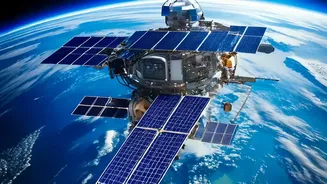
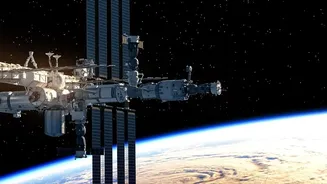
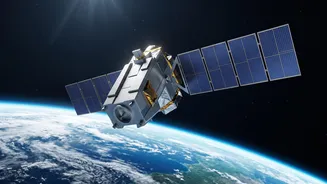
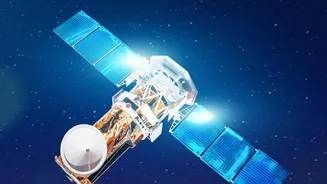
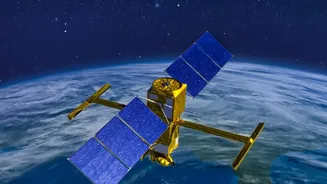
For satellites orbiting beyond the protection of our atmosphere, space weather is a direct assault. High-energy particles from solar events can damage sensitive electronics, degrade solar panels, and cause phantom commands that send a satellite off course. A strong storm can also heat and expand Earth's upper atmosphere, increasing the drag on satellites in low-Earth orbit. This extra friction can cause them to lose altitude and, in severe cases, even fall out of the sky. For navigation systems like GPS, the impact is more subtle but equally disruptive. Solar radiation supercharges the ionosphere, the layer of the atmosphere that GPS signals must pass through. This can delay and distort the signals, leading to positioning errors that can range from a few meters to a complete signal loss. For aviation, precision agriculture, and shipping, such inaccuracies can be costly and dangerous.
The Science of Solar Prediction
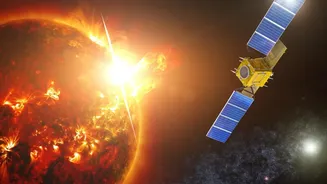
Predicting space weather is a complex but crucial task managed by organisations like the US National Oceanic and Atmospheric Administration's Space Weather Prediction Center (SWPC). Forecasters use a combination of space-based and ground-based observatories to constantly monitor the sun. Satellites provide real-time data on solar flares and track CMEs as they travel through space. By observing the number, size, and magnetic complexity of sunspots, scientists can estimate the likelihood of a major solar eruption. Because this radiation and matter travels slower than light, we can get a warning. A solar flare's radiation reaches Earth in about eight minutes, but the more disruptive CMEs can take one to three days to arrive, giving us a critical window to prepare.
A Race Against Solar Wind
That 1-to-3-day lead time is invaluable. With a reliable forecast, satellite operators can take pre-emptive action to protect their multi-billion dollar assets. This includes powering down non-essential systems or putting the entire satellite into a protective 'safe mode' to weather the storm. Airlines can reroute flights that would normally pass over the polar regions, where the effects of space weather are most intense and can disrupt communication and navigation. Power grid operators can also prepare their systems for the geomagnetic induced currents that can flow through long transmission lines and potentially cause widespread blackouts. These measures help mitigate the worst of the damage, turning a potential catastrophe into a manageable event.
The Future of Forecasting
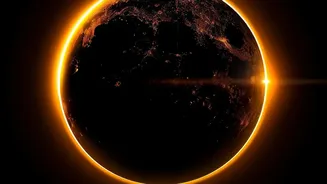
As our world becomes even more reliant on space-based technology, the need for faster and more accurate solar forecasts is growing. Researchers are developing new models that harness artificial intelligence and machine learning to analyze solar data, hoping to improve predictions and lengthen warning times. New initiatives aim to get a clearer picture of the sun's mysterious outer atmosphere, the corona, which is the source of these disruptive events. International partnerships and new satellite missions dedicated solely to studying space weather, like NOAA's SOLAR-1, are providing more detailed data than ever before. These advancements are essential not just for scientific understanding, but for the resilience of the technological backbone that supports our global economy.