








A Nutritional Powerhouse in Disguise
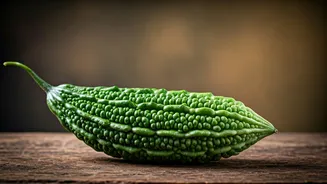
Love it or hate it, you can't deny its credentials. Bitter gourd, or karela, is low in calories but dense with essential nutrients. It is an excellent source of Vitamin C, which is crucial for immunity, skin health, and fighting disease. It also packs
a significant amount of Vitamin A, which supports vision and skin health. Furthermore, it's rich in folate, important for cell growth, and contains smaller but valuable amounts of potassium, zinc, and iron. What truly sets it apart, however, are its potent plant-based compounds and antioxidants that contribute to its wide-ranging health benefits, making every bitter bite a surprisingly powerful act of self-care.
The Original Blood Sugar Regulator
Long before modern wellness trends, Indian households understood karela's power. It is most famous for its potential to help manage blood sugar levels, a property that is now supported by scientific interest. Karela contains at least three active substances with anti-diabetic properties, including charantin, which has a confirmed blood glucose-lowering effect, vicine, and an insulin-like compound known as polypeptide-p. These compounds are thought to work both by reducing the amount of glucose that is absorbed into the blood from the gut and by helping the body's cells use glucose more effectively. While it's a powerful dietary addition, it is not a replacement for prescribed medication, but a complementary food that has been trusted for generations.
An Ayurvedic Champion for Seasonal Balance
In Ayurveda, food is medicine, and karela holds a place of high honour. Its primary taste (rasa) is bitter (tikta), and its secondary taste is pungent (katu). According to ancient texts, these properties make it incredibly effective at pacifying Kapha and Pitta doshas. Its cooling energy (virya) makes it the perfect vegetable for India's hot summer and humid monsoon seasons, helping to counteract heat-related issues like skin problems and indigestion. Ayurveda values it as a natural blood purifier and a tonic for the liver and digestive system. Its bitterness stimulates the secretion of digestive juices, improving metabolism and helping the body flush out toxins (ama). So, when you see karela appear in the market, it’s nature’s signal to start your seasonal cleanse.
The Art of Taming the Bitterness
The biggest barrier for many is, of course, the taste. But Indian cuisine has mastered the art of making karela delicious. The secret often lies in balancing its bitterness with other flavours. A common technique is to scrape the skin, remove the seeds, and salt the pieces for about 30 minutes to draw out some of the bitter juices. From there, the possibilities are endless. In North India, it’s often stuffed with a tangy mix of spices, onions, and raw mango powder to make *bharwa karela*. In the South, it’s sliced thinly, marinated, and deep-fried into crispy chips (*pavakkai varuval*). It can be added to dals, stir-fried with potatoes, or even juiced with an apple or lemon to make its health benefits more palatable. The goal isn’t to eliminate the bitterness entirely, but to celebrate it as part of a complex and satisfying flavour profile.
Embracing a Cultural Icon
Ultimately, karela is more than just a vegetable; it's a cultural touchstone. It represents the wisdom of eating seasonally and locally. It’s the taste of a grandmother’s kitchen, a reminder of a time when food was deeply connected to wellness and the environment. For many, learning to appreciate karela is a rite of passage—a transition from a child’s palate, which prefers sweet and simple tastes, to an adult’s, which can find pleasure in complexity and depth. Its presence on the dining table is a quiet testament to a food philosophy that doesn’t shy away from strong flavours but instead finds ways to balance and celebrate them.