
The Sun's Invisible Threat
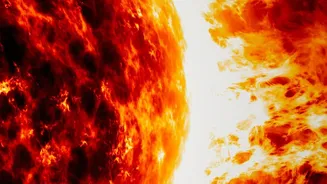
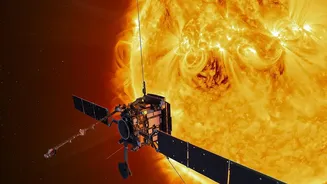
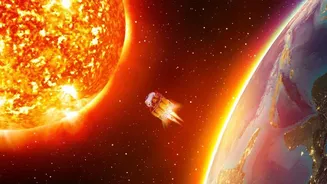
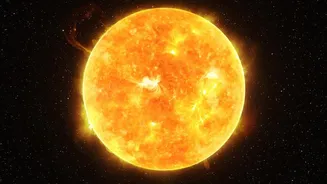
The primary threats from the Sun are solar flares and coronal mass ejections (CMEs). A solar flare is an intense burst of radiation that can reach Earth in about eight minutes. A CME is a much larger eruption, a colossal bubble of plasma and magnetic
field that travels more slowly, sometimes taking several days to arrive. When a CME strikes Earth's magnetic field, it can induce powerful electrical currents on the planet's surface, known as geomagnetically induced currents (GICs). These currents are the main danger to our technology, capable of flowing through any long conductor, like power lines, and wreaking havoc. These events can also disrupt the ionosphere, the upper layer of our atmosphere, which is crucial for long-range radio and GPS signals.
Protecting the Power Grid
Power grids are particularly vulnerable to GICs. These unplanned currents can flow into high-voltage transformers, causing them to overheat and potentially suffer permanent damage, leading to widespread and long-lasting blackouts. To counter this, power companies have developed a multi-layered defence. The first line of defence is forecasting. Agencies like NOAA’s Space Weather Prediction Center (SWPC) monitor the Sun constantly. By observing solar flares and CMEs, they can issue warnings that give grid operators hours or even days to prepare. When a storm is imminent, operators can take proactive steps, such as reducing the load on the grid or temporarily disconnecting certain sensitive transformers to prevent damage. Engineers are also developing and deploying blocking devices, such as series capacitors, which can physically stop GICs from entering and destroying transformers.
Danger in the High Frontier
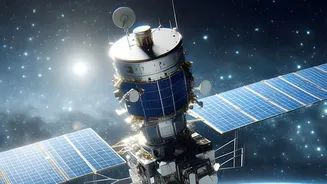
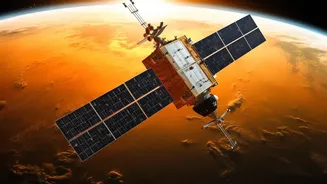
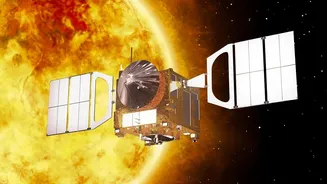
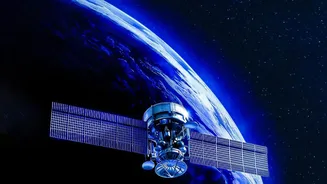
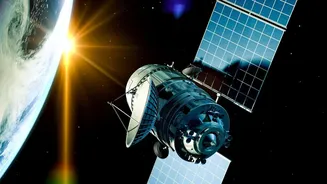
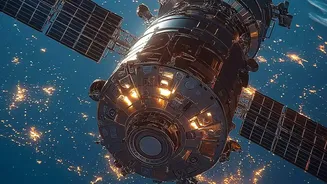
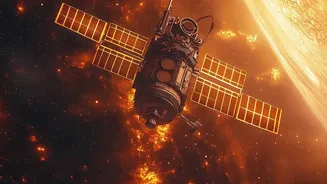
For the thousands of satellites orbiting Earth, solar storms pose a different set of challenges. High-energy particles released during a storm can damage sensitive electronics, degrade solar panels, and cause 'spacecraft charging,' where a buildup of static electricity can lead to short circuits. Furthermore, a storm can heat and expand Earth's upper atmosphere. This increases atmospheric drag on satellites in low-Earth orbit, causing them to lose altitude and requiring them to expend precious fuel to stay in their correct position. The disruption to the ionosphere also creates major problems for communication and navigation, as GPS signals can become unreliable, with accuracy degrading by tens of meters.
Shielding Our Orbital Sentinels
Protecting these vital orbital assets also starts with good forecasting. When a solar storm warning is issued, satellite operators can take defensive measures. This might include turning off non-essential or particularly sensitive components to protect them from electrical surges. In some cases, they can command the satellite to orient itself to use its own structure as a shield. Modern satellites are also built to be tougher. 'Radiation hardening' is a key design principle, where electronics and critical components are built with materials and designs that make them more resistant to the damaging effects of high-energy particles. This includes using specific metals for shielding and designing redundant systems, so if one component fails, another can take over, ensuring the satellite continues its mission.
An Era of Advanced Warning
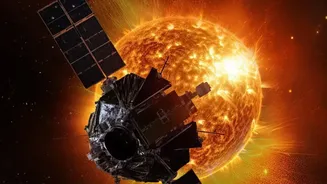
The science of space weather forecasting is rapidly advancing. Missions like India's Aditya-L1 are providing new insights into solar phenomena. Researchers recently discovered that by analysing small, pre-flare brightenings, they could better predict where a major flare would occur. Another Indian study highlighted the importance of a solar storm's temperature evolution as it travels to Earth, adding a new dimension to forecasting models. These constant improvements, often powered by AI analysing vast amounts of satellite data, aim to increase the warning time we have. This extra time is critical, allowing for more thorough preparations, from rerouting polar flights to avoid radiation and communication blackouts to giving power companies a crucial window to safeguard the grid.