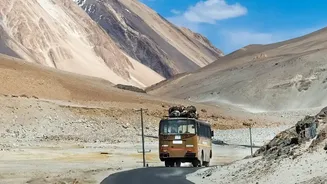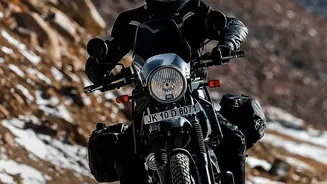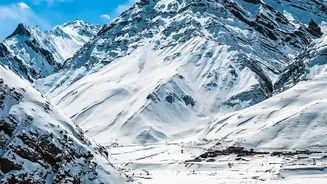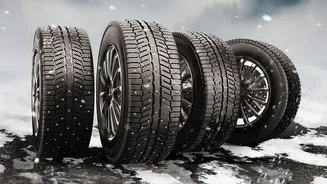








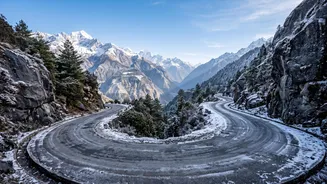
The crisp air and stunning vistas of an early winter Himalayan drive are unforgettable. But as temperatures plummet, a hidden danger emerges for your vehicle: rapidly dropping tyre pressure. Here’s what you need to know to stay safe on the road.
The Science Behind the Pressure Drop
The relationship
between temperature and tyre pressure is a simple matter of physics. As the air outside gets colder, the air inside your tyres contracts and becomes denser, causing the pressure to decrease. The general rule of thumb is that for every 10-degree Celsius drop in ambient temperature, your tyre pressure will fall by approximately 1 to 2 PSI (pounds per square inch). This might not sound like much, but on a trip where temperatures can swing dramatically, it can be enough to significantly underinflate your tyres, creating a serious safety hazard.
The Himalayan Challenge: A Double Whammy
Himalayan routes in early winter present a unique and amplified version of this problem. It's not just the cold, but the rapid changes in both temperature and altitude that you need to account for. A sunny afternoon can quickly give way to a freezing night, causing a significant pressure drop while your car is parked. Furthermore, as you climb to higher altitudes, the atmospheric pressure decreases. This change can also affect your tyre pressure readings. The combination of plunging temperatures and changing altitude means that the tyre pressure you started with at the base of the mountains could be dangerously low by the time you reach your high-altitude destination.
The Dangers of Underinflated Tyres
Driving on underinflated tyres is a major risk, especially on challenging mountain roads. When a tyre is underinflated, its sidewalls flex more than they are designed to, which generates excessive heat due to increased friction. This can lead to premature wear, poor handling, and a delayed braking response. In the worst-case scenario, the heat buildup can cause the tyre's structure to fail, resulting in a sudden and dangerous blowout. Underinflation also reduces traction, which is critical on icy or winding roads, and negatively impacts your vehicle's fuel efficiency.
Your Pre-Trip Tyre Safety Checklist
Proper preparation is the key to a safe Himalayan adventure. Before you even begin your journey, a thorough tyre check is nonstoppable. First, inspect all your tyres, including the spare, for any signs of damage like cracks, bulges, or cuts in the sidewalls. Check the tread depth to ensure you have enough grip for varied conditions; the legal minimum in India is 1.6 mm, but more is always better for safety. Next, inflate your tyres to the manufacturer's recommended pressure. You can find this information on a sticker inside the driver's side doorjamb, in your vehicle's owner's manual, or on the fuel filler door. Finally, invest in two crucial pieces of equipment: a reliable, high_quality tyre pressure gauge and a portable tyre inflator. These tools will be invaluable on the road.
Onward Best Practices
Once your trip is underway, vigilance is crucial. Make it a habit to check your tyre pressure every single morning before you start driving. This is important because pressure should always be measured when the tyres are 'cold'—meaning the car has been stationary for at least three hours—to get an accurate reading. Driving heats up the tyres and temporarily increases the pressure, which can give you a misleadingly high reading. Use your portable gauge to check the pressure against the manufacturer's recommendation and use your inflator to add air as needed. This simple daily check takes only a few minutes but is one of the most important safety procedures you can follow on a high altitude winter trip.