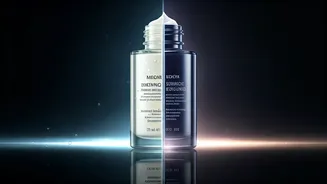









Understanding Your Skin's 24-Hour Cycle
Just like our bodies feel sleepy at night and alert during the day, our skin operates on a 24-hour cycle called the circadian rhythm. This internal clock dictates your skin's changing needs. During the day, your skin is in 'defence mode,' working hard
to protect itself from environmental stressors like UV radiation and pollution. Its barrier function is strongest, and it focuses on shielding itself from damage. At night, it switches into 'repair mode.' This is when your skin works to regenerate, heal damage, and rebuild. Cell proliferation and renewal can be up to 30 times higher at night, making it the prime time for recovery. Understanding this fundamental shift is the key to making your products work smarter.
The Morning Routine: Protect and Defend
Your morning skincare routine has one primary job: to protect your skin for the day ahead. Think of it as putting on armour. The focus should be on gentle cleansing, antioxidants, hydration, and most importantly, sun protection. Start with a mild cleanser to remove any oil and residue that has built up overnight without stripping the skin's natural moisture. Next, apply an antioxidant serum. Vitamin C is a dermatologist favourite for the morning because it helps neutralise free radicals from pollution and UV exposure, effectively giving your sunscreen a helping hand. Follow this with a moisturiser to hydrate and lock in the serum. The final, non-negotiable step is a broad-spectrum sunscreen with at least SPF 30. This should be applied every single morning, even if it's cloudy or you're staying indoors, as UV rays can penetrate windows.
The Evening Routine: Repair and Rejuvenate
As your skin enters its natural repair cycle in the evening, your routine should focus on cleansing away the day and delivering powerful, restorative ingredients. If you wear makeup or heavy sunscreen, it's a good idea to start with a double cleanse, first using an oil-based cleanser to break down products, followed by a water-based cleanser to wash everything away. Nighttime is the ideal moment to use active, treatment-focused products. This includes ingredients like retinoids (retinol), which accelerate cell turnover and boost collagen but can increase sun sensitivity, making them unsuitable for daytime use. Exfoliating acids, such as AHAs and BHAs, are also best used at night to remove dead skin cells and improve texture without risking sun exposure immediately after. Finish with a richer moisturiser or night cream to support your skin's barrier and lock in hydration while you sleep.
Layering and Ingredient Timing
The order in which you apply products matters almost as much as the time of day. The golden rule is to layer from the thinnest texture to the thickest. This means water-based serums go on before heavier creams and oils, allowing them to penetrate the skin effectively. It's also crucial not to mix certain active ingredients in the same routine. For example, Vitamin C and retinol are best used separately—Vitamin C in the morning and retinol at night—to avoid irritation and ensure both ingredients work effectively. Similarly, avoid using strong exfoliating acids on the same night as a retinoid to prevent over-irritating the skin. Giving each product a minute or two to absorb before applying the next can also improve its effectiveness.