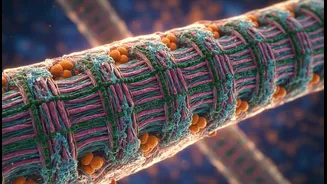








The Old Story of Muscle Ageing
For years, the conversation around muscle and ageing has been dominated by one word: sarcopenia. This is the natural, age-related loss of muscle mass that typically begins in our 30s and accelerates after 50. It’s a slow, steady decline that contributes
to frailty, a higher risk of falls, and a general loss of independence. Sarcopenia has long been viewed as an inevitable consequence of getting older, a process where our muscles simply shrink and waste away. We lose a small percentage of muscle each year, and over decades, that loss compounds, leaving us physically less capable. This narrative, while true, only tells half the story. It focuses solely on the quantity of our muscle, like measuring the size of an engine without checking if it can still run properly. This focus on mass has shaped how many people think about fitness for ageing, often leading to a sense of resignation.
A New Focus on Muscle Quality
The more complete picture of muscle ageing is about quality, not just quantity. Scientists now understand that the loss of strength and power can happen much faster than the loss of muscle size. This decline in muscle function is called dynapenia. You can have two people with the exact same amount of muscle mass, but one is significantly stronger and more mobile. The difference is their muscle quality. This refers to the muscle's intrinsic ability to generate force, its efficiency, and its composition. A healthier ageing pattern isn't just about holding onto muscle mass; it’s about maintaining high-quality, functional muscle tissue. This means muscle that is powerful, responsive, and not infiltrated by fat—a condition known as myosteatosis. This shift in understanding is crucial because it moves the goalposts from simply preventing shrinkage to actively preserving function, which is what truly matters for staying active and independent.
Why Long-Term Planning Is Your Best Tool
The changes that degrade muscle quality begin decades before they become obvious. By the time someone in their 60s or 70s notices significant weakness, the underlying process has been underway for a long time. This is why long-term fitness planning becomes so powerful. Making the right choices in your 30s, 40s, and 50s can fundamentally change your muscle-ageing trajectory. It’s not about staving off the inevitable; it’s about actively building a reserve of high-quality muscle that will serve you for life. Recent research has even pinpointed specific molecular pathways that exercise influences. Physical activity can help muscles clear out damaged proteins and maintain their internal repair systems, effectively hitting a biological reset button. A plan isn't a frantic, short-term fix; it is a consistent, decades-long strategy to ensure your muscles remain healthy and functional at a cellular level. Waiting until you feel weak is too late to start planning.
The Blueprint for a Decades-Long Plan
So, what does a useful long-term plan look like? It’s built on three pillars: progressive resistance training, adequate protein intake, and unwavering consistency. Progressive resistance training is the single most effective tool for building and maintaining muscle quality. Lifting weights, using resistance bands, or doing bodyweight exercises two to three times a week signals your muscles to grow stronger. The key is 'progressive'—always aiming to do a little more over time, whether it's more weight, more reps, or better form. Second, you must fuel your muscles. A diet rich in protein provides the essential building blocks for muscle repair and synthesis. Many adults, especially older ones, don't get enough. Finally, consistency trumps intensity. A perfect, brutal workout done sporadically is less valuable than a good, manageable workout done consistently, week after week, year after year. The goal is to integrate this into your life for the long haul.
Smarter Training for a Stronger Future
As you age, recovery becomes a more significant factor. Your long-term plan should prioritize smarter training, not just harder training. For many, this means focusing on full-body workouts two or three times a week rather than trying to sustain five or six intense sessions. This approach allows more time for recovery, which is when muscles actually rebuild and get stronger. A balanced routine should also include cardiovascular exercise, which improves mitochondrial health—the powerhouses of your cells—and supports recovery between strength sessions. Don’t neglect mobility and flexibility, either, as they are crucial for preventing injury and ensuring you can perform exercises correctly. The ultimate goal of your plan is sustainability. It should be a routine you can realistically stick with through different life stages, ensuring that you arrive in your later years with muscles that are not just present, but powerful.