



A New Treasure Map for the Moon
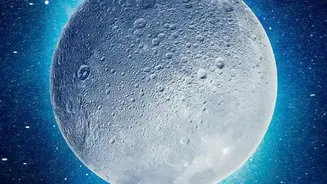
Scientists have unveiled the most detailed, wide-area map of water distribution on the Moon to date. The map, created using data from the now-retired Stratospheric Observatory for Infrared Astronomy (SOFIA), focuses on the lunar south pole—a region of intense
interest for future space exploration. Previous missions had confirmed the presence of water, but this new mapping reveals how its concentration relates to surface features like mountains and craters. By tracking a unique light signature that can only belong to water molecules, SOFIA’s data provides a clearer picture than ever before, distinguishing true H2O from similar-looking hydroxyl compounds. This isn't just an academic exercise; it's a practical guide for missions like NASA's Artemis program, which aims to establish a long-term human presence on the Moon.
Seeing Water in the Shadows
So, how exactly does a telescope 'see' water from hundreds of thousands of kilometres away? The key is an instrument called a spectrometer. SOFIA flew high above 99% of the Earth's atmosphere, which would otherwise block the specific wavelength of light needed for this detection. It measured infrared light bouncing off the lunar surface. Water molecules absorb a very specific part of this light, creating a unique chemical 'fingerprint'. The map shows that water is more concentrated in permanently shadowed regions—the cold, dark floors of craters where sunlight never reaches. Temperatures in these areas can plunge low enough to keep water ice stable for billions of years. The new map reveals that even the shady sides of mountains and crater rims hold more water, suggesting local geography plays a huge role in where this vital resource is preserved.
The Promise of Accessible Ice
Finding water is one thing, but 'accessible' water is the real prize. For future lunar inhabitants, accessibility means the ice is located in sufficient quantities and close enough to the surface to be extracted by rovers and astronauts without extreme effort. The ultimate goal is 'in-situ resource utilization' (ISRU), a fancy term for living off the land. Instead of hauling massive and costly water tanks from Earth, astronauts could theoretically mine this lunar ice. Once melted and purified, it provides drinking water. More importantly, using electrolysis, the water can be split into its components: oxygen for breathing and hydrogen for rocket fuel. This capability would be a game-changer, enabling a self-sustaining lunar base and a launching point for deeper space exploration.
A Boost for India's Lunar Dreams
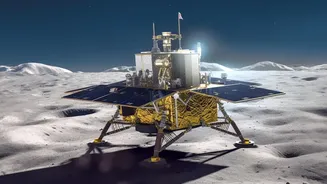
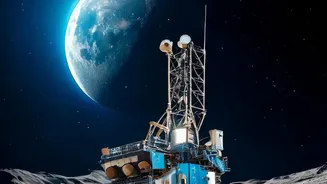
This discovery is particularly exciting for India's ambitious space program. The Indian Space Research Organisation (ISRO), in collaboration with Japan's JAXA, is developing the Lunar Polar Exploration (LUPEX) mission, slated for launch in the late 2020s. The primary objective of LUPEX is to explore the Moon's south pole and investigate the quantity and quality of water ice deposits. The mission will feature a sophisticated rover designed to operate in the harsh lunar environment, equipped with a drill and instruments to directly measure water content. One of ISRO's key contributions is a ground-penetrating radar that can map water ice up to three meters below the surface. This new spectrometer map from SOFIA provides invaluable intelligence, helping mission planners identify the most promising landing sites and exploration targets for the LUPEX rover, maximising its chances of success.